

🏙️ Webcams Halle (Saale) online — watch in real time
1 cameras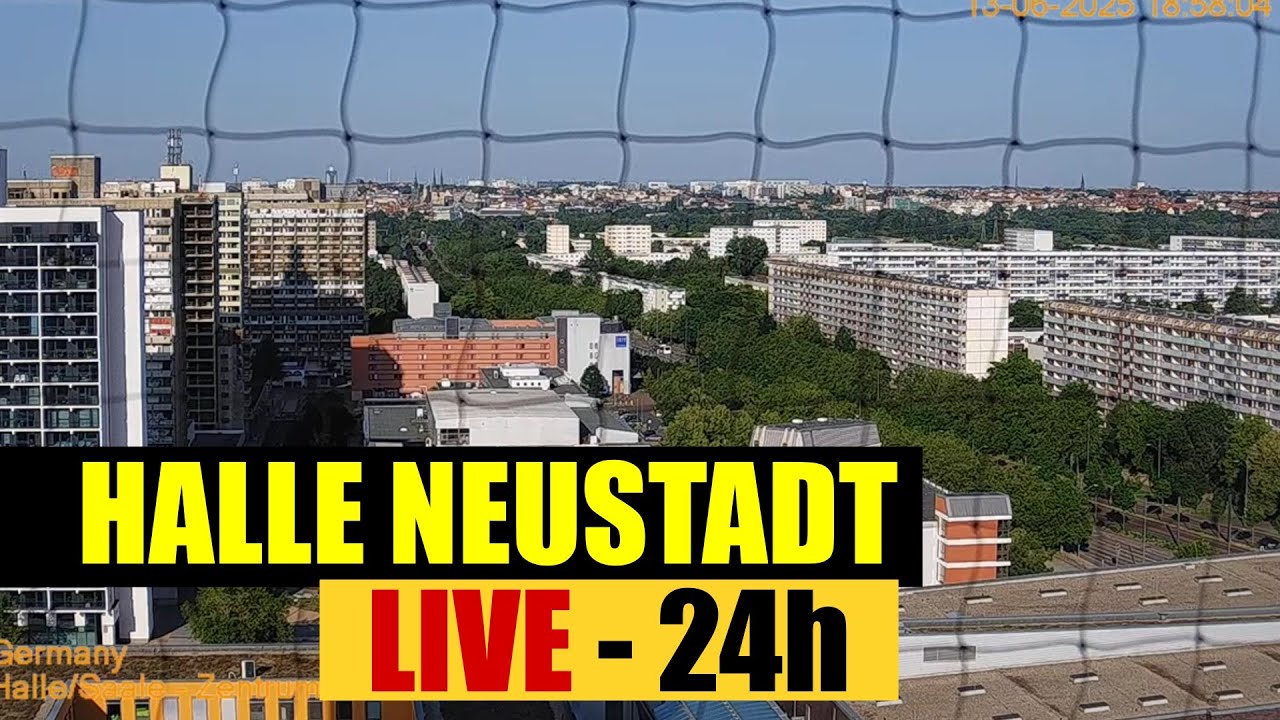
Halle (Saale): a city born from salt
Imagine a place where the history of salt extraction spans more than four millennia. Halle (Saale) is exactly such a city. Its name is of Celtic origin and means "places rich in salt", and this is not just a poetic metaphor, but a literal description of what made the settlement prosperous for centuries. The salt springs shaped the appearance of Halle, determined its economy, and attracted people here long before it received official city status.
Located on the banks of the Saale River, this city is today the most populous city in the state of Saxony-Anhalt. But size is not the main thing that makes Halle remarkable. It is a city with character, where medieval streets stand alongside baroque facades, and the university atmosphere is felt literally in the air.
Historical heritage: from the Bronze Age to the Baroque
Archaeological finds testify: salt harvesting in Halle was carried out at least since the Bronze Age (2300-600 BC). Imagine — even before the founding of Rome, before classical Greece, life was already boiling around the salt springs here. This is one of the oldest industrial regions in Europe, and traces of that era can still be found in the vicinity of the city.
In the 9th century, Charlemagne built a fortress in Halle — a link in the chain of defensive structures on the eastern borders of the Frankish Empire. The strategic location at the crossing over the Saale made this place key for controlling trade routes. The fortress became the nucleus around which the future urban settlement formed.
The turning point came in 981, when Emperor Otto II granted the settlement city status. From that moment, Halle received the right to a market, self-government, and the opportunity to develop as an independent center. The city wall, built in subsequent centuries, outlined the boundaries of a world where craftsmen and merchants created a thriving community.
Architectural gems of Halle
One of the most impressive monuments of the early Middle Ages in the region is Giebichenstein Castle, built between 900 and 1000 AD. This fortress served as the residence of the Magdeburg bishops and played a notable role in the political history of the Holy Roman Empire. The castle received prisoners from among the high nobility within its walls — its history is full of intrigues and dramatic twists.
The center of Halle amazes with its architectural diversity. The five towers of the Market Church dominate the cityscape, and the Red Tower — one of the city's symbols — was once part of the defensive fortifications. Walking through the streets of the old town, one can notice how eras overlap: Gothic elements neighbor Renaissance details, and baroque facades adorn medieval foundations.
Halle is one of the few German cities where the medieval water supply system (salt wells) has been preserved. These underground structures are silent witnesses to how the city used its natural resources for centuries. Today, some of them are open to visitors and represent a unique example of engineering thought from the past.
Cultural life and educational traditions
In 1685, George Frideric Handel was born in Halle — a composer whose works are performed today in concert halls around the world. The house where he spent the first years of his life has been preserved and turned into a museum. For music lovers, this is a place of pilgrimage, where one can feel the atmosphere in which genius was formed.
The educational traditions of Halle are no less impressive. The Francke Foundations were established in 1695 by August Hermann Francke as a Christian, social, and educational organization. This complex of buildings became a model of educational activity of its time and today remains an important cultural center where one can learn about the history of pedagogy and charity.
The University of Halle, founded in 1694, made a huge contribution to the intellectual history of Germany. Its botanical garden, founded in 1698, is the oldest in Germany. This is not just a collection of plants, but a living monument of science, where researchers and students have been working for more than three centuries.
Districts and atmosphere of the city
Halle is a city of contrasts. The historic center with its narrow streets and market square neighbors districts where the influence of the industrial past is felt. From 1965 to 1995, the official name of the city was simply Halle — without the clarification "Saale," which reflected the desire for modernization. Today, the full name Halle (Saale) emphasizes the connection with the river and historical roots.
The area around the university campus is filled with student energy — cafés, bookstores, small galleries create the atmosphere of a young and dynamic city. At the same time, quiet residential neighborhoods on the outskirts offer a completely different rhythm of life, where time flows more calmly.
Those who want to see the city without too many tourists can use webcams Halle online — this is an opportunity to observe the life of the city in real time, noticing details that are easy to miss during a regular visit.
Nature and surroundings
The Saale River is not just a geographic landmark, but an artery around which the life of the city is organized. Its winding channel creates picturesque landscapes, especially in the area of the old town, where the embankment turns into a walking zone. In the warm season, you can meet students having picnics on the grass here, and local residents leisurely strolling along the bank.
The surroundings of Halle offer opportunities for countryside recreation. Small forests and parks surround the city, creating a green belt where you can take a break from the bustle of the city. Salt meadows, preserved in some places, recall the industrial past of the region and create a unique landscape.
What the cameras show
Webcams Halle online open a view of key points of the city — from the historic center to modern districts. The broadcasts allow you to see the Market Church with its famous towers, the Red Tower, the Saale embankment, and the busy intersections of the old town. For those planning a trip, or simply interested in the life of German cities, webcams Halle is a convenient way to get an idea of its atmosphere.
When choosing a camera, pay attention to the angles: some show a panorama of the city from a height, others — street life in detail. This is especially valuable for those who want to appreciate the scale of Halle's historical heritage or simply enjoy the view of the Saale River in real time.