

🏙️ Webcams Saint-Trojan-les-Bains online — watch in real time
1 cameras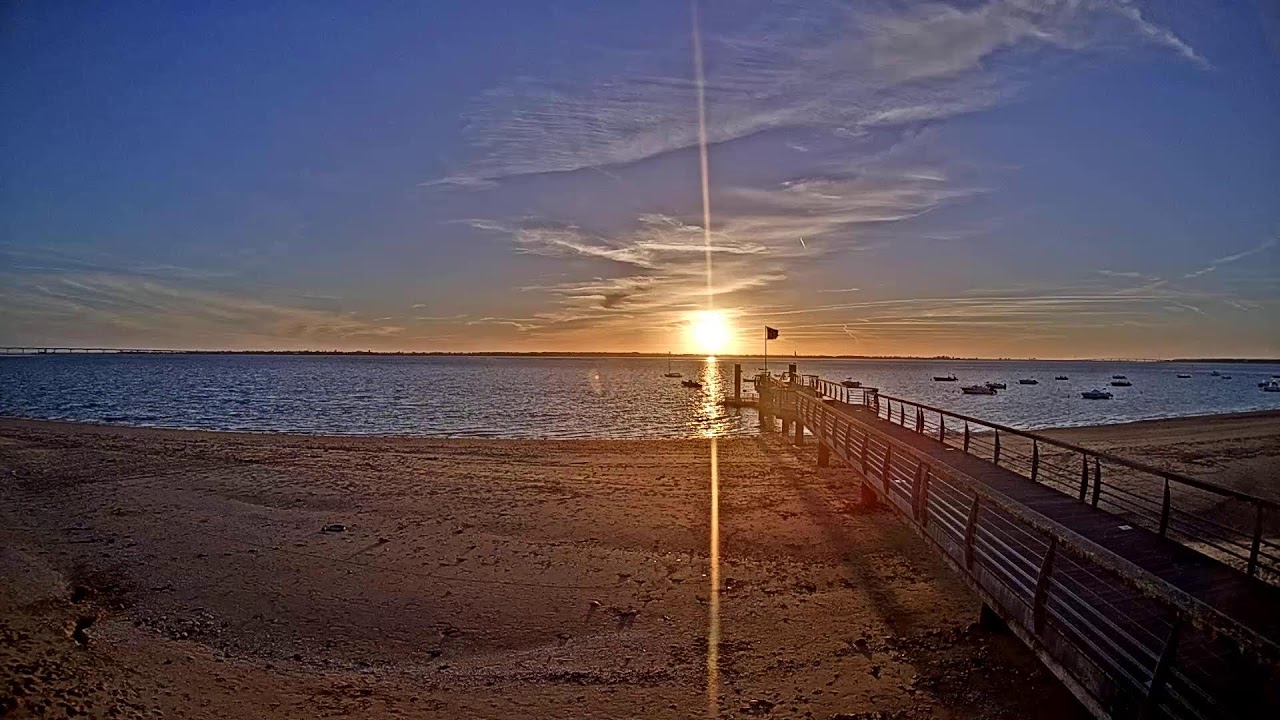
A resort born from sea air
Saint-Trojan-les-Bains is a place where pine forest meets the Atlantic, and history emerges through the sand of the beaches. Located in the south of Oléron Island in the Charente-Maritime department, this resort became famous back in the 19th century for its healing air. People came here not so much for swimming as for walks along pine avenues and the measured rhythm of life on the edge of the land.
The town's name holds a legend about Saint Trojan — a healer who, according to legend, discovered the secret of resurrection and traveled the world in search of knowledge. This name gives the place a special character — not just a resort, but a place with personality and memory.
Bunkers on the beach — ghosts of the Atlantic Wall
One of the most unusual details of the Saint-Trojan-les-Bains landscape is the German bunkers embedded in the sand along the coast. They are remnants of the Atlantic Wall — a grand fortification system that Nazi Germany built in 1942–1944 along the entire European coastline. Oléron Island was occupied and turned into a fortress.
Over time, erosion did its work: some bunkers slid onto the beach, exposing concrete walls covered in algae and salt. They stand right on the sand, like silent witnesses of an era that people preferred to forget. After the war, interest in preserving them was minimal — memories of the occupation were too fresh. Today these structures have become part of the landscape, attracting photographers and history enthusiasts.
Oyster port with colorful huts
The port of Saint-Trojan-les-Bains is an open-air museum of oyster farming. The town is part of the Marennes-Oléron basin — one of the largest oyster farming centers in France. Along the waterfront stand wooden huts painted in blue, yellow, red, and green. Each belongs to a specific farm, and many are still used for their intended purpose.
There is no museum-style staging here — it's a working port. Fishermen and oyster farmers load boats, sort their catch, and sell right from the docks. The oyster market operates in season, and buying a dozen directly from the producer is common. The air is filled with the smell of the sea, seaweed, and pine resin from the neighboring hills.
Little train to the wild beach
Since 1963, Le P'tit Train de Saint-Trojan has been running on the route from Saint-Trojan-les-Bains to Pertuis de Mausson. This narrow-gauge tourist train covers 12 kilometers one way, offering passengers views of sandy dunes, pine forest edges, and the endless ocean.
The final stop is the wild beach of Pertuis de Mausson at the southern tip of the island. This is where Oléron narrows to a strip of sand between the ocean and the Antioches Strait. A buffet operates at the station where you can grab coffee before heading out for a walk along the deserted shore. The train passes through national forest territory, and the carriage windows become frames of a nature film.
Pine forest — the green lungs of the resort
Forêt domaniale de Saint-Trojan-les-Bains is the national forest surrounding the resort from the north. Pine plantations established in the 19th century to stabilize the dunes have become a true nature reserve. Beneath the tree canopy, walking and cycling paths lead to beaches and viewpoints.
The forest provides shade on hot days and protects the town from the wind. The smell of resin and pine needles mixes with the sea breeze — this combination is considered therapeutic, and it was precisely for this that the first resort visitors came here. Today you can encounter squirrels, hares, and many birds in the forest, and mushroom gatherers in season.
Fort Boyard on the horizon
About 21 kilometers from Saint-Trojan-les-Bains, between the islands of Oléron and Aix, the famous Fort Boyard rises from the water. A stone cylinder on a sandbank — one of the most recognizable architectural landmarks on the Atlantic coast of France.
The fort's history goes back to the era of Louis XIV: the shipyard in Rochefort was founded in 1666 by Minister Colbert, and construction of the fort itself began in the 19th century but proved so costly that it stretched over decades. Today the fort is a television studio and museum, with sea excursions organized from the nearby coast.
1920s–1930s villas and resort architecture
The boulevard along Saint-Trojan-les-Bains beach is a gallery of early 20th-century resort architecture. 1920s–1930s villas stand in a row, each with its own character: some with turrets and bay windows, others with laconic Art Deco facades. Many have preserved their original stained glass windows and wrought-iron balconies.
These houses were built by Parisians and Bordeaux bourgeoisie seeking peace and sea air. Today some villas have been converted into guest houses and apartments, but the facades remain untouched. A walk along the boulevard is a journey through the ages, from the Belle Époque to the present day.
Atmosphere of a small town on the edge of the ocean
Saint-Trojan-les-Bains is not a place for noisy parties and shopping centers. There's a different set of values here: a morning walk on the beach, lunch at a harbor café, an afternoon nap in the shade of a pine tree, an evening breeze from the ocean. The town lives to the rhythm of tides, oyster season, and tourist summer.
Local residents — descendants of fishermen and oyster farmers — preserve traditions and are in no hurry to change their way of life. The market operates in the mornings, the church gathers parishioners on Sundays, and there's always a free bench on the waterfront with an ocean view. This is a place where time slows down, and that is its main appeal.
What the cameras show
Saint-Trojan-les-Bains webcams online give you the opportunity to see the resort in real time — from beaches with bunkers to the oyster port and pine forest. The broadcasts show how the light changes on the waterfront throughout the day, how the port fills with fishing boats in the mornings, and how the beaches empty by evening.
Watching Saint-Trojan-les-Bains webcams is a way to feel the rhythm of the resort without leaving home. The cameras cover key points: the coast, the port, forest trails, and central streets. Choose a broadcast and observe the life of this unusual place in the south of Oléron Island — where history, nature, and sea intertwine into a single landscape.