

🏙️ Webcams Roscoff online — watch in real time
1 cameras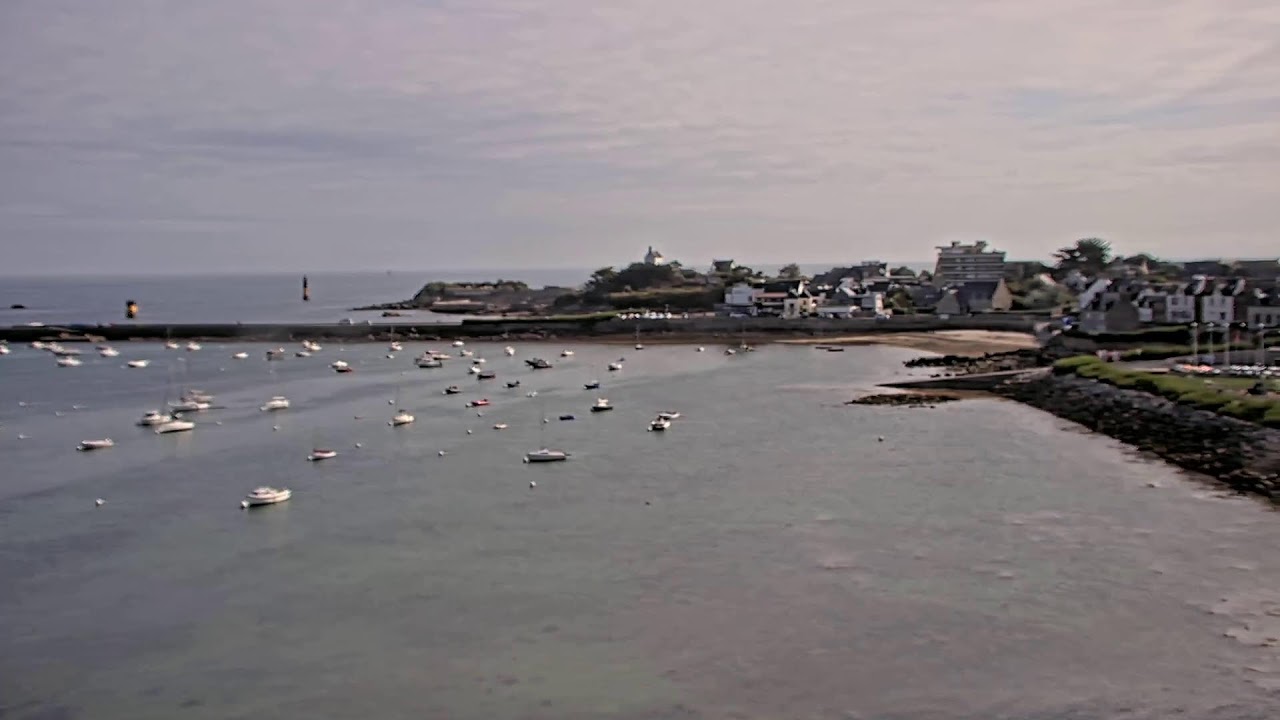
Corsair Heritage and Maritime Legends
Roscoff is often called the "corsair city" — this reputation was established back in the Middle Ages, when local seafarers not only traded but also attacked enemy vessels. French symbolist poet Tristan Corbière, born here in 1845, celebrated this past in his poem "Au vieux Roscoff", mentioning freebooters and corsairs. Today the spirit of maritime romance lingers in the narrow streets of the old town, where stone houses from the 16th–18th centuries preserve the memory of those times. Here you can imagine the sailing ships setting off on their voyages and returning with trophies and tales of distant lands. The port of Roscoff has always been a gateway between continental Europe and the British Isles, which shaped its maritime identity.
Architectural Landmark: Notre-Dame de Croaz Batz Church
The main monument of Roscoff is the Notre-Dame de Croaz Batz church, built in the 16th century. It is unique for its blend of late Gothic and Renaissance styles, and its decorative Renaissance bell tower dominates the townscape. The building is listed in the French architectural heritage database under number PA00090402, confirming its historical value. Inside the church, decorative elements typical of Breton temples from that period have been preserved, and the surrounding area offers views of the port and Île de Batz. The architectural ensemble of the church serves as a landmark for sailors and tourists, reminding visitors of the rich past of this place.
Onion Johnnies: Bretons Who Conquered Britain
One of the most unusual chapters in Roscoff's history is the onion trade. Local residents, known as "Johnnies," rode bicycles across Britain selling pink onions. In 2013, Oignon de Roscoff received Protected Designation of Origin (PDO) status, securing the region's exclusive rights to this brand. The town is home to the Maison des Johnnies et de l'Oignon — a museum dedicated to these enterprising traders. The exhibition tells the story of how Breton peasants became familiar figures on the streets of London and other British cities, and how their image became part of the cultural heritage of both countries. The tradition of growing onions in Roscoff continues to this day, and the local product is prized for its flavor qualities.
Cradle of Thalassotherapy: The 1899 Breakthrough
Roscoff entered world medical history as the birthplace of thalassotherapy. In 1899, Dr. Louis Bagot founded the world's first seawater treatment center here. This event became the starting point for the development of an entire industry, and today Roscoff webcams allow you to see the buildings where this practice was born. The oldest thalassotherapy center continues to operate, attracting wellness enthusiasts from around the world. The principles developed by Bagot laid the foundation for modern methods of using seawater, seaweed, and climatic factors for therapeutic purposes. Roscoff remains one of the leading destinations for those seeking wellness by the sea.
Exotic Gardens on the Edge of Brittany
Despite its northern location, Roscoff is renowned for its flora. The Exotic Garden, founded in 1986, covers 1.6 hectares on the Roc'h Hievec rock. Plants from the Mediterranean, Australia, and America grow here. And on the island of Île de Batz, just minutes from the port, lies the Jardin Georges Delaselle with palms, cacti, and a Māori section. The mild microclimate created by the Gulf Stream allows species to grow here that seem incompatible with the northern latitude. These gardens have become a magnet for botanists and tourists eager to see the contrast between the rugged Breton coast and lush vegetation.
Scientific Center and Ferry Connection
Modern Roscoff is not just history, but also science. The town is home to the Station Biologique de Roscoff — a leading research laboratory in the field of oceanography. And in 1968, local leader Alexis Gourvennec secured the creation of a ferry service to Britain, which led to the founding of Brittany Ferries and turned Roscoff into an important transport hub. Today the port receives vessels connecting France with Cornwall and Ireland, while the scientific center continues to study marine ecosystems. The combination of transport infrastructure and scientific research makes Roscoff a unique place where trade, science, and maritime traditions intersect.
A Town of Character: Official Recognition
Since 2009, Roscoff has held the official designation of "petite cité de caractère de Bretagne" — "small town of character of Brittany." This status confirms the uniqueness of its architectural appearance, where old stone houses adorned with carvings create an unmistakable atmosphere of the Breton coast. Narrow cobblestone streets lead to the port, and the facades of buildings have preserved features characteristic of traditional regional architecture. This status helps maintain the town's authenticity and attracts travelers seeking not tourist clichés, but living history.
What the Cameras Show
Roscoff webcams offer views of the port, where fishing boats and yachts dock, the historic center with its narrow streets and stone facades, as well as the coastline with its rocky shores. Real-time observation allows you to appreciate the atmosphere of a Breton town: the movement in the harbor, the changing light on the facades of historic buildings, and the life of the waterfront. The cameras cover key tourist attractions, including the port area and central squares. This is an opportunity to see Roscoff through the eyes of those who live here and to feel the rhythm of life on the edge of Europe.