

🏙️ Plobannalec-Lesconil webcams online — watch in real time
1 cameras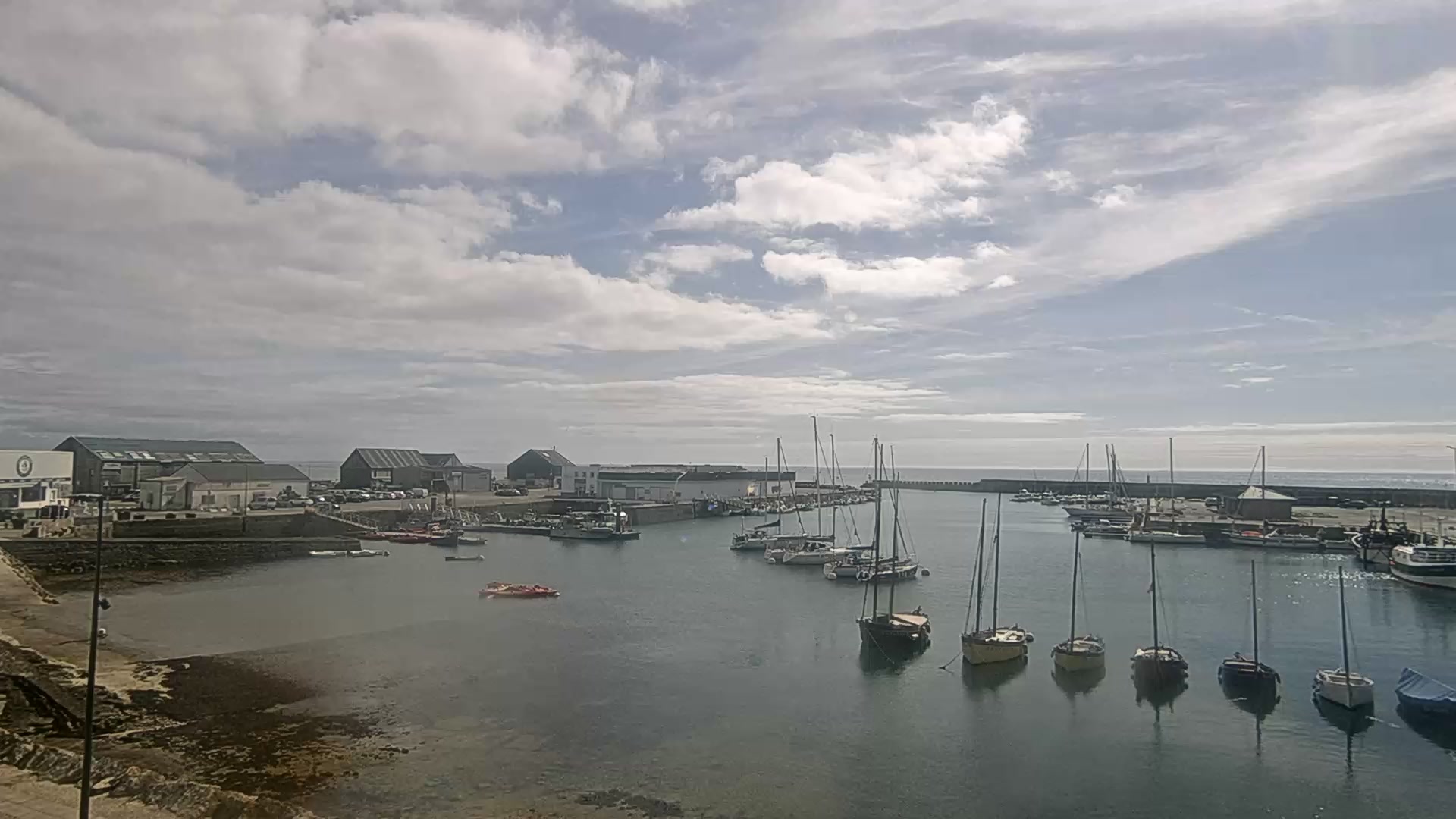
Where Plobannalec-Lesconil is located
In northwestern France, where the Bay of Biscay meets the rugged cliffs of Brittany, lies the small commune of Plobannalec-Lesconil. This is the southern coast of the Finistère department — the land's end, as the department's name translates from Latin. The commune is part of the historical region of Bigouden (Cornouaille) — an area with its own vibrant culture, traditions, and recognizable Breton character. Plobannalec-Lesconil sits on the Atlantic Ocean coast, and its landscape is shaped by sandy beaches, granite outcrops, salt meadows, and picturesque harbors. If you haven't been here in person yet, Plobannalec-Lesconil webcams allow you to see this coast in real time — with its waves, fishing boats, and endless horizon.
History of the name: from Plobannalec to Plobannalec-Lesconil
The modern name of the commune has an interesting backstory. Until 2001, it was officially called simply Plobannalec. Only at the beginning of the 21st century was the second part — Lesconil — added to the name, to reflect the significance of the port village within the commune's structure. The Breton name — Pornaleg-Leskonil — preserves the connection to the Celtic past of the region. The prefix "Plou-" (Plu-) in Breton toponymy traditionally indicates a parish or settlement founded in the early Middle Ages, speaking to the deep roots of this place. Today, Plobannalec-Lesconil is home to about 3,180 inhabitants, living in several villages and hamlets scattered along the coast.
Lesconil Port — the heart of fishing
Lesconil Port (Port de Lesconil) is what historically built life in this part of Finistère. A small fishing port with about 100 permanent berths for vessels and overnight mooring capacity for passing boats. In the past, the port specialized in lobster fishing — one of the symbols of Breton cuisine. Today, professional fishing here has almost disappeared, but a few coastal boats still go out to sea and sell their fresh catch right on the shore. The port remains a lively place: yachts sit alongside fishing boats, and in season, tourists come here in search of authentic Brittany. Webcams at the port show this daily life — tides, vessel movements, and the mood of the Atlantic coast.
Ancient stones: the Kerdalaë menhir
Long before the port and villages appeared, these lands were inhabited by people of the Neolithic era. On the territory of Plobannalec-Lesconil stands the Kerdalaë menhir (Menhir de Kerdalaë-Lesconil) — one of the megalithic monuments scattered throughout Brittany. The commune's official website invites travelers to take a walk "Entre mégalithes et croix à Plobannalec-Lesconil" — between megaliths and crosses. The Kerdalaë menhir is a vertically standing stone, estimated to be several thousand years old. Such structures are usually associated with ritual practices or astronomical observations by ancient inhabitants of Armorica. Around Plobannalec-Lesconil, megaliths sit alongside traditional Breton stone crosses, creating a unique landscape where the prehistoric past intertwines with medieval Christian heritage.
Kereminih Beach and the coastline
The coastline of Plobannalec-Lesconil is not just rocks and a port, but also sandy beaches that attract swimmers and sea walk enthusiasts. Kereminih Beach (Kereminih) is located on the southern coast of Finistère, between the communes of Guilvinec and Loctudy. This is a place with fine sand, protected from strong winds by granite outcrops. A campsite is nearby, making the beach a convenient base for family holidays. At low tide, a wide coastal strip exposes rocks and pools where you can observe marine life. The Atlantic Ocean here is cool even at the height of the season, but the landscapes — with a wide horizon line and changing light — are worth spending several hours here.
Saint-Oual Point and the GR 34 hiking trail
Saint-Oual Point (Pointe de Saint-Oual) is one of the natural landmarks of Plobannalec-Lesconil. It offers panoramic views of the coastline and the open ocean. Near the point runs the GR 34 — the famous Breton hiking trail, which stretches for thousands of kilometers along the entire coast of the region. This route is considered one of the most scenic in France: it passes by cliffs, beaches, fishing villages, and megalithic complexes. In the Plobannalec-Lesconil area, the GR 34 allows you to combine a coastal walk with viewing local attractions — from the Kerdalaë menhir to Lesconil Port. For those who can't walk, the town's webcams offer the chance to see these landscapes in real time.
Bigouden: the cultural heritage of Brittany
Plobannalec-Lesconil lies at the very heart of Bigouden — a historical region in southwestern Brittany known for its unique cultural identity. Bigouden is famous for traditional Breton costumes, a distinctive embroidery style, and, of course, the tall conical hats of the Bigoudènes — headdresses of local women that have become one of the symbols of the region. The Breton language is still heard on the streets here, and local festivals and celebrations maintain a connection to the Celtic past. The commune is part of the Finistère department, but its cultural roots are precisely in Bigouden, with its special dialect, cuisine, and relationship with the sea. This is a place where traditions are not museum pieces but living — they manifest themselves in architecture, in the daily rhythm of port residents, in stone crosses by the roads.
What the cameras show
This page features Plobannalec-Lesconil webcams available for real-time viewing. The broadcasts cover key locations of the commune: Lesconil Port with its harbor and fishing vessels, the coastline with views of the Atlantic, as well as the central parts of the village. You can observe the weather on the southern shore of Finistère, watch the tides at the port, see the movement of yachts and fishing boats. The cameras are live — choose the broadcast you want and watch Plobannalec-Lesconil from anywhere in the world. It's a convenient way to plan a trip, check the weather before heading out on the GR 34 trail, or simply enjoy the atmosphere of the Breton coast without leaving home.