

🏙️ Webcams Penmarc'h Online — Watch in Real Time
1 cameras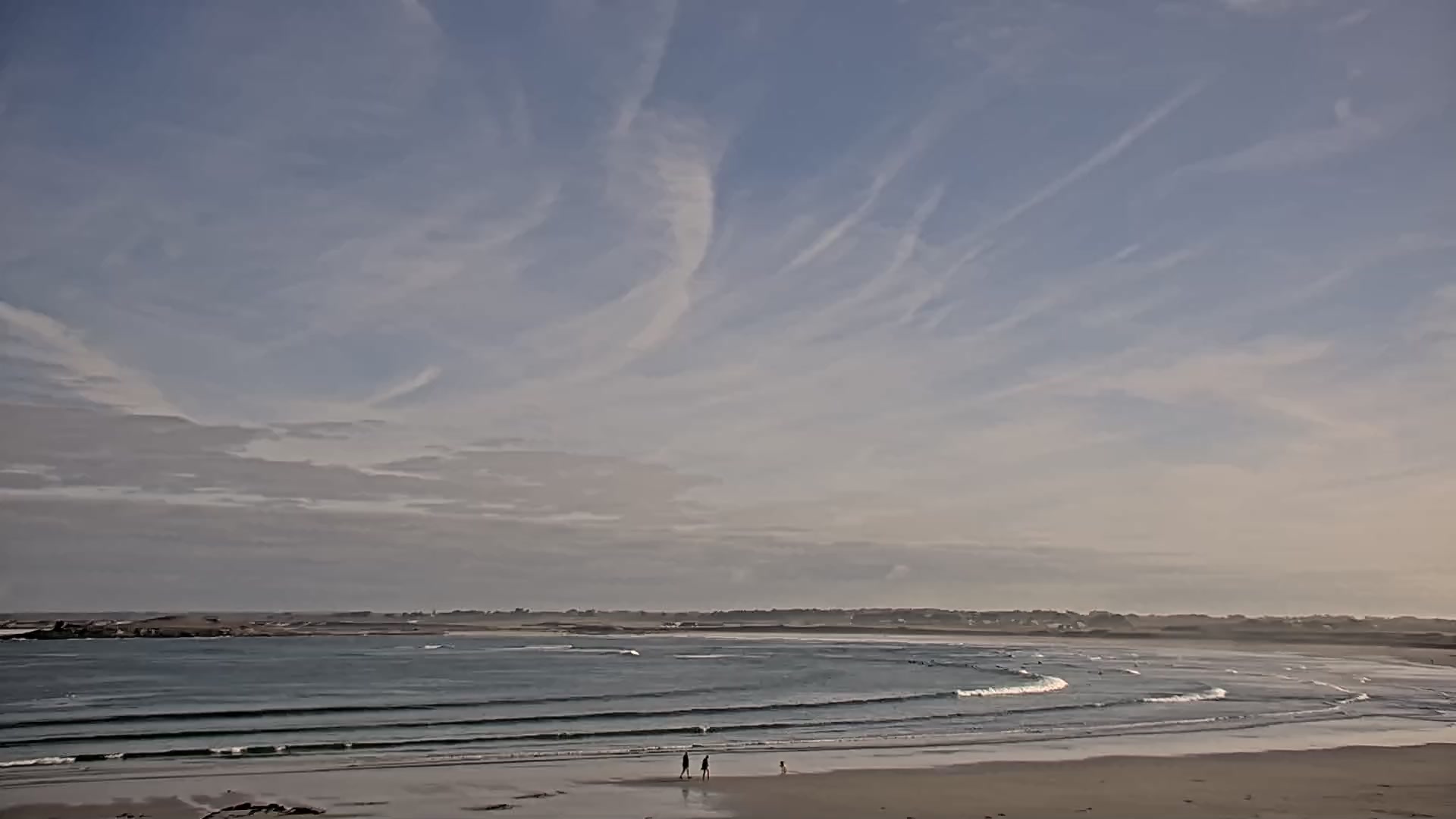
Penmarc'h — the edge of Brittany where land meets the ocean
At the very southwestern tip of the historic Bigouden region, where the Atlantic Ocean crashes into the coast of the Finistère department, lies a small commune with a rugged character and rich history. Penmarc'h is a place where megoliths stand alongside fishing trawlers, and sandy dunes give way to rocky cliffs. The commune's population is around 5,130 residents across 16.4 km², but each one is connected to the sea in some way.
Four districts — the town center, Kerity, Saint-Pierre, and Saint-Guénolé — stretch along 14 kilometers of coastline. This coast does not pamper travelers with calm bays: the Bay of Audierne, which includes the Penmarc'h shoreline, has long been known as one of the most dangerous shipping areas in all of Brittany.
Eckmühl Lighthouse — a giant on the edge of the world
The main landmark of Penmarc'h, visible from many kilometers away, is the 65-meter Eckmühl Lighthouse. It is one of the tallest lighthouses in the world, and climbing to its top platform means seeing the entire Bay of Audierne from Pointe du Raz to the horizon. The lighthouse stands on Saint-Pierre point, the westernmost tip of the commune, and has served as a navigational aid for ships for over a century.
The history of this giant began not with the sea, but with military glory. The lighthouse is named after the title of Marchioness Adélaïde-Louise d'Eckmühl de Blocqueville, daughter of Marshal Louis-Nicolas Davout — one of Napoleon's most brilliant military commanders. It was she who bequeathed the funds for the construction of the new lighthouse, which took place from 1893 to 1897. On October 17, 1897, the lighthouse was ceremonially opened, and since then its beam has scattered the darkness over one of the most treacherous stretches of the Atlantic coast.
Before Eckmühl, a modest 1835 lighthouse stood on this site, and even earlier — a 14th-century tower. But it was the new lighthouse that became the light so desperately needed by sailors. The Penmarc'h coast was called the "Cauldron of Hell" in the 19th century — so frequent were the shipwrecks here. The powerful sandbar of the Bay of Audierne, hidden beneath the water, smashed vessels against the reefs, and only the new powerful lighthouse could somewhat secure this area.
Saint-Guénolé — a fishing port with character
The northwestern district of Penmarc'h, Saint-Guénolé, is a separate world living by the laws of tides. Here lies one of the most important fishing ports in southern Brittany, specializing in trawling and coastal fishing. Saint-Guénolé Port is among the leaders in catch volume among French ports, and its fleet works in Atlantic waters year-round.
What do local fishermen catch? Sea catfish, pollock, rays, turbot, and lobsters — all of this can be seen at the dock in the early morning hours when trawlers return from the night catch. The port is located north of Penmarc'h headland, in the sheltered La Jouanne cove, making it a relatively safe harbor in this harsh region.
Bay of Audierne — the dangerous beauty of the Atlantic
The Penmarc'h coastline is part of the vast Bay of Audierne, which stretches from Pointe du Raz to Pointe de Penmarc'h for over 40 kilometers. This arc of Atlantic shore has long been terrifying for sailors: a powerful sandbar hidden beneath the water created a deadly trap for sailing vessels. In the age of sail, shipwrecks here were commonplace, and only the construction of lighthouses, including Eckmühl, made navigation somewhat safer.
Today the Bay of Audierne is protected by the Coastal Conservancy, which safeguards 641.7 hectares of unique natural landscapes. Sand dunes, salt marshes, rocky outcrops — all create an ever-changing landscape that transforms every few hours with the tide.
Ancient megaliths and Celtic heritage
Penmarc'h is not only maritime history. The commune's territory was settled long before our era, as evidenced by numerous megaliths scattered throughout the surrounding area. Standing stones, dolmens, and stone circles — traces of people who lived here thousands of years before the first lighthouse or fishing port appeared.
The Bigouden region, the historic area to which Penmarc'h belongs, maintains a strong Celtic identity. Local traditions, festivals, and even the character of the inhabitants bear the imprint of Breton culture, which here is not folklore but everyday reality.
Climate and nature of the Atlantic coast
The Atlantic Ocean dictates the rules of life in Penmarc'h. A mild but humid climate with strong winds creates the special atmosphere of this place. In winter, storms turn the coast into a theater of the elements, and in summer tourists enjoy beaches that in good weather seem almost Mediterranean.
Penmarc'h is located about 30 kilometers southwest of Quimper, the capital of Finistère, and is the southwesternmost commune of Bigouden. This position makes it an ideal starting point for exploring the entire southwestern coast of Brittany.
How webcams help you see Penmarc'h
Not everyone can travel to the edge of Brittany right now, but technology allows you to see Penmarc'h in real time. Webcams installed at key points in the commune broadcast live streams from the coast, port, and surroundings. It's an opportunity to watch how the light changes on the Eckmühl Lighthouse, how fishermen unload their catch in Saint-Guénolé, how tides transform the shoreline.
Online streaming from Penmarc'h webcams is not just a picture on a screen. It's a way to feel the rhythm of life of a Breton fishing village, to appreciate the scale of Atlantic storms or, conversely, enjoy a calm sunset over the Bay of Audierne. For those planning a trip here, webcams are a great way to assess the weather and atmosphere of the place in advance.
What the cameras show
Penmarc'h webcams cover the main points of interest: the Eckmühl Lighthouse and Saint-Pierre point, the fishing port of Saint-Guénolé, the central part of the commune, and the Bay of Audierne coastline. The cameras operate in real-time mode, allowing you to observe the life of the city around the clock. Choose the stream that interests you — and you'll find yourself on the edge of the Atlantic without leaving home.