

🏙️ Paris Webcams Online — Watch in Real Time
4 cameras
City of Light: Why Paris Never Sleeps
Paris is a place where every facade breathes history and the Seine embankments hold centuries of reflections. This city earned the nickname La Ville Lumière — the City of Light not only because of its early adoption of electric lighting, but also because it became the intellectual capital of the Age of Enlightenment. Today Paris remains one of the most visited cities on the planet, and webcams let you see it at any time of day — from morning mists over the Seine to the evening lights of Montmartre.
Paris's uniqueness lies in the fact that it is simultaneously an open-air museum and a living metropolis. Here medieval streets coexist with wide 19th-century boulevards, and an entire underground world hides beneath your feet. Live streams offer the chance to observe this urban pulse without leaving home.
Architectural Identity: How Haussmann Reshaped Paris
Modern Paris owes its appearance to a massive mid-19th century reconstruction. In 1853, Emperor Napoleon III appointed Georges-Eugène Haussmann as Prefect of the Seine department with the task of modernizing the medieval city, which was considered unsanitary and unsafe. Over 17 years, Haussmann demolished approximately 12,000 old buildings — roughly 60% of old Paris — and laid out wide, straight boulevards.
Narrow medieval streets were easy to barricade, while wide avenues allowed the army to move quickly and deploy artillery. But Haussmann didn't think only about military strategy. He established strict rules for facades: buildings had to be constructed from travertine limestone, have a uniform height (usually 20 meters), matching roof colors, and mandatory balconies on the 2nd and 5th floors. That is why Parisian neighborhoods look so harmonious.
In addition to the boulevards, Haussmann created a modern sewage system, an aqueduct, and famous parks — Bois de Boulogne, Parc des Buttes-Chaumont, Parc Monceau. He transformed Paris into a modern capital while preserving its unique charm. Today, watching the city through webcams, one can appreciate the scale of this urban revolution — from Boulevard Haussmann to Place de l'Étoile.
Eiffel Tower: A Symbol That Might Never Have Appeared
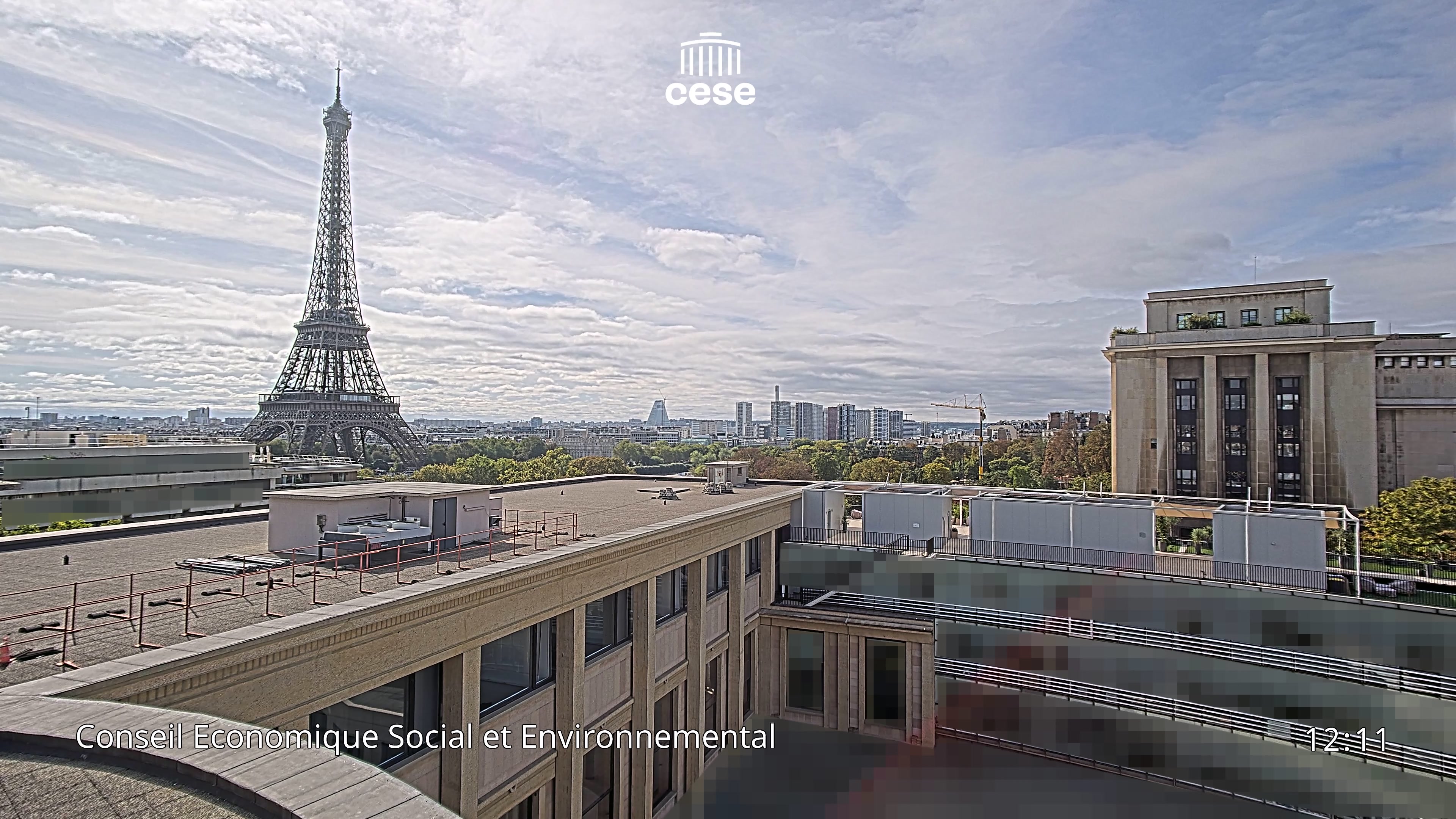
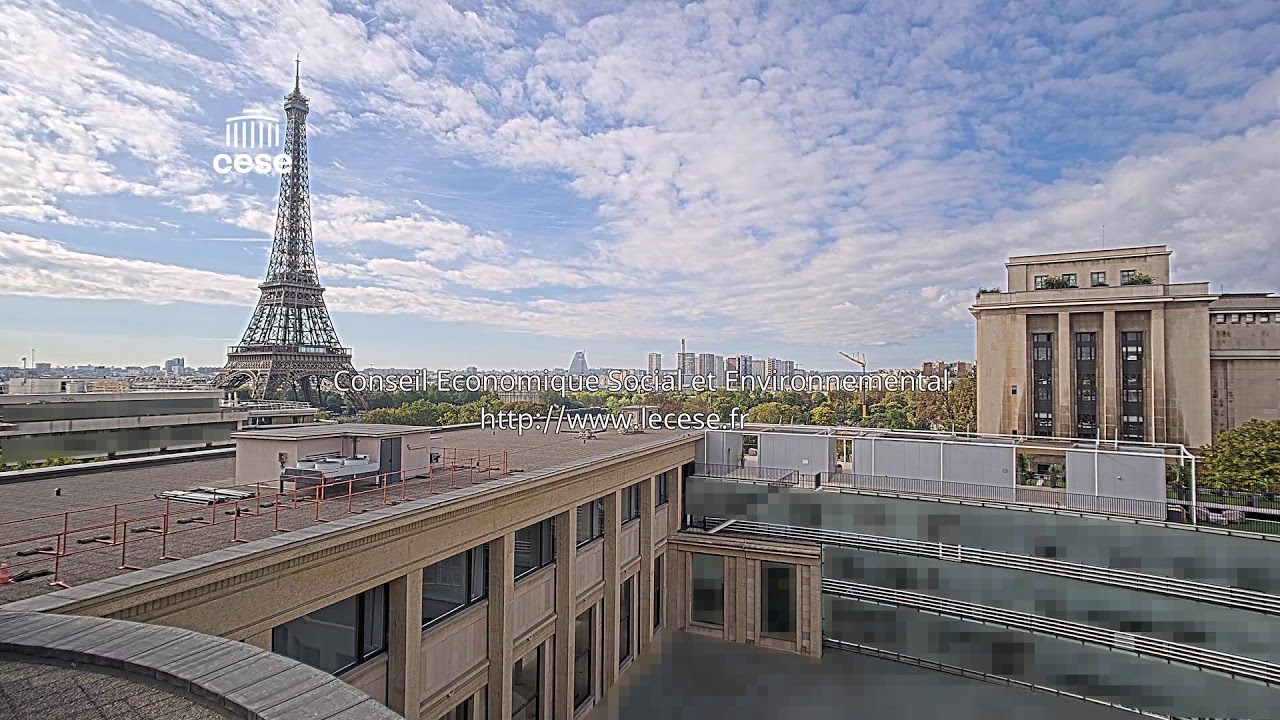
The Eiffel Tower is Paris's main calling card, but few know that it was built as a temporary structure. The metal framework was erected for the 1889 World's Fair and was supposed to stand for only 20 years. The tower was saved by its use as a radio mast — this is what allowed it to avoid demolition.
Gustave Eiffel had a private apartment at the very top with a piano, where he sometimes hosted Thomas Edison. Today, wax figures of Eiffel and Edison are on display there. And the tower can actually grow by 15 cm in summer due to thermal expansion of the metal. To prevent the structure from rusting, it is repainted every 7 years, using about 60 tons of paint.
During the Nazi occupation of Paris, the tower's elevators were disabled, so Adolf Hitler never made it to the top. In 1944, he ordered the tower to be blown up, but General Dietrich von Choltitz disobeyed. Today, the tower is not just an architectural monument, but a symbol of the city's resilience, which can be observed in real time through online cameras.
Underground Paris: The Secrets of the Catacombs
Beneath the streets of Paris lies an entire world — a labyrinth of catacombs stretching for hundreds of kilometers. The catacombs contain the remains of over 6 million people and were created in the late 18th century to solve the problem of overflowing city cemeteries. The remains were transferred from the Cemetery of the Innocents to former quarries, creating a haunting but magnificent ossuary.
In the underground passages, there is a secret pool accidentally discovered by police in 2011. It is located in an equipped cinema created by a secret society of "cataphiles" — illegal underground explorers. During World War II, French Resistance fighters used the catacombs to organize shelters, and German soldiers built an underground bunker there.
In the 19th century, champignons were successfully grown in the catacombs at depths of tens of meters, and wine was stored there, since a constant temperature of about 14°C is maintained. Today, only a small portion of the catacombs is officially open to tourists, but cataphiles continue to explore the remaining tunnels. Webcams on the surface show the entrance to this underground world and the surrounding 14th arrondissement.
Hidden Gems: What You Won't Find in a Guidebook
Paris is full of places that don't appear in standard tourist guides. Hidden in the Latin Quarter are the Arenes de Lutece — a 1st-century Roman amphitheater that was only discovered in the 19th century during street construction. Today it is a quiet park where locals play pétanque, and tourists rarely venture into this corner.
Another hidden attraction is the Little Belt Line (La Petite Ceinture) — an abandoned 19th-century circular railway that once encircled Paris. Now it is a wildlife oasis open to pedestrians. Here you can see wild orchids, butterflies, and even foxes, while old tunnels and bridges create the atmosphere of a post-apocalyptic film.
At the Hôtel-Dieu hospital is the Wax Cast Museum — a eerie place housing a collection of realistic wax casts of human bodies showing the effects of venereal diseases, tumors, and smallpox. And at Place de l'Abbé Pierre in Montmartre is the Wall of Love — a 40 sq m wall on which "I love you" is written in 311 languages of the world. These places rarely make it into tourist photos, but online cameras sometimes capture their surroundings.
Neighborhoods and Atmosphere: From Montmartre to the Latin Quarter
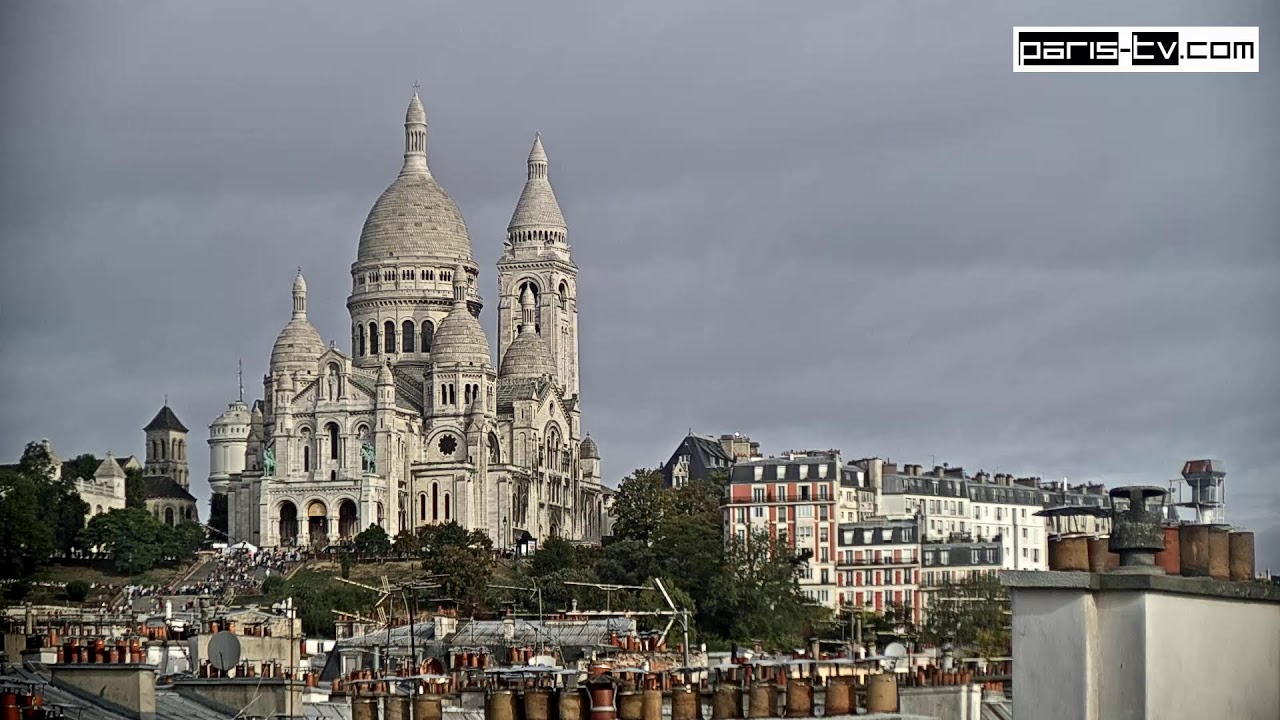
Paris consists of twenty municipal arrondissements, each with its own character. Montmartre is bohemian spirit, the hill with the Sacré-Cœur Basilica, and Place du Tertre where artists paint portraits. The Latin Quarter is student bustle, the Sorbonne, and bookshops. Le Marais is the oldest district with 17th-century mansions and trendy boutiques. Saint-Germain-des-Prés is literary heritage and cafés where Sartre and de Beauvoir gathered.
You can observe life in these neighborhoods through webcams installed at intersections and squares. Morning Paris is bistros with espresso and croissants, evening Paris is boulevard lights and street musician melodies. Each arrondissement has its own rhythm: the 1st with the Louvre and Tuileries Garden is more touristy, while the 13th with its Chinatown and modern architecture is more local and lively.
Traditions and Laws: Strange Rules of the City of Light
France is a country with surprising laws. Marriage to a deceased person is legal — you need to prove that the deceased intended to marry and obtain personal permission from the president of the country. And kissing on railway station platforms is prohibited — the 1910 law was passed to prevent train delays caused by saying goodbye passengers.
In Paris, it is forbidden to throw glass bottles and cans into trash bins during daytime — this can only be done during strictly designated evening hours, otherwise a fine is imposed. And there is an unwritten but strictly observed law of politeness: if you enter an enclosed space or address a person, you must say "Bonjour." Failure to observe this rule is considered extremely rude.
These traditions shape the unique atmosphere of Paris — a city where formality and politeness coexist with bohemian freedom. Online cameras allow you to see how Parisians follow these rules in everyday life — from a morning greeting at the bakery to an evening apéritif.
Weather and Best Time for Observation
Paris has a temperate oceanic climate — mild winters, warm summers, but changeable weather. The best time to watch the city via webcams is spring (April-May) and early autumn (September-October), when the sky is more often clear and the light is soft and golden. In summer, the city is overcrowded with tourists, and in winter it is often overcast.
Morning in Paris starts early — around 7-8 am, the first pedestrians appear on the streets and bistros open. In the evening, the city lights up with thousands of lights — the illumination of the Eiffel Tower, bridges, and facades creates that very "City of Light" atmosphere. At night Paris does not fall asleep — the Seine embankments are lit, and life buzzes in bars and restaurants.
Webcams let you see Paris at different times of day and in different seasons — from cherry blossoms in the Tuileries Garden in spring to Christmas markets on the Champs-Élysées in winter. Each season reveals the city from a new perspective.
What the Cameras Show
Paris webcams cover key points of the city — from the Eiffel Tower and Notre-Dame to boulevards and embankments. Cameras on the Eiffel Tower show a panorama of the city from a height of 324 meters, while cameras at Place de la Concorde offer a perspective of the Arc de Triomphe. Live streams from Montmartre reveal views of the Sacré-Cœur Basilica and the entire city below.
Cameras on the Seine embankments show river life — excursion boats, bridges, and booksellers' stalls. Cameras in the Latin Quarter and Le Marais convey the atmosphere of ancient streets, while cameras in La Défense show the modern look of the business district with its skyscrapers. Some cameras are installed in parks and gardens, allowing you to observe nature within the city.
When choosing a camera, it's worth considering the time of day and weather conditions — morning Paris differs from evening, and clear skies reveal the panorama better than overcast weather. Live streams give you the chance to see the City of Light as it is right now — alive, pulsing, ever-changing.