

🏙️ Dieppe Webcams Online — Watch the City in Real Time
1 cameras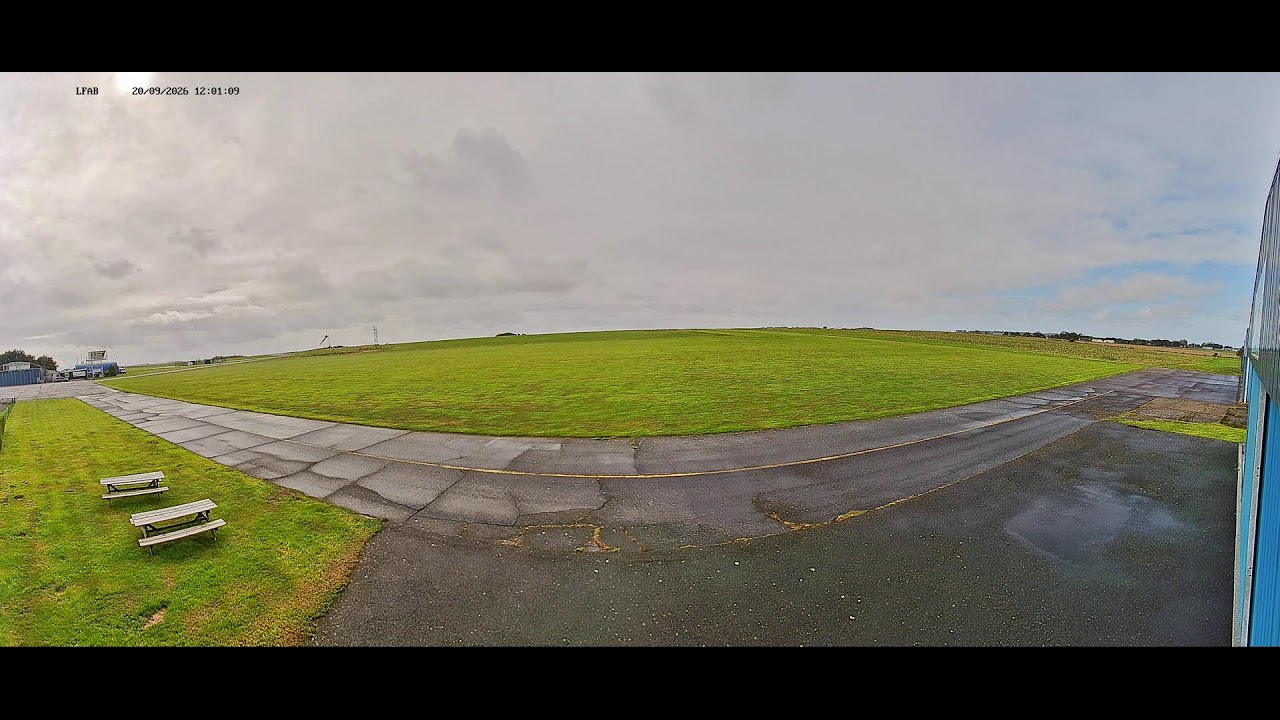
On the map of Normandy, few towns know how to defy expectations quite like Dieppe. From afar, it looks like an ordinary seaside town on the shores of the English Channel: a harbor, a pebble beach, yachts at their moorings. But step off the train and walk a couple of blocks, and it becomes clear that you are standing in a place with a thousand-year biography: a pirate capital, the cradle of French cartography, the site of the boldest amphibious operation of World War II. That is exactly why watching Dieppe live is so fascinating — every corner of the harbor holds traces of several eras at once.
A Fishing Village That Survived the Vikings
The first written mention of Dieppe dates back to 1030, when it was still a modest fishing settlement at the mouth of the Arques River. Legends push the history even deeper — they tell of Vikings who supposedly founded the settlement in the early 10th century. It is impossible to verify this now, but the character of the place speaks for itself: a convenient harbor sheltered from storms — exactly what northern seafarers were hunting for along the entire Alabaster Coast. More details about these pages of history can be found in the article about Dieppe.
By the time of the Hundred Years' War, the small port had become an important strategic point fought over by the English and the French. And in the 16th century, the main thing happened: Dieppe became one of the leading centers of national cartography and a major seaport of the kingdom. Expeditions to the shores of North America and Africa were equipped here, and local corsairs rivaled the famous pirates of Saint-Malo on equal terms. This period is well covered in the Dieppe travel guide: the city was, in effect, the navigational capital of France.
The Harbor That Feeds the Whole City
The heart of Dieppe is its port. It is still an active fishing port, the largest in France in this sector: every morning, the freshest oysters, Saint-Jacques scallops, crabs, and lobsters are sold here. The scallop has become the city's gastronomic symbol — local chefs prepare coquilles Saint-Jacques in dozens of ways, and restaurants around the harbor compete for the right to call themselves the best. A live view of the port docks, where fishermen unload their catch, is one of the reasons why Dieppe webcams are so popular among those who miss Normandy. A brief overview of the city and its cuisine is available in the Dieppe guide.
The Duquesne and Henri IV quays frame the harbor on both sides, and a walk along them is the best way to feel the rhythm of the city: seagulls, the cries of traders from the fish market, the smell of salt and seaweed. A drawbridge spans the harbor — its raising and lowering is a little show in itself.
The Castle on the Cliff: The Strongest Fortress of the English Channel
Above the town, on the headland, rises the Château de Dieppe — a citadel called the best-preserved defensive structure on the entire English Channel coast. Its history is dramatic: the fortifications were founded at the end of the 12th century, soon destroyed, and rebuilt in the 14th century — a rectangular fortress with round corner towers and an inner courtyard. The oldest, western tower dates precisely to the 14th century, and the castle walls were connected to the city's own fortifications into a single defensive belt. A good description of the fortress is in the article about Dieppe.
The castle also survived the heavy bombardment of the late 17th century, when the Anglo-Dutch fleet blockaded the port, and the city itself was virtually wiped off the face of the earth — not all buildings survived, but the fortress was later restored. Today, the museum inside houses a unique collection of ivory items, antique nautical charts, and ship models — the legacy of that very 16th-century cartographic glory. The terrace offers the best panoramic view of the rooftops, the harbor, and the sea horizon, and it is this elevated vantage point that is a favorite for those looking for a live camera view of Dieppe.
The Saint-Jacques Church and the Old Pollet Quarter
The city's main architectural masterpiece is the Saint-Jacques church. Its construction began in the 12th century but was only completed in the 16th, which is why the Romanesque foundation and the flamboyant Gothic of the facade are blended in its appearance. The bell tower rises 42 meters and is visible from almost everywhere — from the beach, from the port, from the streets of the Old Town. The Church of Saint-Remi from the 16th–17th centuries, set deep within the quarters, is no less interesting.
And right in the center hides Le Pollet — an old fishing quarter with crooked streets, Norman-style houses, and an air that seems unchanged for centuries. Once it was a separate island at the river mouth, later — a self-contained world of sailors. It is best to wander here without a plan: every window and sign is like a frame from an old film. If you want to "scout" the routes in advance, it is most convenient to watch a webcam in the center of Dieppe online and choose your streets ahead of time.
The Pebble Beach and Resort Traditions
Dieppe's beach is not sandy but pebbled, and that is its signature feature: large, smooth pebbles stretch along the coast for a good fifteen kilometers. Walking on them takes some getting used to, but the view of the English Channel from here is clean and open, and the loud rustle of pebbles under the waves — a sound that is hard to forget. Since the 19th century, Dieppe has been a fashionable resort: Parisian high society vacationed here, and the seafront boulevards were lined with villas in the English style. A brief portrait of the city with figures can be found on the page about Dieppe.
A wide promenade runs along the beach with a casino and thermal traditions: people once came here "to the waters," to drink mineral water and breathe iodized air. Today it is a place for evening strolls and a point from which a panorama of the port and the lighthouse opens up.
The 1942 Raid: The Darkest Day in the City's History
Dieppe is not just about fish and pebbles. On August 19, 1942, the famous "Dieppe Raid" (Operation Jubilee) took place here — an amphibious landing by Britain and Canada, one of the most controversial operations of World War II. The landing force encountered well-prepared defenses, Allied losses were enormous, but it was this failed raid, in the opinion of many historians, that became the school for the future Normandy landings. Details of the operation are collected in a separate article about the Dieppe Raid.
The memory of those events is carefully preserved: memorials have been installed on the beach and the promenade, and the Canadian cemetery outside the city is one of the most touching places in Normandy. Local museums hold testimonies of that day, and tours of Dieppe's wartime sites are now a separate tourism niche.
Surroundings: Fortresses and Artistic Villages
Dieppe is an excellent base for day trips along the Seine-Maritime. A couple of kilometers from the town stands the impressive Château d'Arques-la-Bataille — ruins atop a dry rocky hill, rising above two valleys and surrounded by an artificial moat. From here, the entire area was once controlled, and today it is one of the most atmospheric spots for photography in Normandy. A list of the main attractions of the city and surroundings is in the section on Dieppe's attractions.
Along the Alabaster Coast, resort villages are scattered — Varengeville-sur-Mer with its white cliffs and Dieppe-la-Pucelle, where people once came to take the waters. This entire coastal strip is united by a single theme: low whitish cliffs, green plateaus, lighthouses, and tiny harbors. Science and the sea coexist here, even in Dieppe itself: the Estran Cité de la Mer science and cultural center tells the story of the English Channel, maritime crafts, and navigation.
Why Watch Dieppe Through a Camera Lens at All
There is a special kind of pleasure: watching a foreign city in real time. Dieppe is perfect for this because it lives in plain sight — its entire life unfolds in the open space of the harbor and the quays. The tide changes the picture at the docks, fishing boats leave and return, clouds drift over the old town, bringing either clear skies or drizzle from the English Channel. For those planning a trip, live streams help understand the city's atmosphere without glossy postcards; for those who have already visited, it is a way to relive a walk through Le Pollet or an evening by the lighthouse.
What the Cameras Show
Dieppe's panoramas cover its main focal points. The first and foremost is the harbor: cameras on the docks show the fishing port, the drawbridge, and the masts of boats, as well as the changing weather over the strait. The second is the beach and promenade: the pebble shore, the waves of the English Channel, the resort strip with the casino and the lighthouse in the distance. The third is the old town and its towering landmarks: the bell tower of Saint-Jacques, the silhouette of the Saint-Remi church, and the roofs of the Pollet quarter. A separate vantage point is the castle on the headland, from which the entire town and the sea horizon are visible; views from this direction convey the scale of the fortress. Finally, individual streams come from coastal villages — Varengeville-sur-Mer and Dieppe-la-Pucelle, where the white cliffs of the Alabaster Coast meet the sea. Choose your angle — and Dieppe, the thousand-year port of Normandy, will open up to you live, with all its tides, seagulls, and the smell of salt.