

🏙️ Hendaye webcams online — watch the city in real time
1 cameras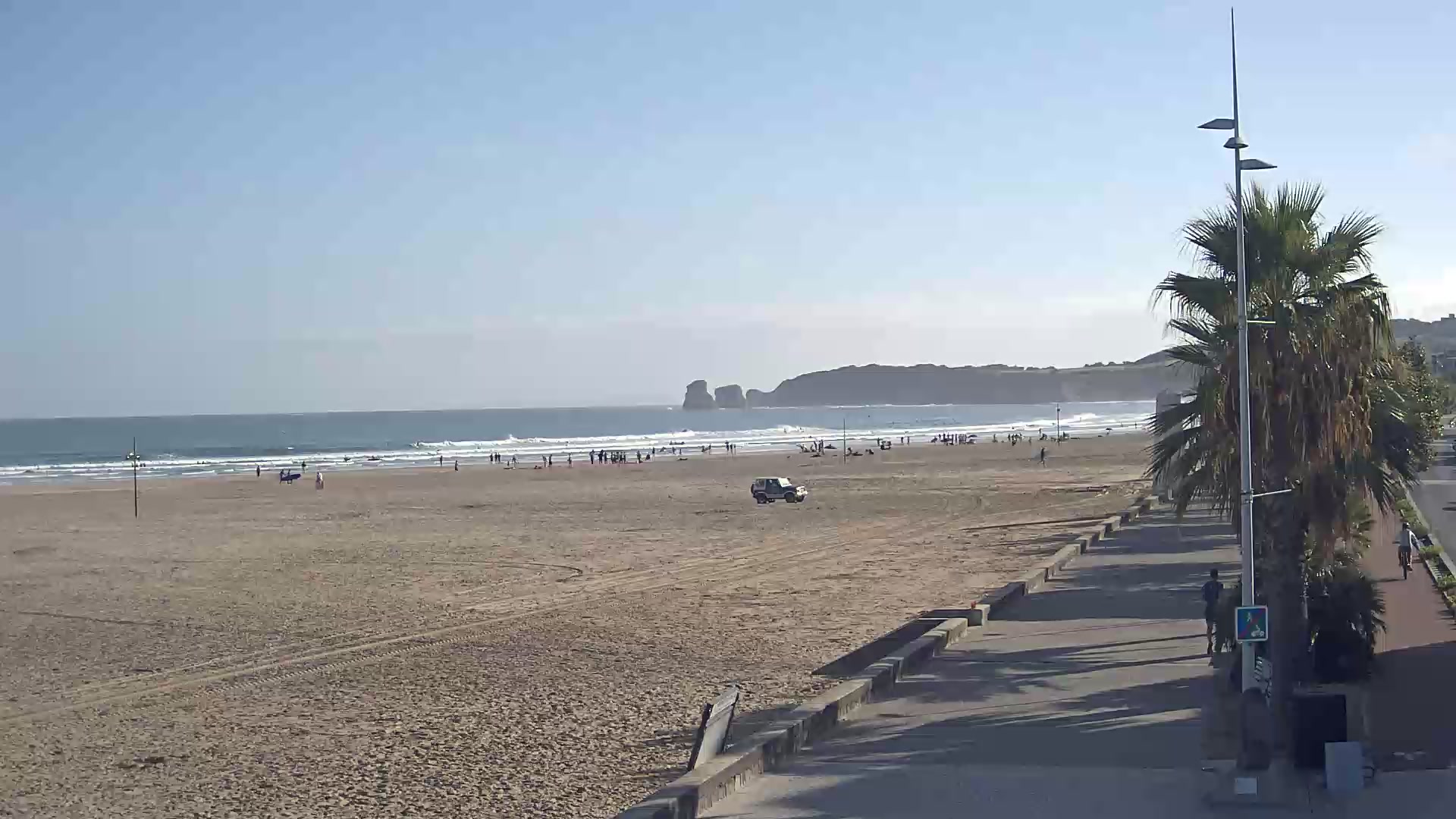
Hendaye — the edge of France on the Bay of Biscay
At the very southwestern tip of France, where the Pyrenees meet the Atlantic Ocean, lies Hendaye — a city often called the gateway to the country. It is the terminus of high-speed TGV trains from Paris and simultaneously the first French settlement for those entering from Spain. The city belongs to the French Basque Country, a special cultural region in the Pyrénées-Atlantiques department, where Basque traditions intertwine with the French way of life. Hendaye webcams allow you to see this unique cultural blend in real time — from the architecture of buildings to the rhythm of the streets.
Hendaye's population in 2026 is estimated at 19,010 people — a notable increase compared to 14,041 residents in 2006. The annual growth rate is about 1.64%, which speaks to the city's attractiveness for new residents. Hendaye is not an open-air museum but a living, breathing settlement where tourists and local Basques share the same streets, cafés, and promenades. The city stretches along the coastline, and from almost any point, there is a view of the ocean or the green slopes of the Pyrenees.
Geographical location and border with Spain
Hendaye is located on the shore of the Bay of Biscay, right on the border with Spain. The Bidasoa River separates it from the Spanish city of Irun, and in the middle of the river lies the famous Pheasant Island — a neutral territory that changes hands between the two countries every six months. It was here, on this tiny island, that the Treaty of the Pyrenees was signed in 1659, ending the Franco-Spanish War. The island is uninhabited and closed to visitors, but it can be seen from the Hendaye promenade or during a walk along the river.
The border between France and Spain in Hendaye can be identified by two notable rocks in the ocean, called the Twins (Bizkiak in Basque). These stone giants were originally attached to the shore, but over centuries of marine erosion, they have become two separate formations at the end of the beach. They serve as a natural landmark and symbol of Hendaye's coastal landscape. In a storm, waves crash against them with force, creating an impressive spectacle that can be observed through webcams installed on the promenade.
Historical heritage: from Martin Guerre to Pheasant Island
Hendaye's history goes back to ancient times, but one of the most famous chapters is associated with Martin Guerre — a 16th-century French peasant whose story became the basis for the famous impostor case. Martin Guerre disappeared from his village, and years later a man appeared claiming to be him. This case became one of the most discussed trials of the Renaissance era and still inspires writers and filmmakers. The Martin Guerre case was tried in Toulouse and became a precedent in the history of European justice.
Pheasant Island on the Bidasoa River is a unique diplomatic phenomenon. This tiny piece of land belongs to France for half a year, then passes to Spain for the next six months. This arrangement has existed since 1659, when the Treaty of the Pyrenees was signed here. The island is uninhabited and closed to visitors, but it can be seen from the Hendaye promenade or during a walk along the river. This place reminds us of the complex history of relations between the two countries and how the border runs not only over land but also over water.
Architectural gems: Abbadia Castle and the Great Cross
Among Hendaye's architectural attractions, Abbadia Castle stands out — a monument from the second half of the 19th century, included in the list of historical monuments of France. The castle's façades and roof, as well as its interiors — the lobby, staircase, and corridors — are protected by the state. Visits are only possible with a guide, the tour lasts about 50 minutes and costs €9.90. The castle was built at the request of explorer Antoine d'Abbadie and combines neo-Gothic elements with oriental motifs. Inside, original interiors, a library, and an observatory have been preserved, offering a view of the ocean.
On the city's central square stands the Great Cross of Hendaye — a stone cross that attracts attention with its mysterious symbols. Signs carved on its surface are associated with apocalyptic beliefs of Christianity, Rosicrucianism, and alchemy. For lovers of mysteries and esotericism, this cross has become a place of pilgrimage, although for most tourists it remains simply a beautiful historical object. The cross is located on Place de la République, which is the heart of the city and a meeting place for locals.
Nature and beaches: the Twins and endless sand
Hendaye's beach is one of the longest in the French Basque Country: it stretches more than 3 kilometers. Clean fine sand, a gentle slope into the water, and a view of the mountains make it a popular place not only for swimming but also for surfing and bodyboarding. The ocean here is cooler than the Mediterranean, but this is exactly what attracts water sports enthusiasts. Along the beach stretches a promenade with cafés, restaurants, and shops, as well as a bike path that is perfect for morning jogs or evening walks.
The Twins rocks are the hallmark of the coast. Two stone masses standing in the water at the end of the beach are visible from many points in the city. In a storm, waves crash against them with force, creating an impressive spectacle. In calm weather, you can approach their base and examine the geological layers that tell millions of years of this coastline's history. The rocks have become a symbol of Hendaye and often appear on postcards and travelers' photographs.
Cultural identity: the Basque spirit on French soil
Hendaye is part of the French Basque Country, and this is felt at every step. Street signs are duplicated in Basque — this is not an official requirement but a manifestation of local cultural identity. The Basques are one of the oldest peoples in Europe, and their language, unrelated to any known language family, sounds here on par with French. Local residents are proud of their heritage, and this is reflected in the architecture, cuisine, and everyday life.
The local cuisine reflects this cultural blend: Basque pinchos sit alongside French croissants, and regional Irouléguy wines are served in the same bars where you can try Bordeaux. The fish market on the promenade offers fresh catch from the Bay of Biscay, and bakeries bake bread according to ancient Basque recipes. The city regularly hosts farm markets where you can buy local cheese, apple cider, and other products that make Hendaye's gastronomic scene truly special.
What the cameras show
Hendaye webcams allow you to see the city in real time: from the promenade with a view of the Bidasoa River to the central squares and the beach area. The broadcasts show how the light changes on the Twins rocks throughout the day, how the beach loungers fill up in sunny hours, and what the border with Spain looks like from the height of the present moment. Online broadcasts from Hendaye are an opportunity to feel the rhythm of a border city where two cultures and two languages meet.
Watching the tide at the Twins rocks, following the movement of trains at the station, or simply enjoying the view of the ocean — all this is available through webcams installed at key points in the city. The cameras show Hendaye as it is: lively, dynamic, standing on the edge of two countries and two cultures, while preserving its unique Basque soul.