

🏙️ Helsinki webcams online — watch the city in real time
5 cameras


Helsinki webcams online — watch the real city with a compass
Helsinki is the northern pearl of Europe, a city on rocks and water where St. Petersburg architecture meets modern design philosophy. A walk through Helsinki with an online webcam takes you to the streets of the northern capital, where every stone holds the history of ScandicNord. The Finnish capital is situated on 315 islands in the Gulf of Finland, giving the city unique picturesque beauty and water diversity. About 70% of the territory is occupied by green zones, rocks, and sea, creating an ideal balance between urban environment and nature. Underground Helsinki is a network of underground spaces with swimming pools, a golf course, gyms, and even skate parks, making the Finnish capital a true experiment in urban planning and leisure.
History of the northern capital: from trading hub to design center
The founding date of Helsinki is considered to be June 12, 1550, when Swedish King Gustav Vasa issued a decree to relocate the residents of Porvoo to a new location — the hills of the current Arabiа district. The city was originally created as a trading center capable of competing with Tallinn, controlled by the Hanseatic League. Until the mid-18th century, Helsinki remained a small settlement, but its role began to grow after Sweden captured Tallinn in 1561. A particular development leap occurred in the 19th century under the Russian Empire, when the city became the administrative center of the Grand Duchy of Finland.
The history of Helsinki is full of changing eras and cultural influences. The city experienced the Russian period as the residence of emperors, had significant army garrisons, and the status of a port city. In 1917, Finland gained independence, and Helsinki became its capital, maintaining a European sound and Scandinavian character. The first Helsinki Day celebration took place on June 12, 1959, on the initiative of Mayor Lauri Aho and secretary of the Helsinki Society Jorma Varonen, which became a tradition to mark important dates in city life.
Atmosphere of the Scandinavian capital
Helsinki is a compact capital with a population of about 650,000 people, the largest city in Finland and the heart of the Uusimaa region. The city is known for its safety; the crime situation in Helsinki is one of the lowest in Europe, confirming the city's place among the top five safest cities in the world according to various international rankings. Life in Helsinki combines order, coziness, and technological advancement — progressive traffic fine systems operate here, the amount of which directly depends on the offender's income, making road legislation fair and motivating.
The uniqueness of Helsinki is expressed in its cultural and natural diversity. In 2012, the city received the status of World Design Capital, highlighting the attention to architecture, urbanism, and design in everyday life. Coffee plays a key role here — Finns rank first in the world in coffee consumption, averaging about 14 kg of ground coffee per person per year. Helsinki saunas are also unique: there are about 2 million saunas for 550,000 residents, meaning almost 3-4 saunas per person. The Finnish bathing ritual has become an integral part of city life.
Helsinki attractions: where to see the best city in Europe
The central part of Helsinki is a single architectural ensemble created by Ernst Lonnrot in the 1830s. Senate Square with its sculptures and marble staircase is the center of political and cultural life. Helsinki Cathedral with its colonnade towers over the square, and the historical ensemble includes the Government Building, University, and City Hall. Uspenski Cathedral, built in Byzantine-Russian style, stands in the east of the city as a symbol of Helsinki's religious and cultural diversity.
The South Harbor of Helsinki is a commercial and pedestrian zone with Hakaniemi Market, a place where you traditionally get acquainted with Finnish food: smoked salmon from boats, lihapiirakka with meat and rice, seasonal berries, and cardamom buns. The National Museum of Helsinki holds the largest and oldest collections of cultural-historical objects in the country, including exhibitions about Finno-Ugric peoples. Tourists in Helsinki are interested in visiting parks, embankments, and embankments of the Gulf of Finland, where city life takes place in the continuous rhythm of a day off.
Life on water: islands and parks of Helsinki
The island nature of Helsinki gives the city a unique breath. The city's 315 islands are connected by bridges and ferries, forming a living network of communications and recreation. Katajanokka is a historic district on hills with elegant 19th-century mansions, transformed into a modern cluster of housing and commerce. Helsinki parks, such as Suomenlinna, Sibelius Park, and Helsinki Park, create breathing spaces for residents and tourists. Walks along the Spanish islands inevitably lead to the embankments of the Gulf of Finland, where you can observe city life and marine landscapes.
Helsinki transport and Gulf cities
Helsinki's transport system is an example of efficient urbanism. Metro, trams, buses, and ferries create an integrated transport network. Helsinki metro stations often become architectural monuments, expanding the city's cultural space. The Gulf of Finland is a trade route connecting Helsinki with other cities in the Baltic region. The Port of Helsinki plays a key role in the capital's economy and transit transportation. The water history of the city is inextricably linked with the development of trade and maritime communications from the 17th to the 20th century.
Modern Helsinki: design, technology, and urban environment
The modern appearance of Helsinki is determined by its status as a capital of design and technological development. Urban spaces include residential clusters, business districts, shopping centers, and cultural institutions. The underground spaces described above create additional horizons of city life. Design and technology are visible in urban urbanism, architecture, and services, making Helsinki attractive to both residents and tourists from around the world.
What the cameras show in the city
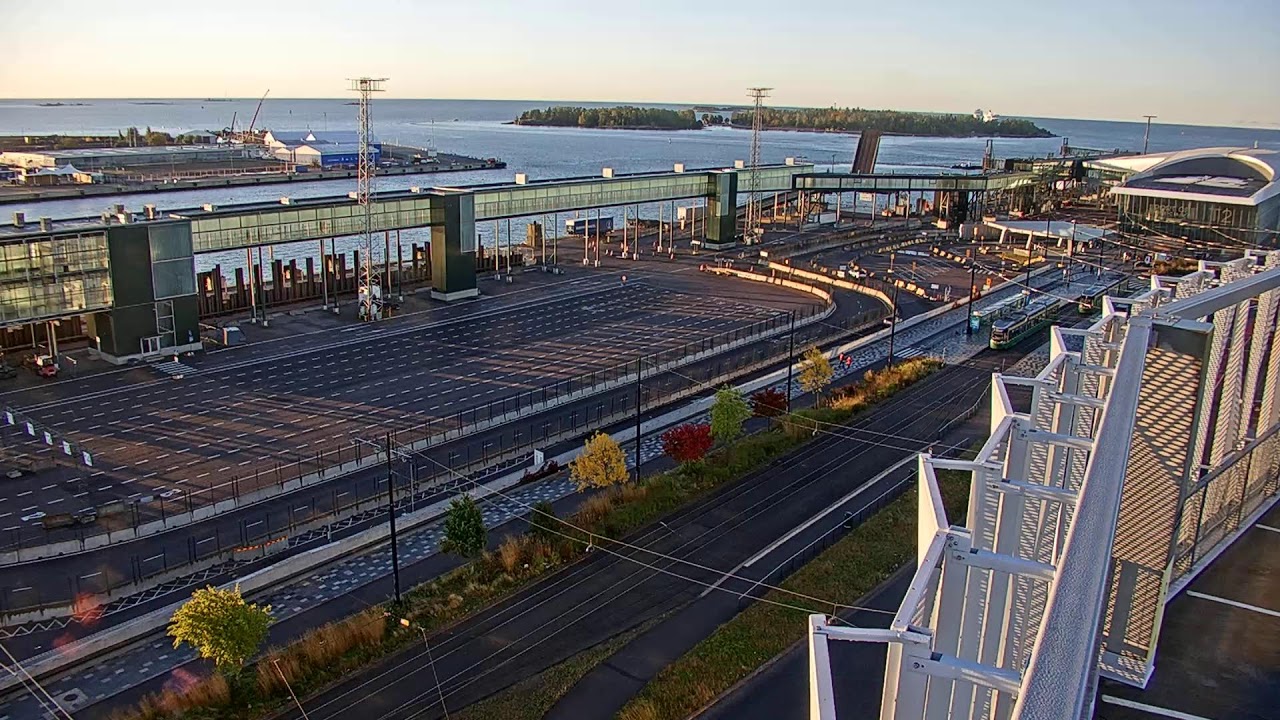
The streets, squares, and embankments of Helsinki are available for observation through webcams broadcasting the real city. Cameras are installed in the center of Helsinki, at Senate Square, at the North and South Harbors, in parks, and on the embankments of the Gulf of Finland. The cameras transmit images of alleys, historical buildings, embankments, and ferry terminals, allowing you to be in the city at any time. Helsinki webcams help plan a visit, get acquainted with the city from the screen, and observe the rhythms of life in the Finnish capital. Market traditions are available through camera shots of market rows and grocery stores. Viewing Helsinki cameras is a way to immerse yourself in the atmosphere of the Scandinavian capital, appreciate its architecture and life in real time.