

🏙️ Webcams Vienna online — watch in real time
3 cameras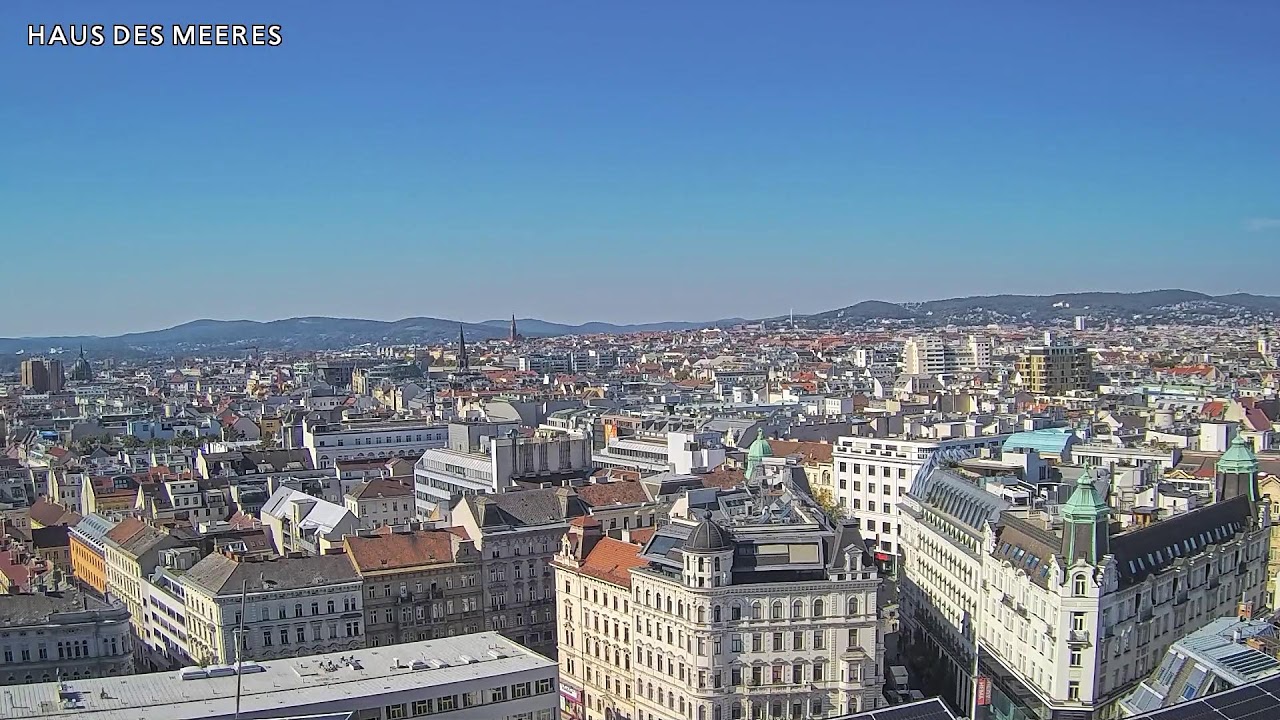

Musical Capital: from Mozart to Schubert
Vienna is a city where music literally hangs in the air. Great composers lived and created here, their names known to everyone. Franz Schubert wrote around 600 songs, and it was Vienna that became his hometown. In the city center, you can visit Mozart's house-museum, where the composer lived and created his famous operas. Every January, the famous New Year's Concert of the Vienna Philharmonic Orchestra takes place — one of the most popular cultural events in the world. The Viennese waltz, which originated here, is still considered the epitome of elegance and style. In the Prater park stands a monument to Johann Strauss — the Waltz King. Vienna's streets are adorned with monuments to composers: sculptures of Beethoven, Mozart, Haydn, and others can be found in almost every district. In 1814, the famous Congress of Vienna took place, where the fate of Europe after the Napoleonic wars was decided.
Coffee Culture: UNESCO Heritage
Viennese coffee culture emerged immediately after the 1683 siege, when Polish translator Jerzy Franciszek Kulczycki opened the first coffee house in Vienna. By the 1910s, there were around 600 establishments, and today there are over 1,100, including nearly 1,000 espresso bars and 200 pastry cafes. In 2011, UNESCO included Viennese coffee culture in the Intangible Heritage list. Typical features of Viennese coffee houses include marble tables, Thonet chairs, booths, newspaper racks, and interior details in the Historicist style. According to UNESCO: "Coffee houses are places where time and space are consumed, but only the coffee is on the bill." Stefan Zweig in his autobiography "The World of Yesterday" calls the Viennese coffee house an "enlightenment center," where one could learn all the news, a democratic club where "anyone, having spent pennies on a cup of cheap coffee, could sit for hours, argue, write, play cards, receive mail, and browse any newspapers and magazines." Among the signature drinks of Viennese coffee houses are Wiener Melange, Einspänner, Franziskaner, and Mozart. Traditional Viennese coffee is served with a glass of water. In Vienna, you can drink water from every tap, as it comes directly from alpine springs. This was achieved thanks to specially equipped sanitary zones, which have been impressive for over 130 years.
Unusual Attractions and Hidden Gems
Vienna is full of surprises for those willing to step off the beaten tourist path. Stock im Eisen (Nail Tree) — on the corner of Graben and Kärntner Strasse stands a seven-foot ancient fir tree, nearly every square inch of which is covered with steel nails driven into the bark in the 14th or 15th century. No one knows exactly why people hammered nails into trees. Some theorize that giving up a valuable commodity of those days ensured luck. Others claimed it was the devil's work. Pestsäule (Plague Column) — a tower of bodies depicting the agony suffered by victims of the bubonic plague that struck Vienna in the 14th and 17th centuries. The Republic of Kugelmugel — a spherical house in Prater Park, which in 1982 was declared an independent micronation. Lipinger declared himself the state president. The authorities moved the sphere to Prater, where it stands on a tiny plot of land amid the amusement park kitsch. A sign on the fence reads: "Anti-Fascist Square 1." Among the hidden gems are Raimundhof in the 6th district with the lovely Secret Garden café, Schottendurchhaus connecting the 8th and 7th districts, Franziskanerplatz with the iconic kleines Café, Ferstel Passage built in 1860, the Imperial Butterfly House (Schmetterlinghaus), the astronomical clock of the Augustinian Monastery — one hand makes a full rotation in 20,000 years, the Criminal Museum (Kriminalmuseum) with the mummified head of a murderer with blond hair, the Cemetery of the Nameless, the Church of St. Leopold at Steinhof (Otto Wagner) — an Art Nouveau masterpiece, the Josephinum Museum of Medical History with its world-famous collection.
Traditions and Customs of Viennese
Vienna is a city with rich traditions, many of which have roots in ancient times. On the eve of Christmas, December 5-6, the streets fill with the figure of Krampus — a half-demon in carnival costumes who, together with Santa Claus (or St. Nicholas), "drives away" evil forces. In the Pongau region during winter, two parallel carnival processions take place: the elegant Schönperchten and the ugly Schiachperchten, referencing pagan rituals. Today, for most Austrians, carnival processions are entertainment and a way to attract tourists, and no one believes in pagan spirits and demons. Just like in Russia, Austrians consider it bad luck to congratulate the birthday person in advance. Upon hearing the first cuckoo of the year or spotting a young moon, people shake their wallet or jingle coins — for good fortune. In Austria, Saturday weddings are rare — it is considered an extremely unlucky day, as is Friday (especially the 13th). The bride should not participate in creating her dress — the bridesmaids choose and order the dress from a tailor. The bride herself should not try on the fully finished outfit — this portends unhappiness in marriage. The boutonniere in the groom's lapel should be the same color as the bride's bouquet — this romantic tradition dates back to the times of knights who wore their ladies' colors. In traditional Heuriger wine taverns, guests are obliged to drink local wines from glass goblets and spin a small wheel (Kutscher) before entering the premises. In homes and cafes, wearing shoes indoors is prohibited, and upon entering they are left at the front door — a sign of respect for the cleanliness of the premises. In Viennese coffee houses, it is customary to order "Wiener Melange" and spend hours reading newspapers, discussing politics, and playing chess. Austrians attach great importance to formal titles, and it is considered disrespectful to address anyone without using their professional or academic title and surname. Direct eye contact during conversation is considered impolite, a slight distance between speakers is preferred. Tipping is not a widespread custom, as the service charge is usually included in the bill at restaurants and cafes.
Laws and Rules: What a Tourist Needs to Know
Vienna is a city with strict rules, knowledge of which will help avoid trouble. Cyclists in Austria are legally required to wear a helmet, even for short trips around the city. Drunk cycling is a punishable offense ("drunk bike riding" is among the most frequent daily violations). Eating and drinking alcohol is prohibited on any form of public transport (Wiener Linien) — you can get a fine for this. Talking on the phone while driving without hands-free is prohibited. Turning right on red is not allowed. Winter tires are mandatory from November 1 to April 15. All vehicles must have: a first aid kit, a warning triangle, and high-visibility vests. On all motorways, it is necessary to purchase a vignette and affix it to the windshield. Overtaking on the right is strictly prohibited (except in designated areas). Whistling in churches is strictly prohibited, as it is considered a violation of solemnity. Wearing clothing or masks that partially or fully cover the face in public places is illegal (exceptions are possible). Public drinking and drunkenness in public places can lead to a fine or arrest. Wearing sports merchandise such as football shirts in public places is not welcomed, as it is perceived as a potential source of social unrest. The sale of "backpack beer" from unofficial vendors along Donaukanal is illegal, but it is a popular underground practice. The legal blood alcohol limit for drivers in Austria is 0.05%, which is significantly lower than in many other European countries. Shops are mostly closed on Sundays. Eating on public transport is not customary, especially if the food has a smell. When boarding a tram, there is no need to enter through the front door (tickets are purchased in advance). At bus and tram stops, a queue does not always form — whoever is closest to the doors boards first.
What the Cameras Show
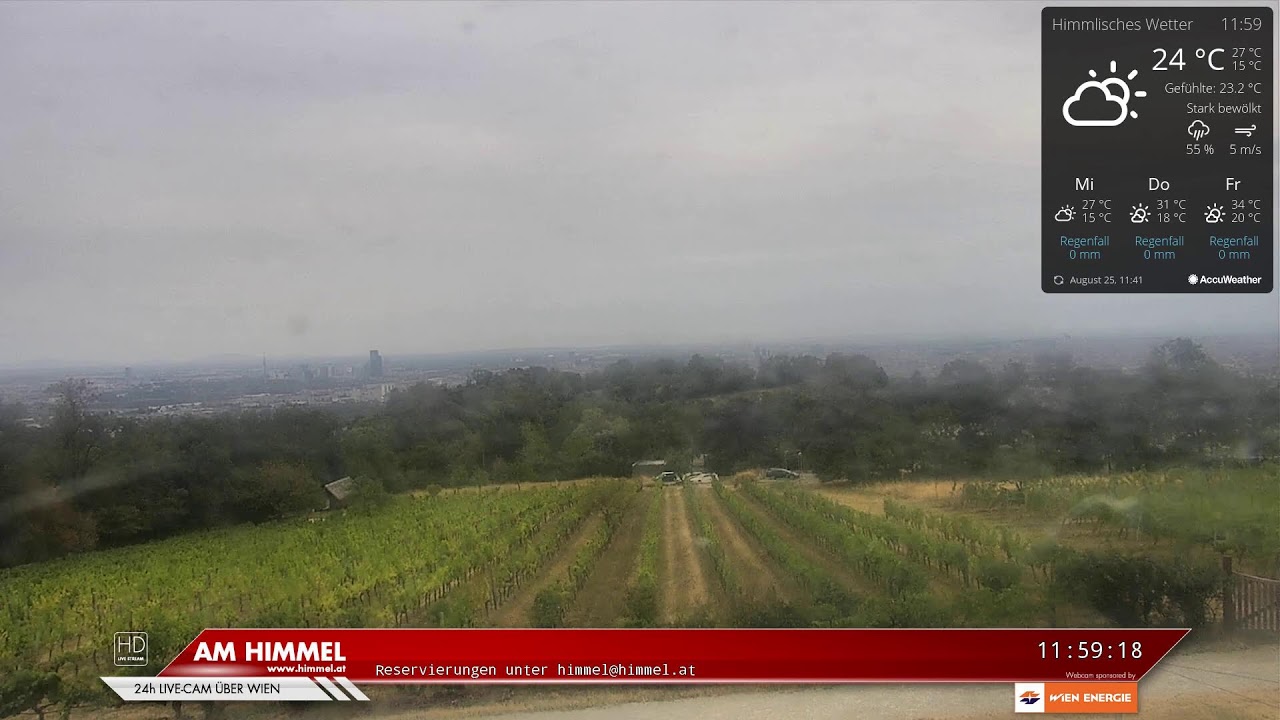
Webcams Vienna allow you to see the capital of Austria in real time without leaving home. You can watch Vienna webcam on our website — we have gathered the best broadcasts from key points around the city. The Vienna city center webcam shows the historic heart of the city with its majestic cathedrals and palaces. The Vienna online broadcast is available around the clock, so you can observe the life of the city at any time of day. Webcams Vienna online are a great way to plan a trip or simply enjoy the beauty of this amazing city. You can watch Vienna webcam on both computer and mobile device.