

🏙️ Deogyusan National Park Webcams Online — Live Streaming Now
1 cameras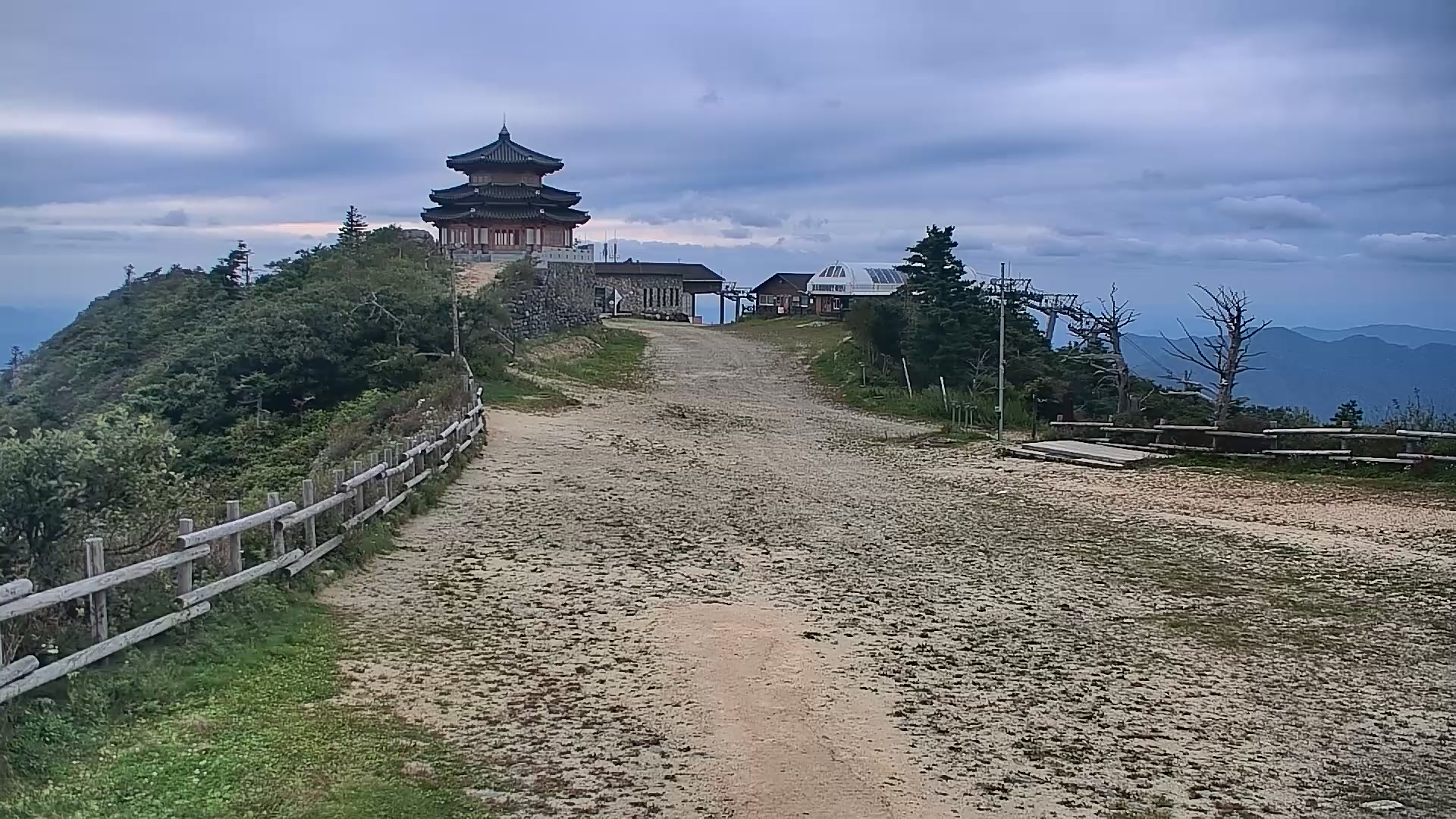
Geographical Location and General Characteristics
Deogyusan National Park stretches across the southeast of the Republic of Korea, covering the territories of Gyeongsangnam-do and Jeollanam-do provinces. This place is often called the mountain backbone of the Korean Peninsula since the park is located on the Baekdu-daegan ridge — the main mountain system stretching along the entire peninsula. The highest point of Deogyusan is Hyangjeokbong Peak at 1,614 meters above sea level, making it the fourth highest mountain in South Korea.
The park is the source of two largest rivers of the country: Namgang in the north and Nakdonggang in the east. These water arteries nourish vast plains and provide water to millions of people. Due to its location at the junction of two provinces, Deogyusan unites diverse landscapes — from steep rock walls to vast mountain plateaus.
History and Cultural Heritage
Deogyusan National Park received its status in 1975, becoming the tenth national park of South Korea. This decision recognized the unique natural value of the territory and the need for its protection. Over the decades, the park has become one of the key ecotourism centers of the country.
Within the park, there are preserved 33 various cultural resources, among which Anguksa Temple holds a special place. This Buddhist temple was founded during the Silla Dynasty and served as a spiritual center for monks and pilgrims throughout the centuries. The temple bell, also among the cultural treasures of the park, is still used in ceremonies to this day.
Natural Attractions and Landscapes
The three main valleys of the park — Chilseon, Joksan, and Munam — are magnificent natural corridors cutting through the mountain ranges. Chilseon Valley is rightly considered the most beautiful thanks to the famous waterfall of the same name. Chilseon Waterfall is surrounded by dense forest and unique rock formations, creating a landscape that attracts photographers and artists alike.
Guchun-dong Valley is another outstanding location in the park, known for its natural beauty. A narrow gorge with sheer rock walls covered in moss and ferns creates an atmosphere of pristine nature. In sunny weather, rays of sunlight penetrate here, illuminating water droplets and creating the effect of a natural rainbow.
Flora and Fauna of the Park
The biodiversity of Deogyusan is striking: here live 1,067 plant species, 32 mammal species, 130 bird species, and 9 amphibian species. Hyangjeokbong Peak preserves a subalpine ecosystem, which is unique for a mountain of this height in South Korea. On the upper slopes one can encounter rare species of pines and rhododendrons adapted to harsh mountain conditions.
Among the mammals of the park are wild boars, roe deer, otters, and various species of bats. The birdlife is represented by black woodpeckers, northern goshawks, and rare species of owls. The rivers and streams of the park are rich in trout and other fish species, attracting anglers and lovers of aquatic fauna.
Seasonal Features and Climate
Each season transforms Deogyusan beyond recognition. In spring, the park is covered with a carpet of royal azaleas, their soft pink and purple blooms turning the slopes into a flowering garden. Summer brings the blooming of daylilies, while dense foliage creates cool shade for visitors. Autumn brings colorful foliage — maples and oaks are painted in crimson, golden, and copper tones. In winter, the park turns into a snowy kingdom where snow-covered peaks contrast with the dark silhouettes of conifers.
The park's climate is temperate monsoon, with warm humid summers and cold dry winters. At altitudes above 1,000 meters, temperatures are significantly lower than in the foothills, so visitors are advised to have layers of clothing regardless of the season.
Popular Hiking Routes
The network of hiking trails in Deogyusan allows choosing a route of any difficulty level. The most popular path leads to Hyangjeokbong Peak through Chilseon Valley — the route takes about 4-5 hours one way and passes by the waterfall through dense pine forest. More challenging routes are available for experienced hikers through passes and ridges with panoramic views of surrounding mountain ranges.
The trail to Anguksa Temple is suitable for family outings — it is relatively gentle and passes through deciduous forest with many observation decks. In winter, some routes require special equipment and mountaineering experience due to ice and snowdrifts.
What the Cameras Show
Deogyusan National Park webcams online allow observing mountain landscapes in real time. Broadcasts from the peaks and valleys of the park make it possible to assess weather conditions, seasonal landscape changes, and tourist activity. Watching Deogyusan webcams online is useful for planning a trip or simply for a virtual introduction to the nature of South Korea.
Deogyusan live stream is available from various points in the park — from the foothills to mountain passes. The Deogyusan National Park center webcam shows the central part of the park with tourist infrastructure. For those interested in specific attractions, cameras with views of Chilseon Waterfall and Anguksa Temple are available.