

🏙️ Nyuzen Webcams – Live Streaming from Toyama Prefecture, Japan
1 cameras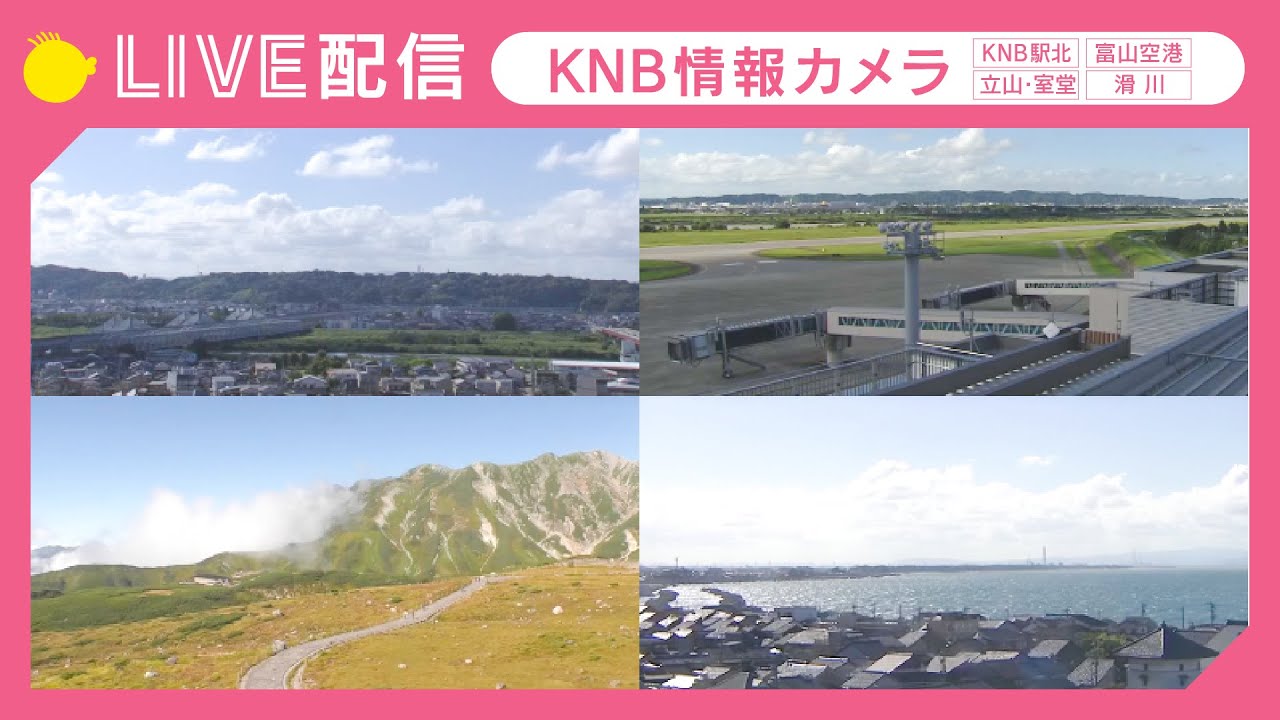
Geographical Location and Climate
Nyuzen is located in the northeastern part of Toyama Prefecture, in the center of an alluvial fan. To the north, the city is washed by the Sea of Japan, and to the west by the Kurobe River. Geographic coordinates: 36.9374° N, 137.5006° E. This coastal city is part of the Niikawa region of eastern Toyama, along with the cities of Namikawa, Kurobe, Wada, and Asahi.
The climate here is humid subtropical, with warm summers and snowy winters. Thanks to its proximity to the Sea of Japan, the city receives heavy snowfall in winter, making it part of the famous Snow Country region. In summer, the coast enjoys mild weather, while the city's inland areas are lush with greenery.
History and Culture of the City
Nyuzen is a city with a relatively recent history. It was formed on October 1, 1953 through the merger of seven villages. Before that, the area was an agricultural district where rice and vegetables were grown, and fishing was conducted along the Sea of Japan coast.
Today, Nyuzen is a compact city with a population of 25,007 people (as of May 1, 2018) in 8,970 households. The city's total area is 71.25 km², with a population density of 350 people per km². Despite its modest size, Nyuzen has its own vibrant identity.
Tulips became the official city flower in 1983, and since then they have been the symbol of Nyuzen. Every spring, the city transforms into a blooming garden, attracting tourists from all over Toyama Prefecture.
Natural Attractions
One of Nyuzen's main natural gems is the Nyuzen Flower Road. This is a popular spot for tulip viewing, where thousands of flowers of different varieties and shades bloom in spring. The road passes through picturesque rural landscapes and offers views of the surrounding area.
Along the coast lies another unique attraction — the Sugisawa Swamp Cedars (杉沢の沢スギ, Sugisawa no Sawasugi). These ancient trees grow in marshy terrain and are living witnesses to the region's natural history. Walking among these cedars gives a sense of touching the pristine nature of Japan.
The coastal waters of Nyuzen hide an underwater forest — evidence of sea level change (eustasy). This geological phenomenon makes the coast interesting not only for recreation but also for scientific observation.
Agriculture and Local Products
Nyuzen is famous for its agriculture. The fertile soils of the alluvial fan create ideal conditions for growing a wide variety of crops. The city has gained particular fame for its jumbo watermelons, grown by local farmers. These enormous striped fruits have become one of the region's symbols and a source of pride for residents.
In addition to watermelons, rice, vegetables, and flowers are grown in Nyuzen. Tulips, which have become the city's symbol, are cultivated here not only for decoration but also for sale. In spring, local farms open their doors to tourists wishing to admire the blooming fields.
Hot Springs and Recreation
Underground water surfaces through various artificial and natural springs throughout the city. In the Nyuzen area is Koshi Onsen — a hot spring known for its healing properties. Onsen are an integral part of Japanese culture, and the local hot spring offers the opportunity to relax in a traditional setting.
The Sea of Japan coast adds to the city's appeal as a vacation destination. In summer, you can enjoy beach recreation here, and in winter, you can observe snowy landscapes. The Kurobe River, flowing west of the city, creates additional opportunities for walks and nature contemplation.
What the Cameras Show
Nyuzen webcams online offer views of the Sea of Japan coast, city streets, and natural attractions. You can watch Nyuzen in real time from various vantage points: from coastal areas to central districts. Live streaming allows you to assess weather conditions, see blooming tulips in spring or snowy landscapes in winter.
Coastal cameras show the Sea of Japan and coastal landscapes, while city cameras show everyday life in Nyuzen. Online streaming is available free of charge and without registration, making it convenient to observe the city for trip planning or simply to get acquainted with life in this Japanese coastal city.