

🏙️ Kruger National Park webcams — live streaming in real time
1 cameras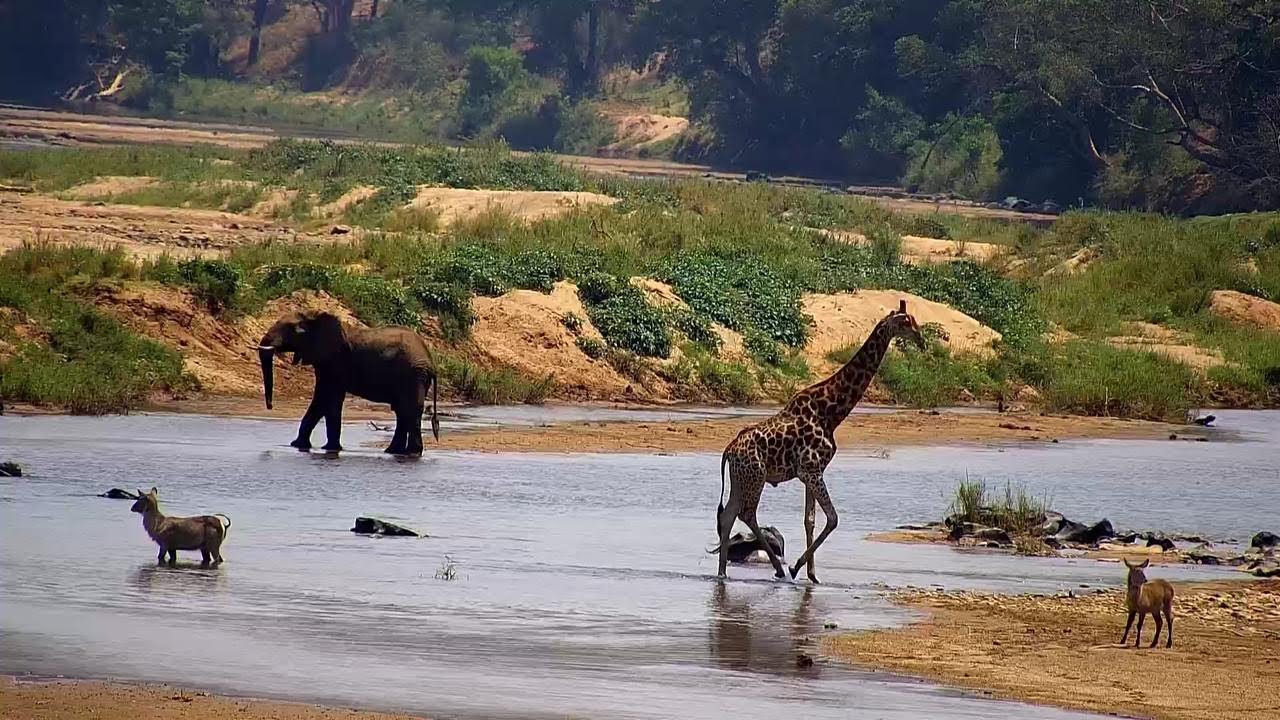
The heart of the African savanna: what is Kruger National Park
Kruger National Park is not just a reserve, but an entire universe of wildlife spread across the expanses of South Africa. An area of approximately 19,000 km² stretches from arid plains to wooded hills, creating an incredible diversity of landscapes. The park is located in two provinces — Mpumalanga and Limpopo — and borders Mozambique and Zimbabwe. This is a place where the African savanna has remained almost pristine, and animals live by their ancient laws, paying no attention to observers.
The park is named after Paul Kruger — President of the South African Republic, who back in the late 19th century initiated the creation of a protected area to save wildlife from extermination. Today, Kruger National Park is the largest reserve in South Africa and one of the oldest national parks in the world, attracting travelers from all continents.
The Big Five: stars of the savanna
When people talk about Kruger National Park, the first thing that comes to mind is the so-called Big Five — five animal species that were once the main target of hunters and have now become objects of admiration for tourists. This famous group includes the African elephant, lion, black and white rhinoceros, African buffalo, and leopard. It is for a glimpse of them that thousands of people go on safari every year, and webcams allow you to see these majestic animals without leaving home.
Elephants in Kruger Park are the true masters of the savanna. Their herds slowly move between waterholes, leaving well-trodden paths in the tall grass. Lions prefer to rest in the shade of acacias during the hottest hours and go hunting in the evening. Rhinos are among the rarest and most protected inhabitants, their population recovering with great difficulty. Buffaloes gather in huge herds, and leopards lead a secretive lifestyle, appearing mainly at dusk.
Rivers — arteries of life in the savanna
In Kruger National Park, rivers serve as true arteries of life. Animals from all around converge on their banks, especially during the dry season when smaller water bodies dry up. The Olifants River is the longest of the park's six major rivers, and its banks are an ideal place for wildlife watching. Here you can see not only herbivores coming to drink but also crocodiles patiently waiting for prey in the muddy water.
The Sabie River flows through the southern part of the park and is renowned for its biodiversity. Its waters are home to many species of fish, and birds nest along its banks. Webcams installed along the rivers show the continuous life of the waterhole: elephants take dust baths, hippos dive, and kudu antelopes gracefully leap through the thickets. The Limpopo River forms the northern boundary of the park and adds a special flavor to the landscape with its sandbanks and gallery forests.
Incredible biodiversity: numbers and facts
Kruger National Park amazes not only with its size but also with the number of species inhabiting its territory. The park is home to about 147 species of mammals, 517 bird species, 117 reptile species, 33 amphibian species, and 50 fish species. These figures make the park one of the most biodiverse places on the planet. In addition to the Big Five, you can encounter giraffes, zebras, hippos, jackals, hyenas, and numerous species of antelopes — from tiny duikers to majestic elands.
The bird world of the park is no less rich. Fish eagles soar above the rivers, pelicans gather on the shallows, and colorful sunbirds flutter among the flowering trees. Reptiles are represented by crocodiles, pythons, and numerous species of lizards. Every layer of the ecosystem — from the soil to the tree canopies — is filled with life, and webcams allow you to peer into this complex world at any time of day.
Unique places: a hotel on a bridge and Balule Private Reserve
One of the most unusual attractions of Kruger National Park is the Kruger Shalati hotel — a reconstructed historic locomotive frozen on the Selati Bridge over the Sabie River. Thirty-one rooms, twenty-four of which are located in former train cars, offer guests a unique experience of sleeping right over the water, where hippos and crocodiles come to drink at night. This place has become a symbol of how humans can fit into the wild without disturbing its harmony.
The Balule Private Reserve, located in the southwestern part of the park, is known for its open landscapes and high density of lion prides. Unlike the main territory, night safaris are allowed here, giving visitors a chance to see leopards and hyenas on their nocturnal hunts. Webcams in this area often capture the movements of large predators and elephant herds that use the local waterholes as stopover points on their way to the Olifants River.
Seasonality: when is the best time to watch wildlife
The nature of broadcasts from Kruger National Park changes depending on the season. The dry winter period (May — October) is considered the classic time for wildlife watching: the grass is low, the shrubs are thinned out, and water bodies shrink to a few large rivers and waterholes. Animals gather around the water, and the chances of seeing members of the Big Five increase many times over. Morning and evening hours are peak activity times, when predators go hunting and herbivores hurry to the waterhole.
The wet summer season (November — April) turns the savanna into a green carpet dotted with flowers. This is the time when antelope and bird chicks are born, which means increased activity of predators attracted by easy prey. After afternoon thunderstorms, common during this period, the rivers swell, and animals emerge from their shelters to enjoy the coolness. Webcams at this time show a completely different park — green, full of water and teeming with life.
Legacy and conservation: how the park preserves nature
Kruger National Park is not only a tourist mecca but also a vital center for conservation work. The park runs programs to protect rhinos from poachers, monitor predator populations, and restore rare species. The park has become home to numerous research projects, the results of which are used worldwide to preserve biodiversity.
The park's infrastructure includes nine main camps, numerous picnic areas, and a network of roads that allow travelers to explore the savanna independently. However, it is the webcams that open up access to wildlife for those who cannot travel. Watching animals live is not just entertainment — it is a way to feel a connection with the wild and realize its fragility.
What the cameras show
This page features webcams from Kruger National Park — from waterholes on the Olifants River to viewing platforms near Skukuza. Choose a broadcast that interests you: perhaps you want to watch elephants on the Sabie River, check if a lion has come to the waterhole in Balule Reserve, or simply enjoy a panoramic view of the African savanna. All cameras stream in real time, allowing you to witness the life of South African wildlife at any time of day. Click on the broadcast you like — and Kruger National Park will open before you.