

🏙️ Webcams Okaukuejo Online — Watch Etosha National Park in Real Time
1 cameras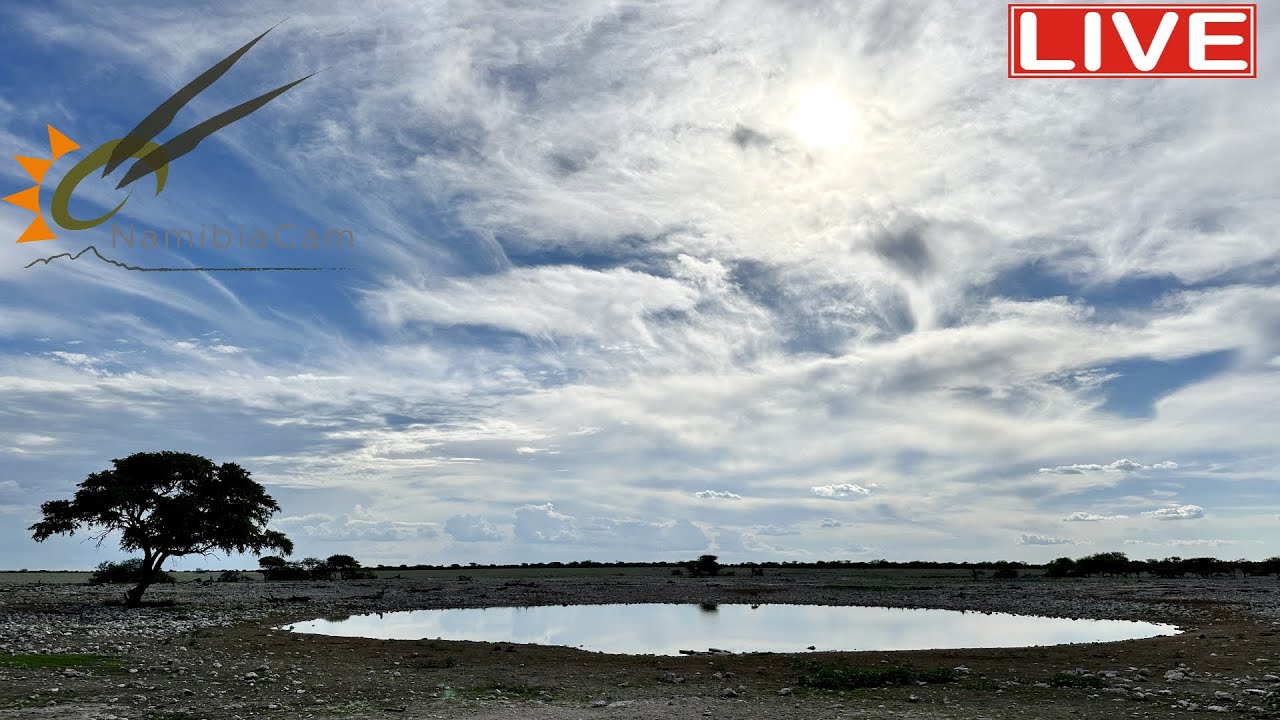
Where Okaukuejo Is Located and Why This Place Is Unique
Okaukuejo is a small settlement in northern Namibia that cannot be confused with any other place on the continent. This settlement is located directly within Etosha National Park, serving as its administrative center and main gateway from the west. The distance from the Anderson Gate entrance is just 17 kilometers, making Okaukuejo an ideal starting point for exploring the park.
The settlement is unlike typical cities — there are no high-rise buildings, noisy streets, or shopping centers. Okaukuejo exists solely to serve tourists visiting Etosha. Everything here is dedicated to one purpose — observing wildlife. And while previously you had to travel to Namibia in person, now it's enough to open an Okaukuejo webcam online to see the African savanna in real time.
The Name's History: The Legend of the Found Child
The name "Okaukuejo" sounds unusual to European ears, but behind it lies a touching story. Translated from the Owambo language, it means "the place where a woman found a child". According to local legend, a woman once discovered an abandoned infant here, and the place has been considered sacred ever since. There is also an alternative translation — "a distant place," which is also true: Okaukuejo is indeed far from Namibia's major cities.
The settlement grew around a former border post established in the early 20th century. German colonial authorities used this location to control the territory, and later a stone fortress was built here that survives to this day. Today, Okaukuejo is primarily a tourist hub where travelers from around the world begin their acquaintance with one of Africa's greatest wildlife reserves.
Okaukuejo Waterhole: The Heart of the National Park
The main attraction of Okaukuejo is the illuminated night waterhole, built on the site of a natural water source. This is where the most exciting action takes place: wild animals come to the waterhole around the clock. Powerful floodlights illuminate the area around the source, allowing observation of animals even in complete darkness.
The waterhole at Okaukuejo is a theater of wildlife where a new performance unfolds every evening. First, cautious antelopes and zebras appear, then giraffes arrive, and by nightfall the true masters of the savanna come to the waterhole — lions, leopards, and hyenas. Spotting a black rhino is considered especially lucky — one of Africa's rarest and most protected animals. It is for such moments that tourists come to Okaukuejo and turn on webcams so as not to miss the appearance of rare guests.
What Animals Can Be Seen at the Waterhole
The biodiversity around the Okaukuejo waterhole amazes even experienced naturalists. Here you can observe elephants, giraffes, zebras, wildebeests, black rhinos, lions, leopards, and hyenas. Each species arrives at the waterhole at its own time, creating a unique behavioral dynamic.
Elephants usually appear in family groups led by an old matriarch. They are the first to approach the water, drinking for a long time and spraying themselves, creating a noisy spectacle. Giraffes arrive cautiously — their long necks make them vulnerable while drinking, so they constantly look around. Zebras and wildebeests stay in herds, creating a living corridor around the waterhole. And at night, when the floodlights blaze brighter, predators appear — lions and leopards, making the herbivores wary.
The black rhino is the true star of the Okaukuejo waterhole. These giants are on the brink of extinction, and seeing them in the wild is a great rarity. Etosha has preserved one of the largest populations of black rhinos in Africa, and the waterhole at Okaukuejo is one of the best places to observe them.
Okaukuejo Rest Camp: Fortress Tower and Infrastructure
The Okaukuejo Rest Camp is not just a place to stay, but a full-fledged tourist complex in the heart of the savanna. Its main architectural landmark is the round stone fortress tower built in 1934. Originally a border post controlling the park's territory, the tower has been converted into an observation deck overlooking the waterhole.
The rest camp's infrastructure includes a pool (a relief on hot days), camping for tents and RVs, a souvenir shop, and a restaurant overlooking the savanna. Everything here is designed so that guests feel comfortable without losing touch with the wild. Even sitting by the pool, you can watch birds or animals passing in the distance.
Okaukuejo webcams often show not only the waterhole but also the rest camp area — so online viewers can see tourists relaxing by the pool against the backdrop of the African savanna, creating a unique contrast between civilization and wildlife.
Okaukuejo Climate: From Scorching Heat to Nighttime Cold
The climate of Okaukuejo is hot and semi-arid, with sharp temperature swings between day and night. In summer, daytime temperatures often exceed +40°C, turning the savanna into a scorching carpet. In winter, the situation changes dramatically: nights become cold, around 0°C, while days remain dry and sunny.
These climatic conditions directly affect animal behavior at the waterhole. On hot days, animals approach the water more often and drink longer, while on cold nights more predators can be seen at the waterhole — they go hunting when herbivores are weakened. Okaukuejo webcams allow you to observe these seasonal behavioral changes in real time.
The rainy season in Okaukuejo lasts from October to April, but rainfall here is extremely uneven. Most days of the year are sunny, making the waterhole the only reliable source of water for animals within many kilometers. This is precisely why the Okaukuejo waterhole is so attractive to wild fauna — without it, survival in these conditions would be impossible.
Nature Around Okaukuejo: Savanna, Mopane, and Salt Pans
The landscape around Okaukuejo is a classic African savanna with dry vegetation. Acacias and mopane trees (Colophospermum mopane) predominate here, creating a sparse canopy under which numerous animal species hide. Mopane is a tree with characteristic winged pods that serves as an important food resource for elephants and antelopes.
A distinctive feature of the Okaukuejo landscape is the pans — shallow salt flats that fill with water during the rainy season and become temporary water bodies. In the dry season, the pans are covered with a white salt crust, creating surreal landscapes resembling an icy desert. These salt pans are an important part of the Etosha ecosystem, attracting flamingos and other birds during the rainy season.
Okaukuejo webcams show not only the waterhole but also the surrounding landscape — the endless savanna with solitary trees that serve as landmarks for animals and create that iconic African scenery.
Night Safari at the Waterhole: The Main Tourist Attraction
The night safari at the Okaukuejo waterhole is what tourists come to Etosha for from all over the world. When the sun sets below the horizon and the savanna plunges into darkness, the waterhole floodlights blaze to life, turning it into a stage for a thrilling spectacle. Lions go hunting, hyenas laugh in the darkness, and rhinos approach the water unhurriedly, paying no attention to the presence of people.
For those who cannot travel to Namibia in person, Okaukuejo webcams offer a unique opportunity — to watch a night safari online. It cannot compare to being there in person, but it allows you to see what is hidden from ordinary tourists: animal behavior in complete darkness, when they are most active.
The Okaukuejo Rest Camp organizes special night seats at the waterhole where tourists can observe animals in safety. But even without being there in person, the webcams convey the atmosphere of this place — the silence of the African night, broken only by the sounds of nature, and the majesty of animals coming to the waterhole under cover of darkness.
Birds of Okaukuejo: Feathered Inhabitants of the Savanna
Although the Okaukuejo waterhole is famous for its large mammals, the birds here are no less interesting. The rest camp area and surrounding savanna attract many species of birds — from tiny sunbirds to birds of prey. During the rainy season, the salt pans fill with water, and flamingos, pelicans, and various waders flock here.
At the Okaukuejo Rest Camp, you can see weaver birds that build their nests right on the trees near tourist accommodations. Vultures and eagles have taken a liking to the rocks and stones around the waterhole, waiting for prey. And in the crowns of mopane trees, bright woodpeckers and parrots hide. Okaukuejo webcams sometimes show these feathered inhabitants, adding variety to the usual footage of large animals.
For ornithologists and bird lovers, Okaukuejo is a true paradise. Over 300 bird species have been recorded here, making it one of the best birdwatching spots in Namibia. And while webcams can't replace binoculars, they allow you to observe birds in their natural habitat without extra noise and disturbance.
What the Cameras Show
Okaukuejo webcams are installed at strategic points, allowing you to observe savanna life in real time. The main camera is aimed at the waterhole — the heart of Etosha National Park, where all the most interesting action takes place. Additional cameras may show the rest camp area, the historic fortress tower, and the surrounding landscape.
You can watch Okaukuejo webcams online at any time — during the day you'll see animals resting in the shade of trees or coming to the waterhole to drink, and at night — thrilling scenes of predator hunts. The broadcast quality allows you to see details: from the wrinkles on an elephant's skin to the stripes on a zebra's coat.
Okaukuejo webcams are a window into the African savanna, accessible to everyone. Whether you're planning a trip to Namibia or simply want to see wildlife in real time, the broadcasts from Okaukuejo will provide unforgettable impressions. It's a place where civilization meets wildlife, and the webcams allow you to witness this encounter without leaving home.