

🏙️ Webcams Maun online — watch in real time
4 cameras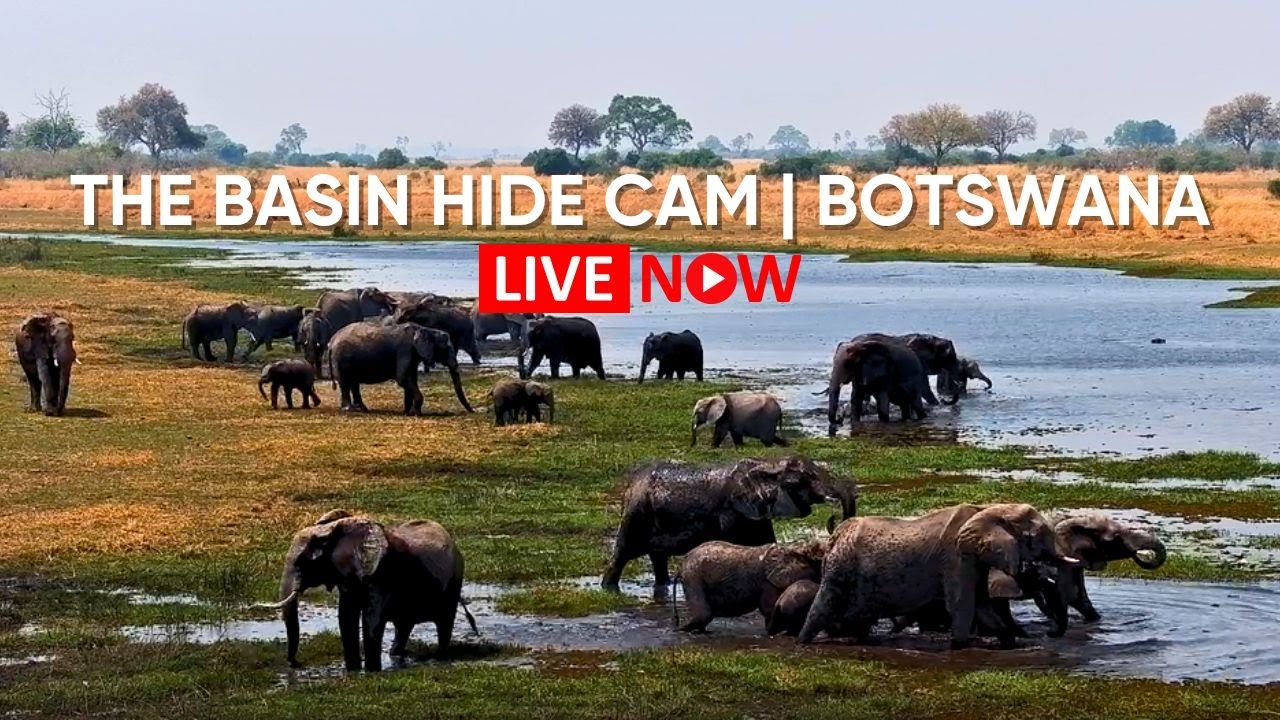


Maun — Botswana's second-largest city and African safari capital
Lost on the edge of the planet's greatest inland delta, this city began as a speck of fishing huts in the sand. Today Maun is Botswana's fifth-largest settlement with over 55 thousand residents and the recognized safari capital of Africa. Here the pavement ends and true savanna begins, and instead of office towers you'll find tents overlooking hippos.
If you've never seen a city where elephants stroll down the main street at sunset and the airstrip resembles a bird market — Maun's webcams will open this unique world to you without a flight to Southern Africa.
A name born from the landscape
The word "Maun" comes from the language of the region's most ancient people — the San (Bushmen). Translated, it means "place of riverine thickets" or "edge of short trees" — a perfect description of low acacias and papyrus thickets along the banks. The name stuck for good reason: this is where the rapids of mountain rivers end and the great delta begins.
From a Bayei village to a tourist mecca
Until the 1960s, Maun remained a quiet village of the Bayei tribe — skilled fishermen and mokoro builders who migrated from the Katanga region of the DR Congo as early as the 18th century. Just a few hundred people lived in mud-and-reed huts, practicing fishing and floodplain farming.
The turning point came in the 1970s–1990s when Botswana's government chose a "high cost — low volume" strategy for elite ecotourism. Instead of mass crowds — exclusivity for those willing to pay for uniqueness. In 1992, 27 thousand people lived here; by 2001, nearly 49,700. Today Maun is a full-fledged city with an airport, banks, hotels, and safari agencies.
Gateway to the Okavango Delta
Maun sits on the southeastern edge of the Okavango Delta — the world's largest inland delta, which flows nowhere but simply spreads across the Kalahari sands and evaporates. All routes start here: on light bush planes to the Moremi Game Reserve, on motorboats to camps deep in the delta, on traditional mokoro through papyrus thickets.
The local airport is the country's second-busiest after the capital's. Every day dozens of aircraft carry tourists into the green kingdom where rhinos, lions, and buffalos have never heard of a zoo.
The Thamalakane River — the city's lifeline
The Thamalakane River flows through Maun — the last thread of the Okavango Delta that reaches the desert. About 100 meters wide and 2–5 meters deep, it behaves unpredictably: in the dry season (June–October) the channel shallows into a chain of pools where crocodiles and hippos share the remaining water pockets.
Thamalakane is what gives the city life: along its banks you'll find tourist lodges, mokoro docks, river cruises, fishing, and birdwatching. Jacanas, kingfishers, and African fish eagles are just the beginning of the list.
Craft market and Bayei culture
The center of Maun is unimaginable without its market — a dense, noisy place smelling of smoke and spices. The Bayei have turned craft into art: palm-leaf baskets with geometric patterns, ostrich-egg-shell jewelry, wooden bowls, and animal figurines — all handmade and carried to every corner of the globe.
The San (Bushmen) are another ancient people of the region. Nomadic hunter-gatherers, they have lived here for millennia, and their presence is felt in the rock art, river names, and the very principles of surviving the savanna.
Safari capital — what this title means
Calling Maun the "safari capital of Botswana" is no exaggeration. It is the only city from which you can reach Moremi, Chobe, and the central delta. Routes are planned here, camps are booked, guides meet their guests. The country's reputation as a destination for expensive, exclusive tourism was built around this very city.
Maun's webcams let you see the tourism infrastructure from the inside — from runways to market rows — and feel the rhythm of a city that lives on tourism but hasn't lost its African authenticity.
Climate, seasons, and natural rhythms
Life in Maun is ruled by the delta. The dry season (June–October) is peak tourism: water recedes, animals gather by the river, skies are clear. The wet season (November–March) turns the city into an emerald oasis, but roads become impassable mud. Summer temperatures often exceed 40°C in the shade, while winter nights are surprisingly cool for Africa.
Those who tune into the webcams at different times notice how the city changes: from morning haze over the Thamalakane to evening fires in outlying villages.
What to see in and around the city
Beyond safari, Maun offers several overland routes. Nokaneng — the cultural capital of the Bayei — lies a few hours' drive away along sandy tracks. Mokoro trips offer close-up views of water lilies and aquatic birds. And the market is a must-visit for every tourist flying home with African souvenirs.
The urban landscape is unusual: single-story buildings alternate with modern shopping centers and lodge complexes. No skyscrapers — just acacias, red sand, and endless sky.
What the cameras show in the city
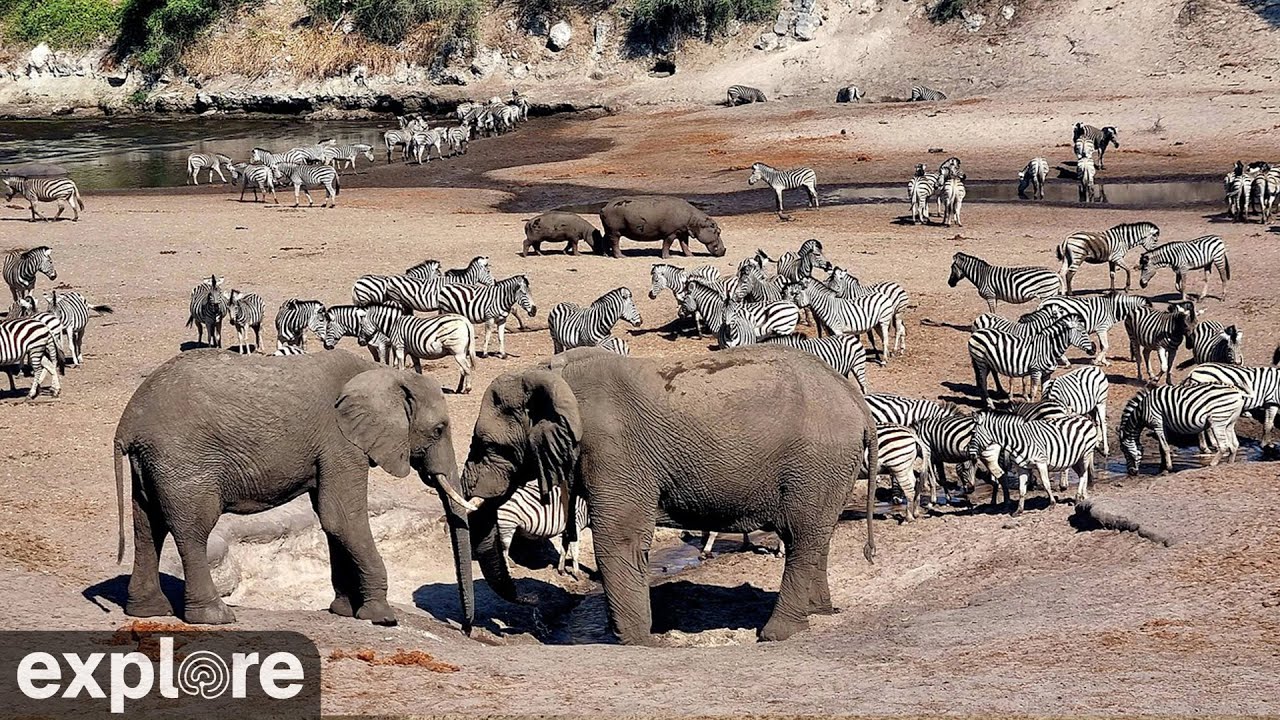
The catalog brings together Maun's webcams, placed in different areas — from the center to riverside zones. With them, you can watch the main city intersections, the market, the airport, and the banks of the Thamalakane in real time. Choose your viewing point and head on an African safari without leaving your chair.
Each camera is a window into the life of Botswana's second city, where modern infrastructure coexists with centuries-old Bayei traditions, and where traffic jams are replaced by herds of antelope on the edge of the savanna.