

🏙️ Atacama Webcams Online — Watch the Desert in Real Time
1 cameras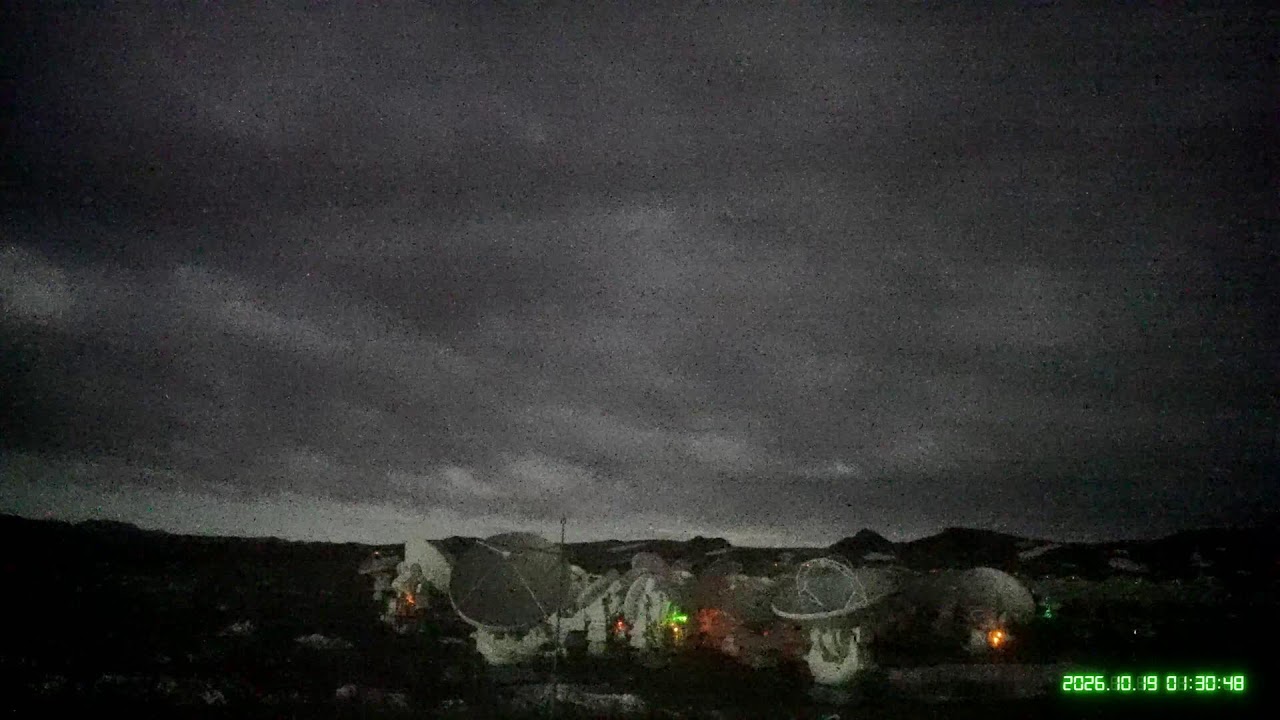
Atacama — The Land of Eternal Drought
The Atacama Desert stretches along the coast of Chile in a strip over a thousand kilometers long, squeezed between the Pacific Ocean and the Andes Mountains. This place is breathtaking: here the air humidity is zero, and in some areas rain does not fall for decades. Scientists call Atacama the driest desert on the planet — the air contains virtually no moisture, creating unique conditions for life and observation. It is here, in this lifeless landscape, that nature has created forms resembling Martian plains. Travelers from all over the world come here to see endless salt flats, rocky canyons, and dunes that change color depending on the light. Atacama is not just a geographic feature, but an entire universe where time flows differently and silence becomes tangible. The geographic position of Atacama between the ocean and the mountain range has created a unique dryness effect that has no analogues on Earth. The cold Humboldt Current off the coast prevents evaporation, and the Andes block moist air masses from the Amazon. The result is absolute dryness that has persisted for millions of years. Local residents have learned to extract water from fog using special nets — this invention allows them to collect moisture directly from the air in coastal areas of the desert.
Valle de la Luna: Landscapes of an Alien World
Fifteen kilometers from San Pedro de Atacama lies Valle de la Luna — a place that got its name thanks to a landscape incredibly similar to the lunar surface. There are no trees, no grass, no animals here — only rocks, wind, and light, creating a sense of complete lifelessness. Over millions of years, wind and water have carved bizarre forms in the rocks: sharp ridges, deep caves, and smooth wavy walls. At sunset, the valley transforms — white and gray rocks burst into crimson, orange, and purple hues, turning into a true artist's palette. This place has become one of Chile's calling cards, attracting photographers, filmmakers, and lovers of unusual landscapes. Valle de la Luna is part of the Los Angeles Nature Reserve and is under state protection. The rock layers here expose the geological history of the region — from ancient marine deposits to volcanic tuffs. Salt ridges covered with a white crust crunch underfoot, and deep in the canyons you can find remains of fossil organisms that inhabited this place millions of years ago. The Great Dune, towering over the valley, offers a panoramic view of the surroundings — from here you can see the Cordon de la Pacua and Licancabur volcanoes.
El Tatio Geysers: Steam Above the Clouds
At an altitude of 4300 meters above sea level, at the foot of mountain volcanoes, lies the high-altitude El Tatio geyser field — the highest in the world and the third largest on the planet. About 80 active volcanic geysers operate here, with water temperatures reaching 80 degrees. In the morning, when the air is cooled to sub-zero temperatures, columns of steam rise several meters high, creating a fantastic picture against the backdrop of mountain peaks. El Tatio is not only a natural attraction but also a geothermal laboratory where scientists study processes occurring in the Earth's interior. Visiting the geysers requires preparation — the thin air of the highlands makes itself felt, but the spectacle is worth it. This place is a reminder that Atacama is not only a dry desert but also a territory with a turbulent geological history. Around the geysers you can see thermal springs where locals take healing baths, as well as unique microbial mats — colonies of microorganisms surviving in the extreme conditions of hot water and high solar radiation. Volcanic activity in this region has been ongoing for millions of years, shaping the landscape and creating conditions for unique ecosystems.
Salar de Atacama: Salt and Flamingos
At the foot of the Licancabur volcano, at an altitude of 2300 meters, lies Salar de Atacama — the third largest salt flat in the world. Endless white salt plains stretch for tens of kilometers, reflecting the sky and creating the illusion of infinity. In the Los Flamencos Nature Reserve, located on the territory of the salt flat, pink flamingos live — graceful birds that feel at home in this harsh landscape. Their bright plumage contrasts with the snow-white salt and blue lagoons, creating an unforgettable picture. Salar de Atacama is also a place where lithium is mined, which is used in the production of batteries for electric vehicles. Thus, this ancient salt plain is connected not only with the past but also with the technologies of the future. The lagoons of the salt flat have different degrees of salinity, creating unique conditions for various species of flamingos — here you can find Chilean, Andean, and James's flamingos. These birds come here to breed, using isolated islands in the middle of salt lakes. Salt crystals on the surface of the salt flat form hexagonal tiles that stretch to the horizon, creating a surreal landscape.
Geoglyphs and the Hand of the Desert: Traces of Ancient Civilizations
Atacama preserves traces of ancient cultures that left behind mysterious messages in the form of geoglyphs. The largest of them is the "Giant of Atacama" (Tarapaca) — a prehistoric anthropomorphic drawing 86 meters long, estimated to be 3000 years old. This is the largest prehistoric anthropomorphic drawing in the world. About 1500 years ago, many different images were created in the desert, which are believed to have served as a solar calendar and observatory for observing astronomical cycles. Another famous monument is the "Hand of the Desert" sculpture, created by the renowned Chilean sculptor Mario Irarrázabal at the end of the last century. This giant hand sticking out of the sand has become a symbol of how harsh the conditions for life are in dry areas. Both sites attract travelers interested in archaeology and art. The geoglyphs of Atacama are not just drawings but a complex system of navigational and astronomical markers that helped ancient peoples orient themselves in space and time. Images of animals, people, and geometric shapes are laid out from stones and carved into the ground, preserved for millennia thanks to the dry climate. The Inca and their predecessors used these drawings to mark trade routes and sacred places.
The Astronomical Capital of the World
The sky above Atacama is a mecca for astronomers from around the world. It is here that the greatest discoveries in astrophysics are made, and the 0% humidity provides exceptional atmospheric clarity. Cloudy days in Atacama are practically non-existent — the sky is always clear, making it ideal for stargazing. Chile is considered the best place to build observatories precisely because of the dryness of Atacama. Dozens of observatories are located on the territory of the desert, including the Very Large Telescope (VLT) and the Atacama Large Millimeter Array (ALMA). Tourists can visit observatories and observe stars through powerful telescopes, see the Milky Way with the naked eye, and enjoy one of the cleanest night skies on Earth. High altitude, dryness, and the absence of light pollution — three conditions that make the sky of Atacama the cleanest night sky on Earth. Astronomers from all over the world come here to study distant galaxies, exoplanets, and star formation processes. On clear nights, up to 3000 stars can be seen with the naked eye — several times more than anywhere else on the planet.
What Cameras Show the Desert
For those who want to see Atacama without flying to South America, there are webcams broadcasting views of the desert in real time. Online cameras are installed at key points in the region: at the viewpoints of Valle de la Luna, near the El Tatio geysers, and on the territory of observatories. You can watch Atacama online at any time — the cameras operate around the clock, allowing you to observe the change of day and night in the desert. The live stream from Atacama gives you the opportunity to see silent landscapes, clouds moving across the sky, and sunsets that paint the rocks in incredible colors. Atacama webcams are a window into one of the driest and most beautiful corners of the planet, available to anyone with an internet connection. The broadcast from Atacama allows you to appreciate the scale of the desert, feel its atmosphere, and plan a future trip to this unique region of Chile. Watching Atacama through webcams is an opportunity to touch one of the most extreme and beautiful places on Earth without leaving home.