

🏙️ Webcams Disentis online — watch live stream in real time
1 cameras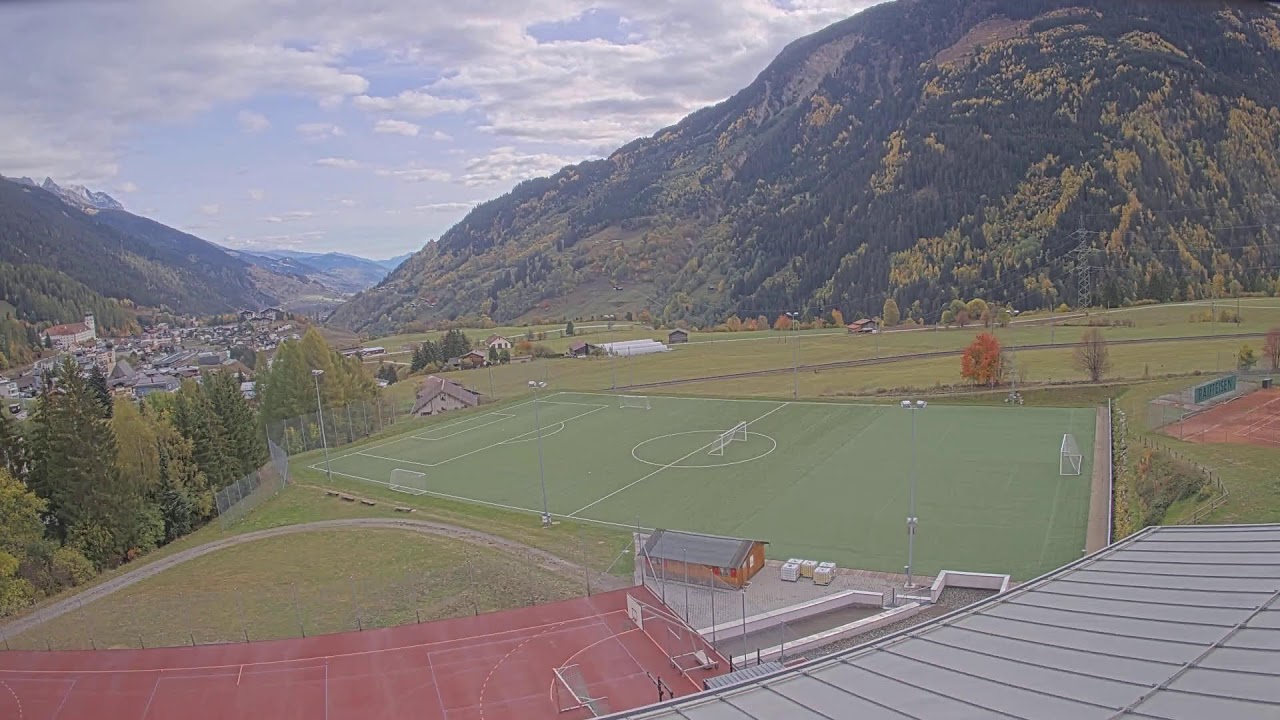
History of Disentis: from legends to the present day
Disentis is a town whose history dates back to the early Christian era. The traditional founding date of Disentis Abbey is 614 AD, attributed to the local saints Placidus and Sigisbert. According to legend, the monastery was destroyed by the Avars in 670 AD, with the abbot and 30 monks being killed. The abbey was rebuilt by Charles Martel after the Avar destruction, marking the beginning of its revival as a spiritual and cultural center of the region.
The abbey crypt was built around 700 AD, as confirmed by archaeological excavations. In 765, Count Tello bequeathed extensive land holdings in the lower Surselva (between Flims and Trun) to the abbey through the so-called "Tello's Testament" as compensation for murder. This document became a crucial act in the monastery's history, determining its economic power for centuries to come.
The subjects of Disentis Abbey first used their own seal in 1285 and had their own Landammann from 1371. In 1617, the abbey joined the Benedictine order, and in the 17th century the papal nuncio intervened in its affairs. Disentis Abbey is a cornerstone of Swiss history and culture, and the present-day town of Disentis (in Romansh — Mustér, meaning "monastery") grew up around it.
Disentis Abbey — the heart of the town
The abbey is located in the Upper Surselva valley in the canton of Graubünden and is situated near the Lukmanier and Oberalp passes, making it a historical crossroads for travelers and pilgrims. The abbey church was built in Baroque style between 1683 and 1704. The ceiling frescoes in the church were painted by Swiss artist Fritz Kunz in the early 20th century during a major restoration, including the fresco "Ursicinus lays the foundation of Disentis Abbey".
The former chapter house displays sacred works of art, including the oldest altar cloths, vestments, and statues dating from around 1200. The monastery has a museum (Klostermuseum), a magnificent Church of St. Martin, and a monastery shop. The relics of Saints Placidus and Sigisbert are kept in the crypt but are only visible through a window from the corridor. The abbey celebrated its 1400th anniversary, making it one of the oldest monasteries in Switzerland.
Romansh culture and language in Disentis
The canton of Graubünden, where Disentis is located, is the only canton in Switzerland where Romansh is an official language. This unique linguistic heritage gives the town a special character. On the streets of Disentis, you can hear Romansh speech, see bilingual signs, and feel an atmosphere where ancestral traditions live in every stone.
The feast of the founding saints Placidus and Sigisbert is celebrated on July 11. This event brings together local residents and visitors, reminding them of Disentis's deep roots. Romansh culture here is not a museum exhibit but a living fabric of everyday life, passed down from generation to generation.
Nature and surroundings of Disentis
Disentis is surrounded by majestic Alpine landscapes. The Upper Surselva valley offers views of snow-capped peaks, green pastures, and mountain rivers. The Lukmanier and Oberalp passes historically served as important trade routes connecting Switzerland with Italy. Today, these routes attract tourists, cyclists, and mountain hiking enthusiasts.
The region's natural diversity is stunning: from alpine meadows to rugged rock formations. Disentis webcams allow you to observe the changing seasons in real time — from blooming spring meadows to winter snow caps on the peaks.
Architecture and art of the abbey
The architectural ensemble of Disentis Abbey represents a unique combination of Romanesque foundations and Baroque splendor. The crypt, built around 700 AD, preserves the spirit of the early Middle Ages. The Baroque church with its lavish decoration contrasts with the austere walls of the ancient crypt, creating an unforgettable architectural dialogue of eras.
Fritz Kunz's frescoes, painted in the early 20th century, tell the story of the monastery in vivid colors. Among them is "Ursicinus lays the foundation of Disentis Abbey," which visualizes the legend of the monastery's founding. The abbey museum houses priceless artifacts: altar cloths, vestments, and 12th-century statues, testifying to the high level of craftsmanship of medieval artisans.
Interesting facts about Disentis
Disentis hides many surprising details. For example, the relics of Saints Placidus and Sigisbert are kept in the crypt but are only visible through a window from the corridor — this creates a special atmosphere of mystery. The abbey celebrated its 1400th anniversary, making it one of the oldest monasteries in Switzerland.
The town's name in Romansh — Mustér — literally means "monastery," emphasizing the inseparable connection between the settlement and the abbey. Disentis webcams online give you the opportunity to see this historical heritage in real time, without leaving home.
What the cameras show
Disentis webcams are positioned to cover key points of the town and its surroundings. The broadcasts allow you to observe the life of the abbey, the town streets, and the Alpine landscapes in real time. By selecting a specific camera, you can examine the architectural details of the Baroque church, see the flow of pilgrims, or enjoy views of the mountain peaks.
Disentis webcams are a window into a world where history meets modernity. Whether you are interested in architecture, nature, or cultural heritage, the Disentis online stream will give you a vivid impression of this unique Swiss town.