

🏙️ Webcams Pitkyaranta online — watch in real time
6 cameras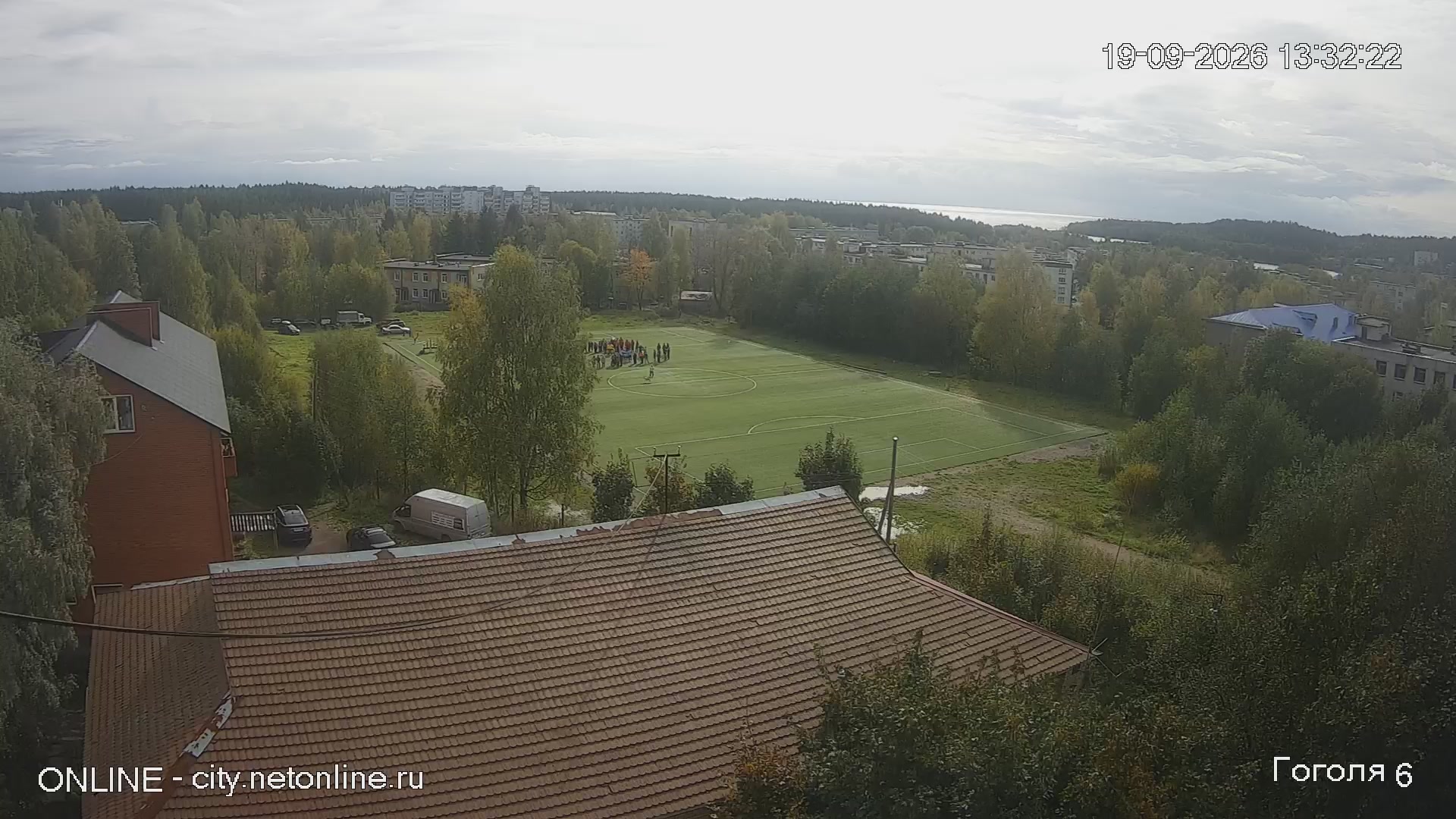
Pitkyaranta: a city at the crossroads of eras and cultures
Pitkyaranta is a small town in the Republic of Karelia, located on the northeastern shore of Lake Ladoga. The name translates from Finnish as «long shore», which accurately describes the elongated landscape stretching along the water. Today, 7,887 people live here — more than half the population of Soviet times, when it reached 14 thousand.
The town traces its history back to the XV century — the first written records date to 1499–1500. Over the centuries, the territory passed from Novgorod Rus to Sweden, then to the Grand Duchy of Finland, and in the XX century it finally became part of Russia. Pitkyaranta was granted town status on July 9, 1940, after the end of the Winter War.
Finnish heritage: what remains of the past
Until 1940, Pitkyaranta was part of Finland and was a developed industrial center. The Finns built a pulp mill, a hydroelectric power station, an iron ore sorting factory, and even a Lutheran church. Many of these structures have survived to this day — albeit as ruins.
The Pitkyaranta HPP, founded during the Soviet period, lay in ruins for a long time, but in recent years it has been partially restored. The ruins of the sorting factory with massive stone walls are one of the most impressive architectural monuments of Finnish modernism in Karelia. In the town today you can still find stone residential houses of a characteristic Scandinavian type, some of which have been restored and are used as residential or commercial premises.
Pulp and paper mill: rise and fall
The town-forming enterprise of Pitkyaranta became the pulp and paper mill, founded by the Finnish company «Disen Wood» in 1921. In its first year of operation, the plant produced 5,508 tons of products. In 1929, a three-story management building with a chapel was constructed — one of the symbols of the Finnish period.
During the Soviet-Finnish War of 1941–1944, the mill was completely destroyed, but later rebuilt and equipped with modern machinery. In 1948, condensate pulping was mastered, in 1962 — semi-bleached sulfate pulp, in 1970 — pulp for electrical pressboard. Annual capacity reached 99,200 tons of market pulp, and the products were exported.
In September 2012, the enterprise declared bankruptcy, and in April 2013, liquidation proceedings began. The closure of the mill was a blow to the town — it was from this moment that active population outflow began.
Environmental legacy: «White Mountains» and Ladoga
Decades of operation of the pulp and paper mill left a heavy mark on the region's ecosystem. The main problem became the lignin waste accumulators — the so-called «White Mountains», giant dumps of pulp production byproducts. Rain and wind wash out toxic dust, and poisonous effluents continue to seep into groundwater and Lake Ladoga.
Local residents say that in hot weather, the lignite dumps can spontaneously combust, and the smell of burning hangs over the town. After the mill closed, direct discharges ceased, but the consequences of the past will continue to remind themselves for a long time.
Abandoned mines and ghost town
During the Finnish period, iron, silver, and marble were actively mined in the vicinity of Pitkyaranta. When the deposits were exhausted, the mines were abandoned. Most of them are flooded, entrances are sealed or overgrown, but on the outskirts of the town you can still find preserved stone mine portals.
Besides the ruins of the pulp mill and the Finnish sorting factory, Pitkyaranta also has abandoned Soviet objects: a former pioneer camp, empty dormitories, and abandoned five-story buildings on the outskirts. Due to population outflow, many houses stand empty, giving the town a characteristic atmosphere — quiet, somewhat melancholic, but no less attractive for industrial tourism enthusiasts.
Marble quarry: a turquoise lake in the middle of the forest
One of the most unusual attractions in the vicinity of Pitkyaranta is the flooded marble quarry. Marble mining was carried out by the Finns and then abandoned. The quarry filled with water, turning into a picturesque reservoir with turquoise water and steep white-and-gray marble walls.
You can reach the quarry by car on dirt roads — the journey from the town center takes about 15–20 minutes. There is no direct bus; you can take an electric train to Pitkyaranta station and then take a taxi or walk (about 5–7 km). The quarry is not an official tourist site, there are no fences, the descent to the water is steep, and the water is icy even in summer due to springs bubbling up from the bottom.
Local history museum and memorial sites
The Pitkyaranta City Local History Museum is located in a historic building — the former Vallden house, which once housed a pharmacy. A garden with an interesting dendrological collection is laid out around the building. The museum houses exhibits from the Finnish period and the Soviet era, telling the story of the difficult fate of these places.
On the shore of Lake Ladoga, glacial boulders and rocks have been preserved — a typical landscape of the Northern Ladoga region. In the vicinity of the town, you can also find monuments of military history: crosses, memorials, and battle sites of the Winter War and the Great Patriotic War.
How to get to Pitkyaranta
The town is located 202 km from Petrozavodsk and 350 km from St. Petersburg. You can get there by car on the highway or by electric train — the railway was extended to Pitkyaranta in January 1931. Pitkyaranta station receives commuter trains from Lyaskelya and other towns in Karelia.
The distance to the border with Finland is about 115 km, making Pitkyaranta a convenient starting point for those traveling around the Northern Ladoga region.
What the cameras show
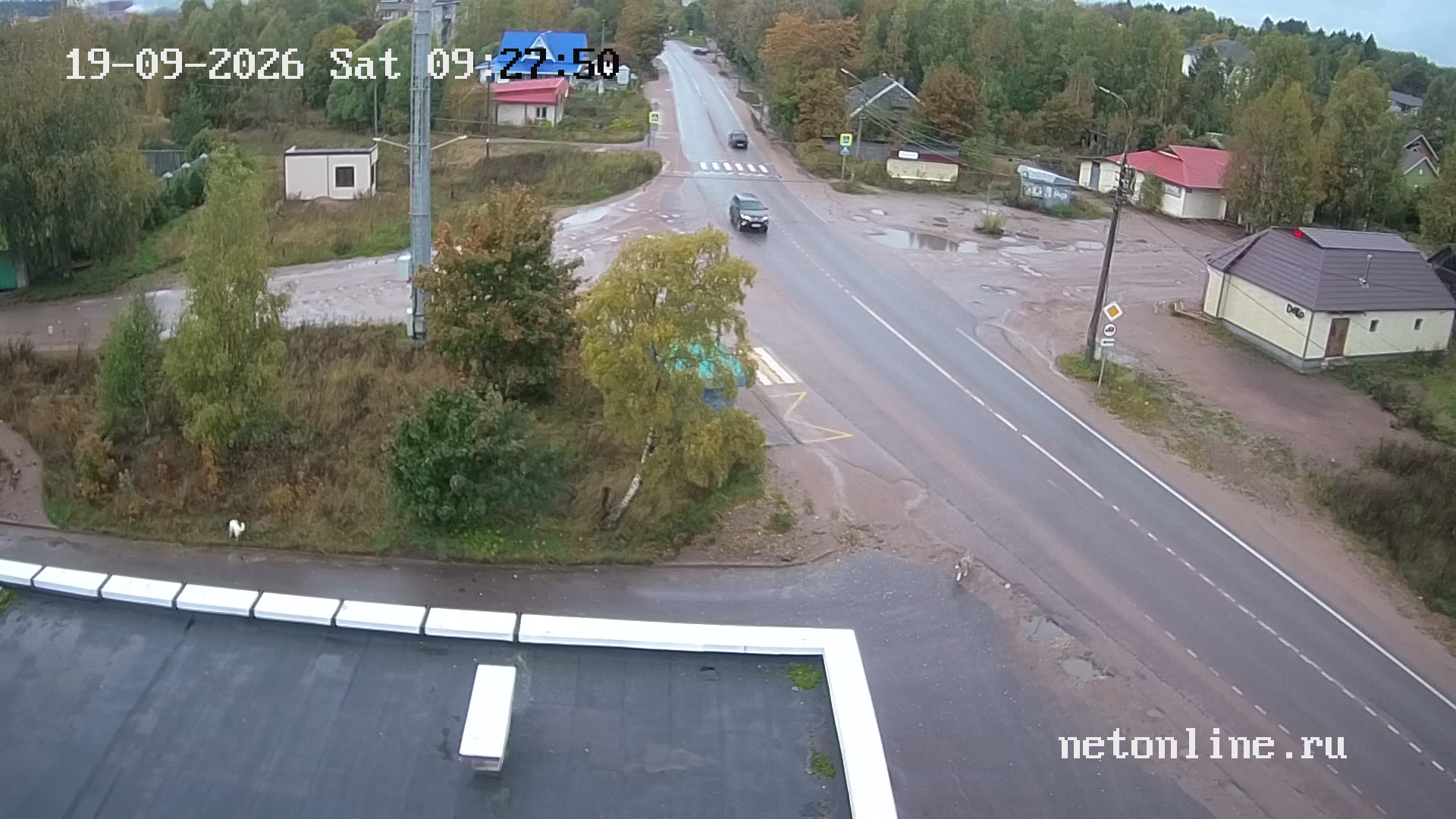
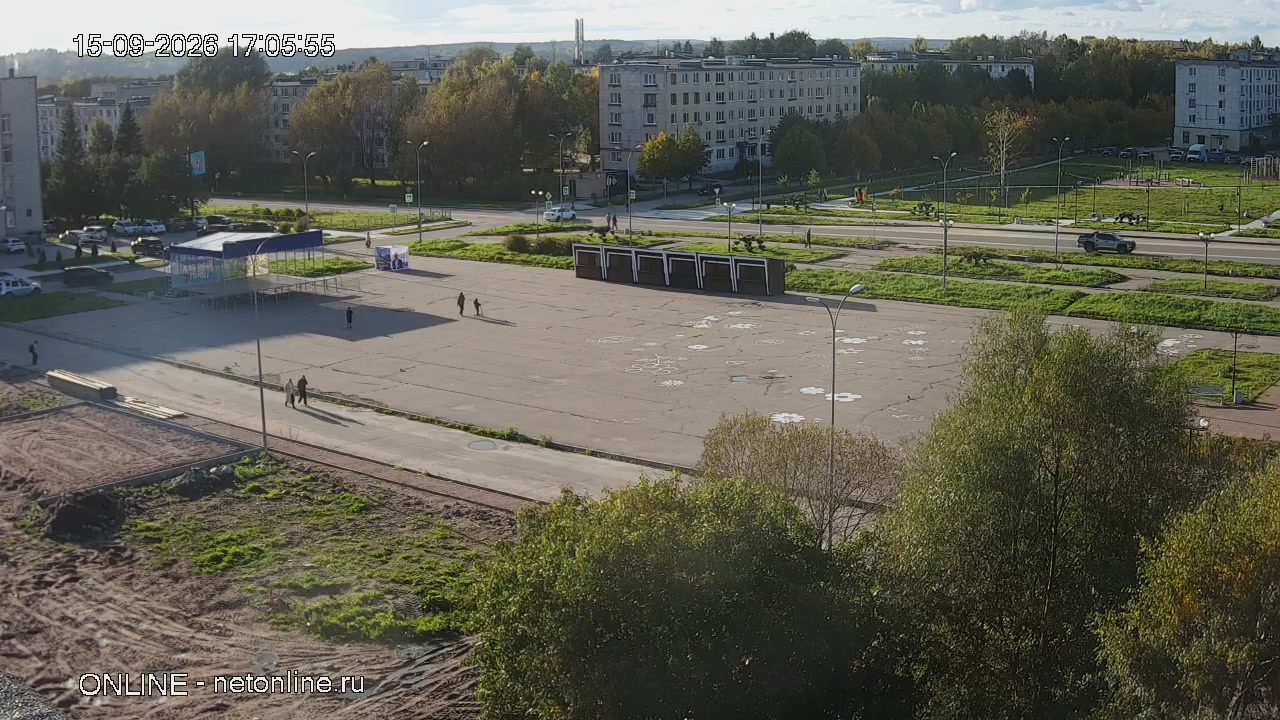
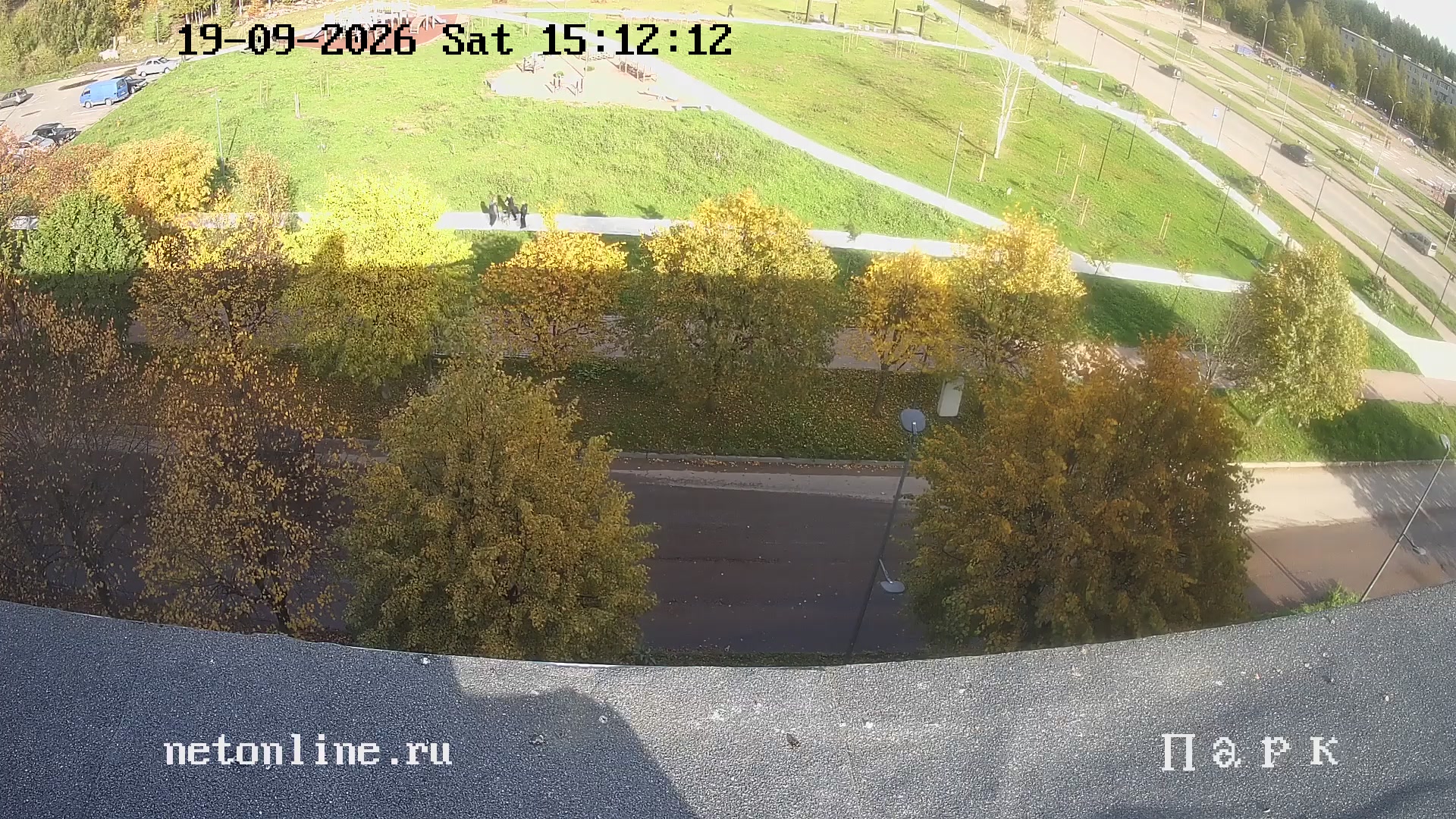
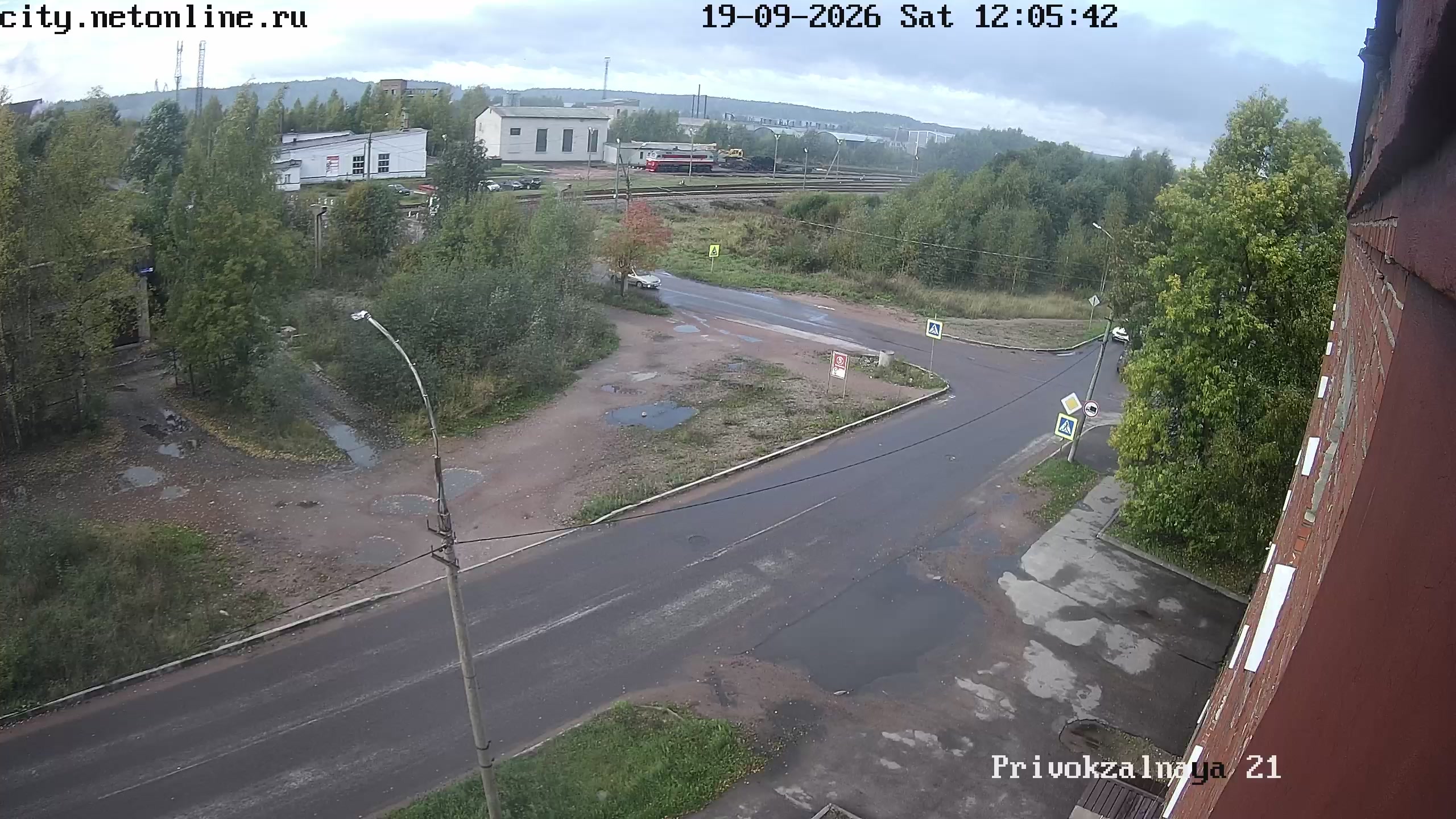
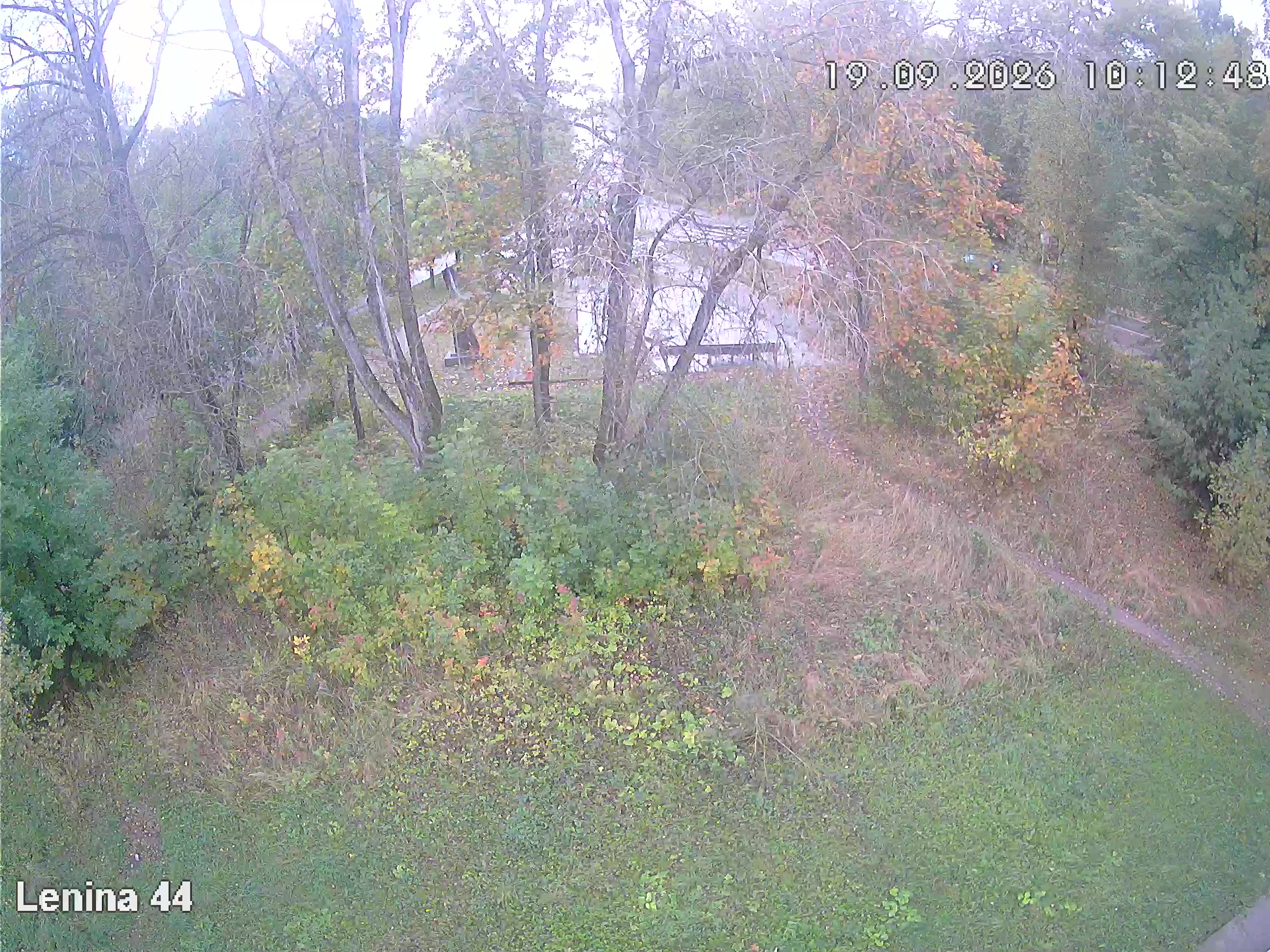
This page collects all available webcams of Pitkyaranta. Choose any broadcast to see the town in real time: central streets, the embankment of Lake Ladoga, residential neighborhoods, and industrial areas. Online cameras allow you to observe the life of this quiet Karelian town, assess the weather before a trip, or simply enjoy the views of the Northern Ladoga region without leaving home.