

🏙️ Live Webcams in Estoril — Watch Online in Real Time
1 cameras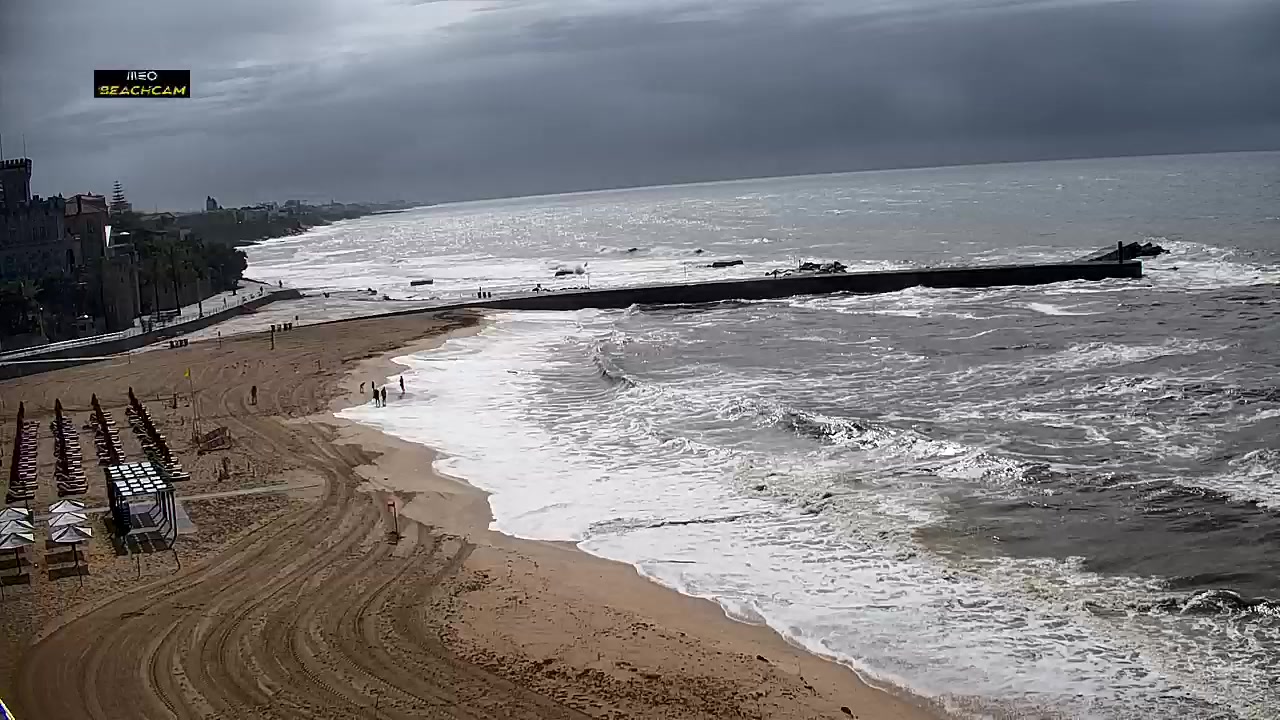
The Resort of Spies and Kings
Estoril is not just a suburb of Lisbon, but a separate chapter in Portugal's history. Located in the Cascais municipality on the Atlantic coast, the town was a quiet fishing village in the 19th century and by the 20th century had become one of Europe's most aristocratic resorts. The name comes from an Arabic word meaning "spring" — underground springs did indeed flow here, attracting the first settlers: Phoenicians, Romans, and later Moors.
During World War II, neutral Portugal became a crossroads of intelligence services. It was in Estoril that the paths of spies from all countries crossed — British, German, and Soviet agents played their games in hotels and along the promenade. Ian Fleming, the future creator of James Bond, served in British military intelligence at the time and personally witnessed this game. Many historians believe that it was the atmosphere of Estoril that formed the basis of his novels.
After the war, the town became a haven for exiled monarchs. King Umberto II of Italy spent his final years here, and King Carol II of Romania acquired a residence on the coast. King Juan Carlos I of Spain attended the lycée in Cascais — just a few kilometers from Estoril.
Today, walking through the streets of Estoril, you can follow the traces of these stories. Cameras in the city center show the promenade where intelligence officers and crowned heads once strolled.
Casino Estoril — Where Agent 007 Was Born
Casino Estoril opened in 1958 and became one of Europe's largest gambling establishments. The mid-century modernist building still attracts visitors not only with its games but also with its history. During World War II, a colorful crowd gathered here: diplomats, aristocrats, suspicious gentlemen with unclear functions — many of them were agents under cover.
In 1941, German spy Alexander Wassmus attempted to recruit the son of the Duke of Windsor — former British King Edward VIII — right in the middle of a game. This story of bluffing, bets, and double-dealing inspired Ian Fleming to write Casino Royale — the first James Bond novel, published in 1953.
The casino still operates today and remains one of the resort's landmarks. A camera on the building's façade allows you to see the regulars and the architectural ensemble in online mode.
Fortresses and Defensive Architecture
The Estoril coastline has been defended for centuries. The 17th-century Fort of Conceição stands on a rocky shore and guards the bay. Its walls overlook the sea from all sides, and inside, barracks and gun ports are preserved. Nearby is the 16th-century Fort of São Teodoro, part of a chain of coastal fortifications built to defend against pirates and enemy fleets.
These defensive structures were erected during the era of Portuguese expansion, when the coast needed protection from Spanish and North African raids. Today, the forts have been transformed into public spaces and architectural monuments, open to visitors.
Beaches, Promenade, and Ocean
Estoril's main beach — Tamariz — is a sandy strip at the foot of cliffs, fringed with palm trees and restaurants. The water here is cool even in summer — the Atlantic doesn't spoil you with warmth but makes up for it with cleanliness and clarity. Nearby are rocky coves where local fishermen still go out to sea in boats.
The Marquês de Pombal promenade stretches along the coast, connecting Estoril to Cascais. It is a pedestrian zone about three kilometers long, paved with traditional Portuguese calçada — black and white mosaic with wavy patterns. A walk along it is the best way to feel the rhythm of the resort.
The camera on the promenade shows views of the ocean, the promenade, and the mountains of Sintra on the horizon.
Estoril and Cascais — Two Resorts, One Municipality
Estoril has been part of the Cascais municipality since the 1840s, and today these towns have practically merged into a single agglomeration. But the difference between them is palpable: Cascais preserves its fishing heritage and baroque palaces, while Estoril has the atmosphere of a 20th-century international resort with its casino, spy stories, and aristocratic villas.
Cascais beaches are wider and sandier, while Estoril is dominated by rocky coves. Cascais architecture features medieval fortresses and baroque palaces; Estoril has 1950s modernism and functional buildings from the resort era. Fifteen kilometers away is the Cultural Landscape of Sintra — a UNESCO World Heritage Site with palaces and parks on green slopes, visible from Estoril in clear weather.
Legends of the Coast
Three rocks at Tamariz Beach are considered, in local tradition, to be petrified sea spirits that guard the bay from storms. Another legend about the "Golden Fish" promises the fulfillment of a wish to anyone who sees it in the waters of the bay. Fishermen still tell these stories to children before heading out to sea.
In June, the town celebrates the feast of Saint Anthony, the patron saint of Estoril. Bonfires, music, grilled sardines, and traditional dancing fill the streets. In summer, a seafood fair takes place where you can taste fresh fish and oysters.
What the Cameras Show
Estoril's webcams are installed at key points of the resort: on the promenade at Tamariz Beach, in the square in front of the casino, at the Fort of Conceição, and at intersections in the center. They broadcast panoramas of the coast, architectural monuments, and everyday life of the resort. You can watch the streams at any time — the cameras operate in real time, allowing you to see the coastal weather, beach occupancy, and movement along the Estoril promenade.