

🏙️ Primošten Webcams Online — Watch Live in Real Time
1 cameras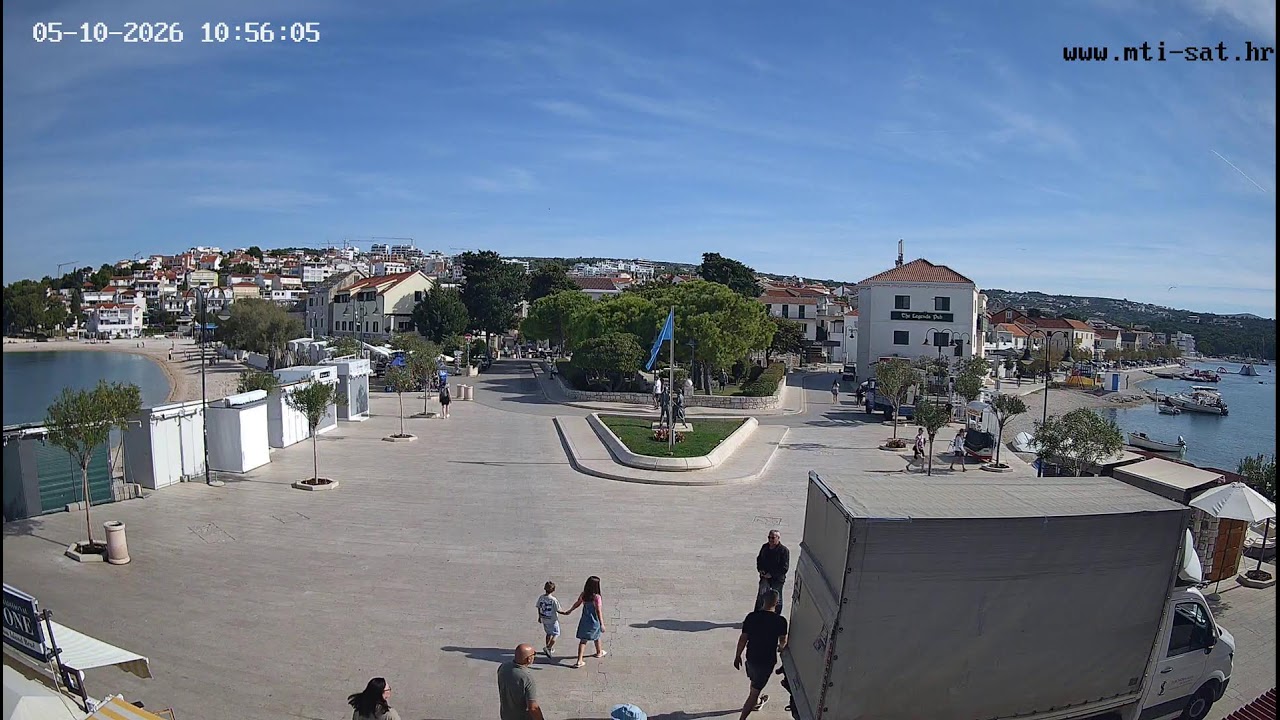
Northern Dalmatia Region on the Adriatic
The small coastal town of Primošten is located in Northern Dalmatia, Croatia, in Šibenik-Knin County, on the shores of the Adriatic Sea. The town has a population of about 2,000 residents. It lies 60 km north of Split and 70 km south of Zadar. The Adriatic Highway runs through Primošten, connecting the town with other coastal resorts. Regular bus service provides convenient transport links to the country's largest settlements. The cities of Split, Šibenik, and Zadar are accessible by various modes of transport.
Primošten is considered one of the most beautiful small resorts on the Adriatic. The tiny peninsula on which the old part of town stands divides the coastal plain into two parts and is connected to the mainland only by a stone bridge. From a bird's-eye view, the peninsula looks like a small island in the Adriatic Sea. The coastline is indented with small coves and rocky outcrops. The harbor offers a panoramic view of the island of Čiovo, which has a rich history and natural attractions. The bus stop is just a two-minute walk from the town center, making the area pedestrian-friendly.
History of the Small Coastal Town
Primošten is a town with a long history stretching back centuries. The ancient name of the town is Caput Cista, which translates as "bare head" due to the shape of the peninsula. Primošten was first officially mentioned in documents from 1564, when it was surrounded by stone walls with towers. In those days, the port was important for navigation along the Adriatic coast. The town fortifications provided protection against pirate raids from the sea.
In the Middle Ages, the town's coastal position determined its economic and political status. Fish and seafood trade became the foundation of the settlement's existence. Fishermen and merchants from across the Mediterranean would enter Primošten's harbor for goods and rarities. The town flourished and developed, maintaining its characteristic coastal appearance. The towers of the fortress walls and the preserved gates of the town fortifications serve as reminders of past glory.
The Old Town on the Peninsula
The old town of Primošten is the most picturesque place in the town. It sits on a tiny peninsula-islet in a narrow strait that separates the mainland from the island of Čiovo. This unique geographical position makes the old town visually resemble a small island connected to the land by a bridge. The elevation of the peninsula and the lack of direct vehicle access have created an atmosphere of tranquility and coziness, as well as a sheltered dock for sea vessels.
The architecture of the Old Town is picturesque. Narrow streets between white stone houses with orange roofs create the characteristic image of the Dalmatian coast. Many house facades are adorned with plant ornaments, sculptures, and statues of patron saints. The development of tourism in recent decades has stimulated the restoration of historic buildings, preserving the authentic appearance of the town. A walk through the Old Town with a visit to the viewpoint near the marina opens up a panorama of the Adriatic and nearby islands.
Architectural Gems of the Old Town
The main temple of the town — the Church of St. George, built in the 15th century, rises above the entire town. The white bell tower of the church is visible from afar against the backdrop of terracotta roofs, making it the town's main landmark. The interior of the church is decorated with frescoes and a wooden Baroque altar, while stained glass windows fill the space with warm tones. On the feast of St. George, the church fills with worshippers and tourists who come from all corners of Croatia.
Another important architectural landmark — the Church of Our Lady of Mercy, built in 1553. The building is located in the historic center, near the waterfront. Inside the church, ancient frescoes, Baroque altarpieces, and wall paintings have been preserved. Also in the Old Town is the Palazzo Comunale, a property from the 14th–16th centuries, which now serves as the town hall. The building was reconstructed in the 19th century in a historicist style, its facade adorned with stucco and sculptural elements.
The Church of St. Stephen is located on the island of the same name near Primošten. This small island is called the holy island because of the ancient temple that stands at its very top. Access to the island is by boat from Primošten harbor. Locals consider the island of Sveti Stefan a place of spiritual seclusion. Ancient icons and relics have been preserved in the church vaults, and the summit offers a panoramic view of the Adriatic.
Wine Culture of the Region
Winemaking has deep traditions in these lands. The vineyards of Primošten are located on slopes where the sun ripens the grapes year-round. Babić wine — a famous red wine from the surroundings of Primošten and Šibenik, an indigenous variety of the region. This grape variety has been cultivated here for centuries, its fruits yielding a deep ruby color and complex aroma with notes of cherry and spices. The winemaking traditions of Primošten include not only production but also the celebration of wines through gastro-festivals.
A walk along the Primošten wine route passes through the narrow streets of the old town and vineyards dotted with wineries. Local winemakers conduct tours of their cellars, where tourists can learn about the history of production and taste samples. The region's wine production contributes to the preservation of the rural landscape, turning the hills around the town into green vineyards that form a picturesque landscape. Primošten has a wine bar and restaurants featuring local wines and Adriatic seafood on their menus.
Primoštenška Užance — Fishermen's Night
One of the most significant cultural events in the region is the Primoštenška Užance festival, held in early August, on the first weekend of the month. This ethnographic folklore festival revives the ancient customs and traditions of local residents. The festival is dedicated to fishing, seafood, and traditional cuisine, which is an integral part of coastal culture. The festival program includes concerts by folk ensembles, circle dance performances, and demonstrations of ancient fishing gear.
During the festival, demonstrations of fishing from sailboats, traditional pottery, and crafts take place through the streets of Primošten. Guests are treated to dishes of fresh fish and seafood prepared according to ancient recipes. The lights of lighthouses and torches illuminate the night streets of the Old Town, creating the atmosphere of a true medieval celebration. The ethnographic museum and church choirs conduct thematic tours introducing visitors to the history of Primošten and its residents.
Self-Guided Exploration Program
For a self-guided tour of Primošten, it is recommended to start with a walk through the Old Town. Narrow streets between white stone houses with orange roofs lead to a viewpoint offering a panoramic view of the Adriatic. Be sure to visit the Church of St. George, the Church of Our Lady of Mercy, and the town hall building Palazzo Comunale. Time in the Old Town can be combined with wine tasting at restaurants serving seafood dishes.
The gastronomic tour includes Babić wine tastings at wineries in the surroundings of Primošten and Šibenik. The self-guided exploration program can include an excursion to the island of Čiovo, to Krapanj (sea sponge museum), and to Zlarin (coral tourism center). In March, Zlarin hosts a coral festival, when the town is decorated with illuminated coral installations. The surroundings of Primošten are rich in nature parks and protected natural areas, which are offered for walking and cycling excursions.
Logistics and Transport
Primošten can be reached via the Adriatic Highway, which connects the town with Split, Zadar, and Šibenik. Regular bus service ensures convenient travel throughout Croatia. Buses run from Split to Primošten once an hour, with a journey time of about one hour. From Zadar — about 1.5 hours, and from Šibenik — just over an hour. In the summer season, taxis operating between ports and the town are available. By car, the highway provides access to all resort areas of the Adriatic.
What the Cameras Show
This page features Primošten webcams for observing town life in real time. The cameras are located in different areas of the town: the Old Town, waterfront, harbor, residential areas, and on the road to Split. Click on a camera to view the live stream. With webcams, you can check the weather on the Adriatic, enjoy coastal scenery, and get a sense of resort life at any time of day. The cameras offer HD image quality, stable connection, and free viewing without registration.