

🏙️ Plaški Webcams Online — Watch the City in Real Time
1 cameras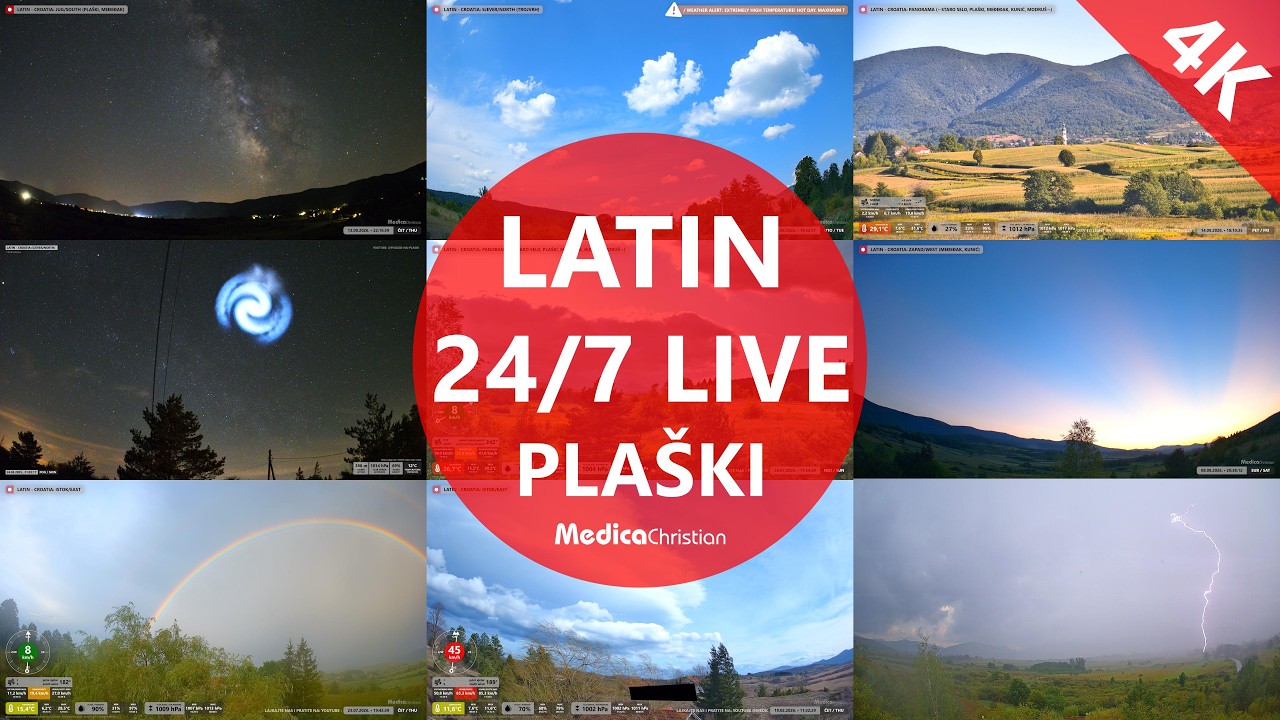
History of Plaški: From Roman Times to the Present Day
The small Croatian town of Plaški preserves the memory of several historical eras. The first written mention of the name dates back to 1163, when it appeared in documents of the Diocese of Split of the Roman Catholic Church. However, these lands saw people long before the Middle Ages — Roman coins found here prove that the region was inhabited in ancient times. Archaeological finds indicate that ancient trade routes passed through this territory, connecting the Adriatic coast with the interior of the Balkan Peninsula.
In the mid-20th century, the municipality of Plaški encompassed 14 settlements, including Janja Gora, Ozero, Kunić, Lapat, Latin, Medarica, Međedak, Plaščanski Potu and Šupiće. Today it is a settlement of the Lika type, located near the town of Ogulin, making it a convenient base for exploring the Lika region. The town's architecture preserves features of traditional Mountain Croatia construction — stone foundations, wooden upper floors, and characteristic attic windows.
Geographical Location: Gateway to Lika
Plaški is located in the Plaščanska Valley, which is part of the Ogulin-Plaščanska Valley and belongs to Mountain Croatia. This region lies between the Velebit and Plešivica mountains, connecting inland Croatia with the Adriatic coast. The road over Velebit via the Veliki Alan pass historically served as the geographical boundary between the northern and central parts of the mountain range.
The Lika region is one of the wildest and least populated corners of Croatia. It is here that the karst landscape, covering half the country, creates unique geological and hydrological phenomena. Caves, underground rivers, karst fields, and sinkholes form a landscape that attracts speleologists and geologists from across Europe. Plaški webcams allow you to observe this rugged beauty in real time, assessing weather conditions before traveling into the mountains.
Natural Wealth: Velebit and Karst Landscapes
Mount Velebit is not just a geographical feature but a true national symbol. In Croatian folklore, it is celebrated in the patriotic folk song "Vila Velebita" (Fairy of Velebit), which personifies the mountain as a mythical being. Historically, Velebit connected coastal regions with the deep interior of Lika into a single economic and cultural whole — roads passed through it for the exchange of goods between the coast and the continent.
The Velebit Nature Park is the largest protected natural area in Croatia. Over 150 bird species inhabit the area, including rare eagles and falcons, and about 1,500 species of plants and fungi grow here. Among them is the endemic Velebit degenia (Degenia velebitica), found only in these mountains and which has become a symbol of the region. Velebit's biodiversity also includes brown bears, wolves, lynx, and many other rare animal species.
Cultural Heritage and Attractions
Near Plaški is located the Nikola Tesla Memorial Center in Smiljan — a cultural attraction of the region that draws fans of the great inventor. The museum was opened in 1956 and includes the house where Tesla was born, the church where his father served, and an exhibition hall with original documents and reconstructions of inventions.
The area also features the Barač Caves and the picturesque village of Rastoke with watermills, popular among tourists. Rastoke is often called "little Plitvice" due to its cascading waterfalls and traditional wooden buildings preserved from the 18th century. Webcam broadcasts reveal traditional Mountain Croatia architecture — stone houses, wooden roofs, and small churches characteristic of Lika settlements.
Plitvice Lakes: The Pearl of Croatia
Relatively close to Plaški are the Plitvice Lakes — a UNESCO World Heritage Site since 1979. This is the largest national park in Croatia, covering almost 300 square kilometers. 16 cascading lakes connected by waterfalls welcome over a million visitors annually. The lake waters change color from emerald to turquoise depending on lighting and mineral content.
Online cameras in this region show not only city views but also approaches to natural attractions, allowing you to assess trail congestion and weather conditions before your trip. The road from Plaški to Plitvice passes through scenic mountain passes and traditional pastures where you can encounter flocks of sheep — the foundation of local agriculture.
Climate and Weather in Plaški
The mountain climate of the Lika region features cool summers and snowy winters. Elevation differences create a variety of microclimates — the valley may be sunny while fog or rain covers the passes. Average July temperature is around 18°C, while January drops to -3°C. Abundant precipitation feeds numerous springs and rivers, forming the unique hydrological network of the karst region.
Plaški webcams help track these changes in real time. Weather monitoring is especially important for tourists planning mountain hikes or visits to Plitvice Lakes. In winter, cameras show snowy landscapes and conditions on mountain roads, while in summer they reveal green pastures and valley mists.
What the Cameras Show
This page features webcams from Plaški and its surroundings. You can choose a broadcast with views of central streets, mountain landscapes, or approaches to natural attractions. All cameras operate 24/7, providing free access to live streaming without registration. Enjoy the atmosphere of Mountain Croatia in HD quality right now — discover the rugged beauty of Lika and the majesty of Velebit without leaving home.