

🏙️ Kythira Island Webcams Online — Watch in Real Time
1 cameras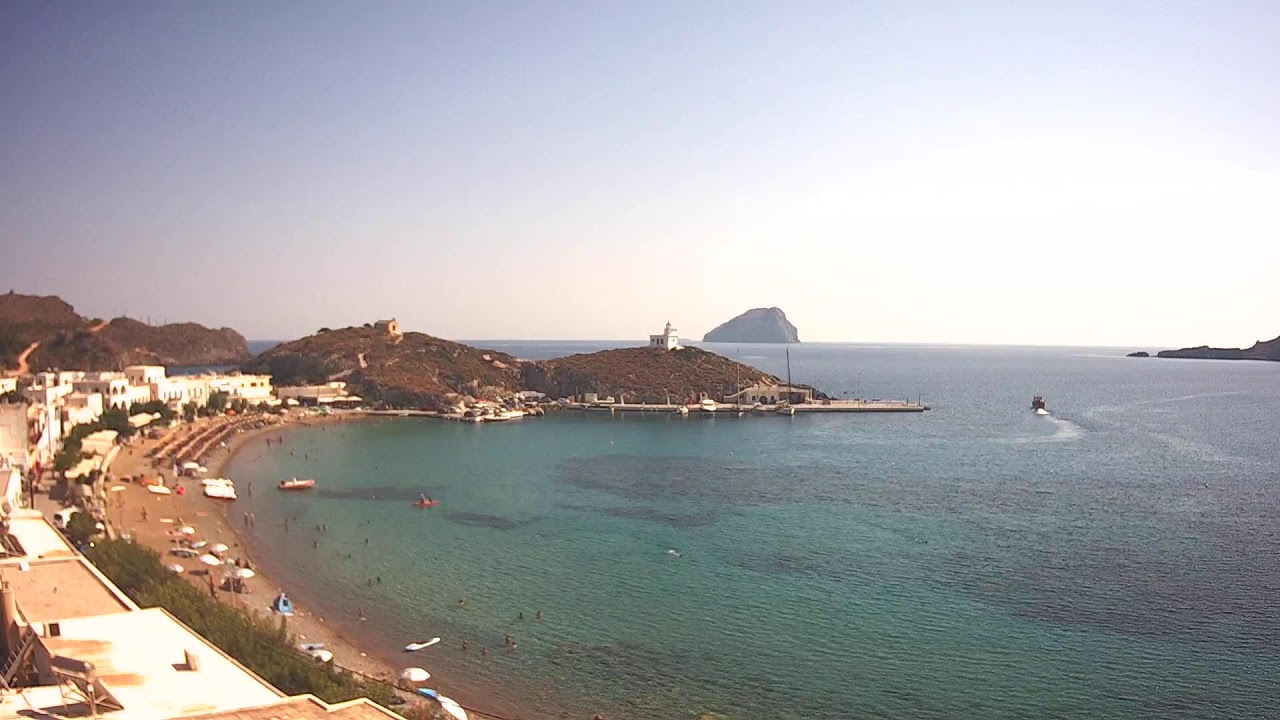
Myths and Legends of Kythira Island
This patch of land in the Aegean Sea has been shrouded in myths since time immemorial. According to Hesiod's "Theogony," it was off the coast of Kythira Island that the goddess of love Aphrodite was born from the sea foam, before heading to Cyprus. The ancient Greeks called it the "Island of Aphrodite" — a place where the divine touches the earthly. According to legend, Odysseus also stopped here during his wanderings when he was caught in a storm near Cape Malea. For the Hellenes, Kythira Island was not just a geographical point, but sacred territory where gods walked the earth.
Mythology here literally permeates the air. Every stone, every cove has its own story connected to ancient cults. The worship of Aphrodite on Kythira Island was ubiquitous — the goddess's sanctuary was located in a place now known as Palaepoli. Archaeological excavations have uncovered fragments of mosaics and temple foundations here, confirming that the cult of the goddess of love flourished on the island long before our era.
Geographical Location: Where Kythira Is Located
Kythira Island is located in southern Greece, between the Peloponnese peninsula and the island of Crete, at the point where the Ionian, Aegean, and Cretan Seas meet. This strategic position at the crossroads of sea routes determined the island's turbulent history — it was successively controlled by Venetians, Ottomans, the British, and the French. Kythira Island lies 12.5 nautical miles from Cape Malea in Laconia and 120 miles from Piraeus, a stretched island 29 km long and 18 km wide, with a coastline of 122 kilometers.
Isolation from mainland Greece shaped the unique character of the local culture. Kythira Island remained difficult to access for a long time, which allowed it to preserve traditions, dialect, and architecture that had long been lost on the mainland. Today, you can get here by plane from Athens in just 45 minutes or by ferry from several ports in the Peloponnese. Kythira Island webcams allow you to see this remote beauty without leaving home.
Chora and the Venetian Castle — The Heart of the Island
The capital of Kythira Island — Chora — is a town that hovers above the sea. The Venetian Castle of Chora towers above the sea atop a steep cliff at 300 m above sea level. From here opens a breathtaking panorama — endless waters in all directions, and below — a labyrinth of narrow streets with stone houses and bright shutters.
Venetian rule on Kythira Island lasted until 1797, until the liquidation of the Venetian Republic by the French. Chora is a town of majestic Venetian buildings, churches, and structures from the period of British rule. The castle was reconstructed in 1565, when the Venetians strengthened the island's defenses, additionally building a castle in Avlemonas 32 kilometers from Chora. Today, a church operates inside the castle, and you can walk along its walls, imagining how Venetian soldiers served on these towers.
The architecture of Chora is a true layered cake of eras. Byzantine temples neighbor Venetian mansions, Ottoman mosques — with English colonial buildings. Narrow streets are paved with stone, and in the shadows of arches hide small taverns serving local cuisine. Kythira Island is unique in this regard — nowhere else in Greece will you find such a mixture of architectural styles in such a compact area.
Monasteries and Caves: Sacred Places of Kythira
The spiritual life of Kythira Island is centered around numerous monasteries and churches. One of the most revered is the Monastery of the Virgin Mary in the village of Mylopotamos, built in the 19th century to house an ancient icon of the Mother of God, which was previously kept in the fortress of Chora. The monastery is located at the end of a gorge, before the water reaches the sea. In translation, the name means "mill stream."
The monastery houses the icon of the Virgin Mary "Myrtidiotissa," which was found on the island in a myrtle bush. When the shepherd brought the icon home, it disappeared the next day and was found in its original location, which was understood as the desire of the Virgin Mary for a monastery to be built at this site. In the monastery's gorge are ancient watermills demonstrating industrial architecture of the past. Fila's watermill has belonged to the family for 350 years.
Among the attractions are also the Cave of Agia Sophia with stalactites and stalagmites, the Byzantine and Archaeological Museums, as well as the Monastery of Myrtidiotissa (Panagia Myrtidiotissa) — the largest monastery on the island. The Cave of Agia Sophia amazes with its underground halls — stalactites and stalagmites have created an entire stone city here, illuminated by artificial light. According to legend, local residents hid from pirates in this cave for centuries.
Beaches and Coastline: From Diakofti to Kapsali
Kythira Island is famous for its beaches, each with a unique character. The most beautiful beaches of Kythira include sandy Diakofti, Kapsali (sheltered from winds), and Firi Ammos, as well as pebble beaches Kalady, Chalkos, and Melidoni. Diakofti Port is the main sea gateway of the island, where ferries from the mainland arrive. Diakofti Beach is sandy, with a gentle entry into the water, ideal for family vacations.
Kapsali is another popular beach, located in close proximity to Chora. It is sheltered from winds by high cliffs, making it comfortable even on windy days. The water here is crystal clear, and the infrastructure is well-developed — taverns and cafes operate along the coast. Kythira Island also offers wild beaches that can only be reached by mountain trails or by boat — for those seeking solitude with nature.
The coastline of Kythira Island is indented with coves and bays, many of which are inaccessible by land. This is why Kythira Island webcams become a valuable tool for exploring remote corners — you can see wild beaches and rocky cliffs that cannot be reached on foot. The 122-kilometer coastline hides many surprises for explorers.
How to Get to Kythira
Kythira Island is accessible by several means. From Athens to Kythira you can get by plane (travel time 45 min) or by ferry from the port of Piraeus, Neapoli, or Gythio. Air travel is the fastest option, with Kithima Airport receiving flights from the Greek capital. The road from Athens to Neapoli (the ferry port) takes about 4–5 hours (about 330 km), the length of the direct ferry route is 202 km.
Ferry service to Kythira Island operates regularly, although the schedule depends on the season. In high season, ferries run more frequently, and in winter the number of flights decreases. Diakofti Port receives both passenger ferries and cargo ships providing the island with everything necessary. For those planning a trip, Kythira Island webcams online allow you to assess the situation at the port and weather conditions in advance.
On Kythira Island itself, the transport infrastructure is modest — the main means of transportation is a car or scooter, which can be rented in Chora or at Diakofti Port. Public transport is represented by buses connecting the main settlements, but the schedule is limited. Many tourists prefer to walk — the trails on Kythira Island pass through olive groves, cypress alleys, and along picturesque cliffs.
Weather on Kythira Island
The climate of Kythira Island is typical Mediterranean with mild winters and hot dry summers. Due to its location at the junction of three seas, the weather here can change rapidly — the sun may shine in the morning, and a strong wind may rise after lunch. The Ionian Sea brings cooler air masses, while the Cretan Sea brings warm and humid ones.
In summer, the temperature on Kythira Island often exceeds 30 degrees, but the sea breeze makes the heat bearable. In winter, the thermometer rarely drops below 10 degrees, although frost is possible in mountainous areas. Precipitation falls mainly in the winter months, and summer is practically cloudless. Kythira Island webcams in real time allow you to see the current weather — whether there is cloudiness, whether the sea is rough, what the visibility is on the trails.
Spring and autumn are the best time to visit Kythira Island if you want to avoid crowds of tourists and exhausting heat. In these seasons, nature is especially beautiful — in spring the island is covered with flowering grasses and wild orchids, and in autumn the olive groves take on a golden hue. The sea water temperature allows swimming from May to October.
What the Cameras Show
Kythira Island has webcams broadcasting views of key points on the island. The camera at Diakofti Port shows the arrival of ferries and yachts, movement in the harbor, and a panorama of the coastline. The Chora webcam is aimed at the Venetian castle and opens a view of the labyrinth of streets in the capital of Kythira Island. The camera at Kapsali Beach broadcasts the coastline with its crystal water and rocky shores.
The airport webcam of Kythira Island allows you to observe the runway and aircraft movement — interesting for aviation enthusiasts and those waiting for a flight. Separate cameras are installed near the Mylopotamos Monastery, showing the gorge with watermills and approaches to the shrine. All Kythira Island webcams operate in real time and are available for viewing without registration.
For observing the weather on Kythira Island online, cameras aimed at the open sea are most useful — they can be used to judge wave height, wind direction, and the general atmospheric conditions. Kythira Island webcams are a window into a world where myths become reality and the beauty of nature needs no filters.