

🏙️ Jerusalem Webcams Online — Watch the Holy City in Real Time
5 cameras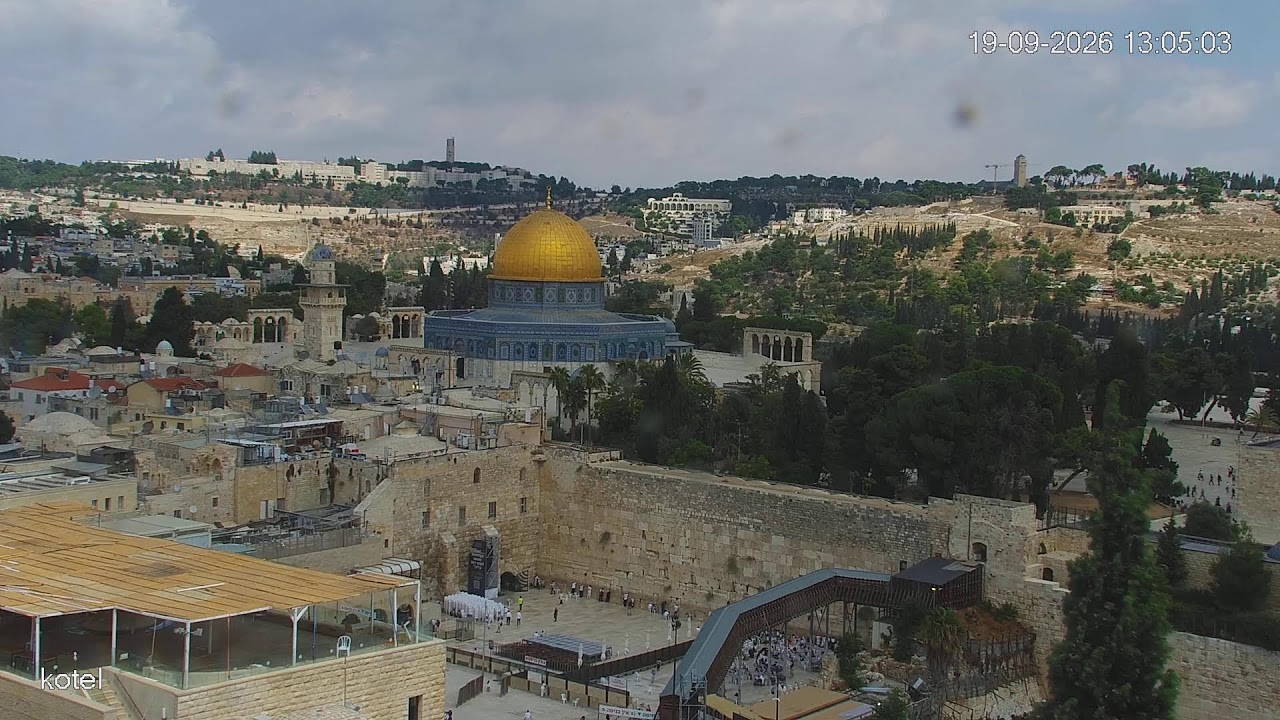


Jerusalem — a city at the crossroads of civilizations
Jerusalem is unlike any other city in the world. Here, Jewish prayers at the Western Wall mingle with the voices of merchants in the Arab bazaar, and church bells ring in unison with the Muslim call to prayer. This city is a living open-air museum where every stone holds the memory of millennia. Jerusalem webcams online allow you to see this crossroads of cultures in real time — from morning prayers to the evening lights of the Old City.
The city is located at an altitude of about 700 meters above sea level, in the Judean hills, between the Mediterranean and the Dead Sea. This geographical position determined its fate — a crossroads of trade routes and spiritual pilgrimages. Today, Jerusalem is the largest city in Israel with a population of about 900,000 people, but its historical significance cannot be measured in numbers. Each district of the city tells its own story: from the ancient walls of the Old City to the modern neighborhoods on the western hills. The climate here is Mediterranean — mild winters and hot dry summers, making the city attractive at any time of year.
Three religions on 1 km²
The Old City of Jerusalem is a square with sides of about 900 meters, within which are concentrated the shrines of three world religions. Jerusalem is considered a sacred city for Judaism, Christianity, and Islam. On Temple Mount rises the Dome of the Rock with a golden dome 20 meters in diameter — the third most important shrine in Islam. Nearby is the Al-Aqsa Mosque, accommodating up to 5,000 worshippers. Inside the Old City, four quarters are clearly distinguished: Jewish, Christian, Muslim, and Armenian, each with its own traditions and way of life.
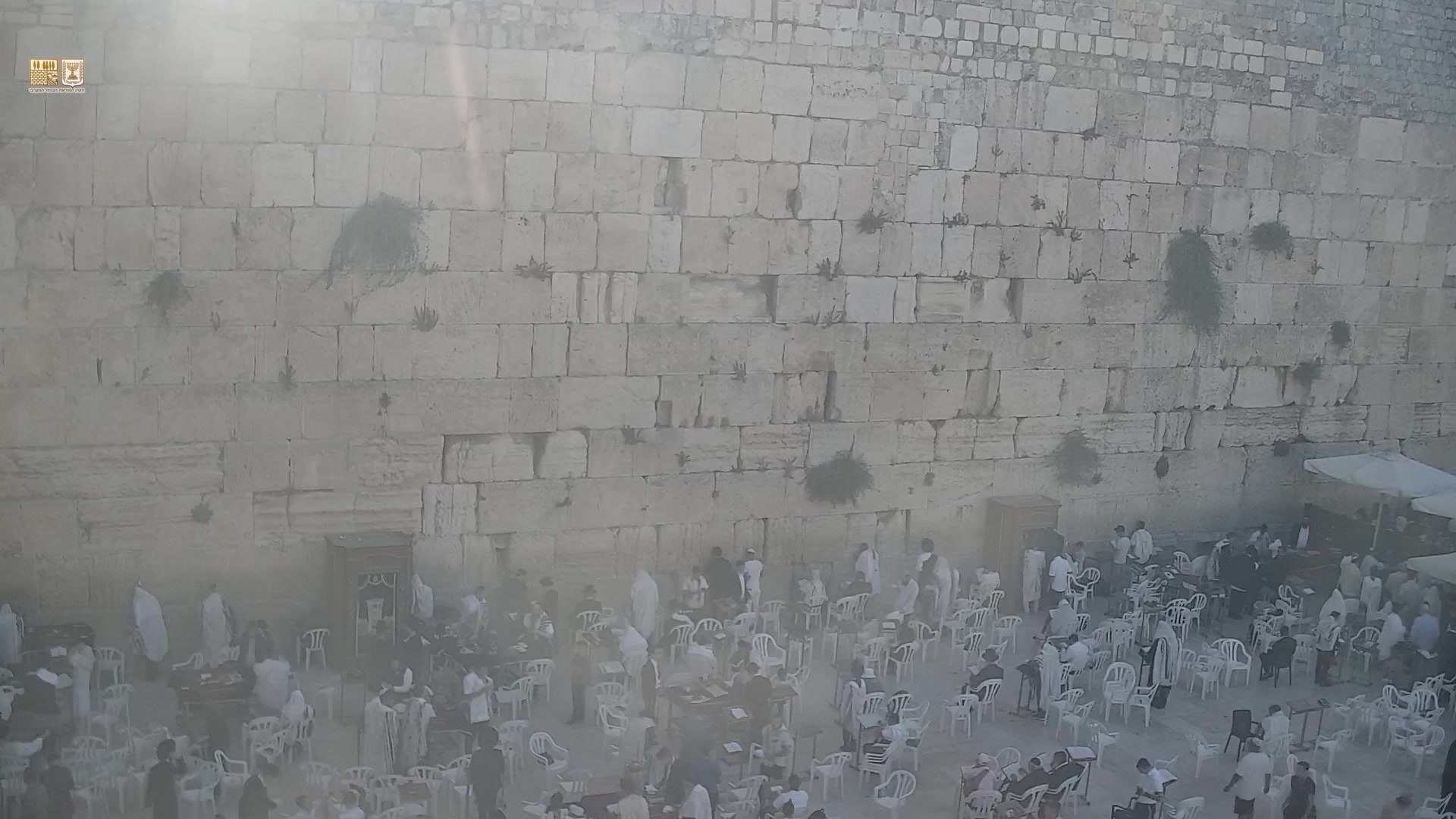
At the foot of Temple Mount stretches the Western Wall — the holiest site in Judaism. This is the only surviving wall of the Second Temple, destroyed by the Romans in 70 AD. Believers from around the world come here to pray and leave notes in the crevices between the stones. In the Christian quarter, at the place where Jesus was crucified and resurrected according to tradition, stands the Church of the Holy Sepulchre — the main shrine of the Christian world. Six Christian denominations share this holy place, and the keys to the church are kept by a Muslim family — an ancient symbol of interfaith harmony.
The stone that saw David and Herod
Jerusalem is recognizable from afar thanks to its unique appearance — all buildings are clad in natural stone of golden-pink hues. This is not an architectural whim, but a legal requirement. The British Mandate in 1918 introduced the "Stone Rule", which remains in effect to this day. According to this rule, every new building in the city must be faced with Jerusalem stone — limestone or dolomite mined in the surrounding mountains.
The colors of the stone range from snow-white to dark pink and orange-brown. Modern building standards allow cladding just 6 centimeters thick — previously the stone was a structural element of walls, but now serves a decorative function. But it is this tradition that creates that very Jerusalem silhouette, which cannot be confused with any other city in the world. At different angles of sunlight, the stone surface of the walls changes shades — from cold silver at dawn to warm gold at sunset.
Underground Jerusalem: tunnels beneath the city
Beneath the streets of the Old City lies a whole world — ancient aqueducts, underground reservoirs, and secret passages. The main jewel of underground Jerusalem is Hezekiah's Tunnel, carved into the rock around 700 BC. This 533-meter aqueduct connects the Gihon Spring to the Pool of Siloam and was built by order of King Hezekiah to provide water to the city during the Assyrian siege.
Walking through the tunnel today means immersing yourself in the atmosphere of an ancient engineering marvel. The water here is knee-deep, the walls narrow to one and a half meters, and the ceiling height varies from 1 to 5 meters. The temperature in the tunnel is constant — about 18 degrees, creating coolness even in the summer heat. Archaeological excavations in underground Jerusalem have been conducted since the 1860s, when British engineer Charles Warren began the first research. Since then, irrigation systems, passages to Temple Mount, and artifacts from the First and Second Temple periods have been discovered.
Seven gates of the Old City
The walls of Jerusalem's Old City are not just a fortification, but a chronicle in stone. Seven gates lead into the square where the fates of peoples and religions intertwine. The walls reach a height of 15 meters and a thickness of 3 meters. The Jaffa Gate is the main entrance from the west, through which pilgrims entered for centuries. The Damascus Gate on the north side is striking in its grandeur — beneath it, remnants of the Roman era have been preserved, including columns and arcades.
The Zion Gate leads to the Jewish quarter, and bullet marks are still visible on its walls — a memory of Israel's 1948 War of Independence. The Dung Gate is the closest to the Western Wall, through which Muslims enter Temple Mount. The New Gate was built in 1889 for the Christian quarter, and the Golden Gate on the eastern wall is sealed — according to tradition, the Messiah will enter through it. Each gate has its own history and architectural features, reflecting the era of construction and its purpose.
Mahane Yehuda Market: from dates to graffiti
If the Old City is Jerusalem's past, then Mahane Yehuda Market is its present. This market operates from Sunday to Thursday, and closes on Friday evening and Saturday due to Shabbat — the Jewish day of rest. This creates a unique rhythm: on weekdays, life bustles here, and on Saturday, silence descends, broken only by the voices of tourists.
The market's two main streets — Etz-Haim (covered) and Mahane-Yehuda (open) — offer not only fresh produce but also souvenirs, wine, and arts and crafts. In recent years, Mahane Yehuda has become a center of street art: shop walls are covered with graffiti, and bars and restaurants operate in the evenings. This is a place where you can try local cuisine — from hummus and falafel to sweets with honey and nuts. The market is bounded by Jaffa Road to the north, Agrippas Street to the south, Beit Yaakov Street to the west, and Jewish Agency Street to the east.
City of David: biblical past beneath your feet
To the south of Temple Mount stretches a narrow hill — the City of David. According to the Bible, it was here around 1000 BC that King David established his capital. Today it is an archaeological park with underground labyrinths revealing the history of ancient Jerusalem. Excavations began in the 1860s and continue to this day, uncovering new layers of history.
Archaeologists have discovered seals of officials from the First Temple period, pottery from the Second Temple era, and an ancient road to Temple Mount used by pilgrims. The Pool of Siloam, where water flowed from Hezekiah's Tunnel, has survived to this day. In this area, you can see the remains of palaces, water supply systems, and fortifications telling the life of the ancient city. Modern technology allows tourists to walk through underground tunnels and see artifacts that are over 3,000 years old.
What the cameras show
Jerusalem webcams cover the city's key points. Panoramic cameras on rooftops show the silhouette of the Old City with the Dome of the Rock and the spire of the Church of the Holy Sepulchre. Cameras in squares broadcast life at the Western Wall and Damascus Gate. Online streams are available from Mahane Yehuda Market, where you can observe the rhythm of city life.
Jerusalem city center webcam watch online — this is an opportunity to see the crossroads of civilizations in real time. Cameras in areas outside the Old City show modern Jerusalem — residential neighborhoods, parks, university campuses. Choose a stream and embark on a journey through the holy city without leaving home.