

🏙️ Lake Ritsa webcams online — watch the mountain lake in real time
1 cameras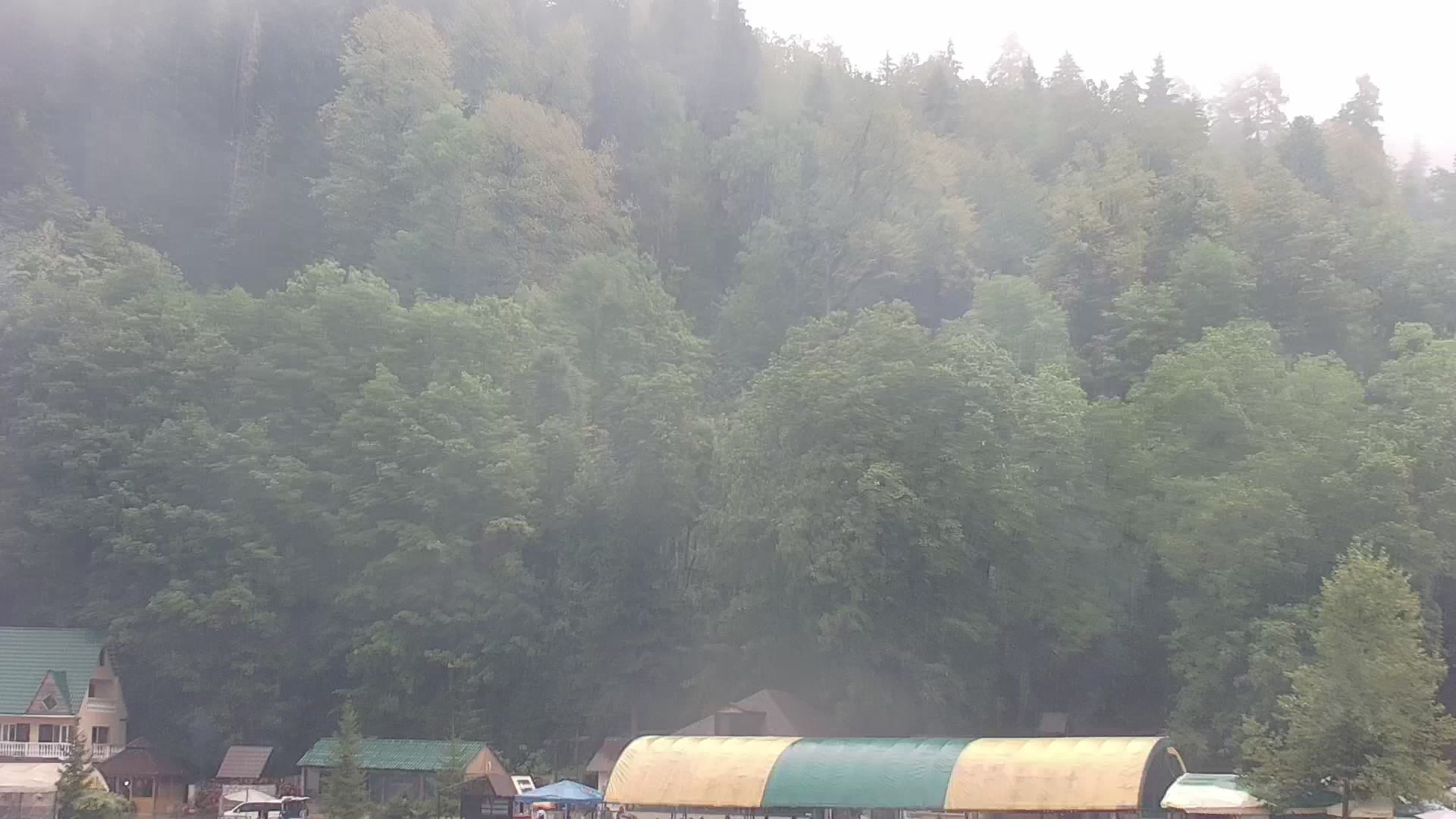
How an Earthquake Created the Pearl of the Caucasus
Lake Ritsa is not just a body of water, but a geological monument born from catastrophe. 250–300 years ago, a powerful earthquake caused Mount Pshegishkha to collapse, damming the Lashipse River. Thus this high-mountain basin was formed, flooded with crystal-clear water. Today, Lake Ritsa webcams allow you to witness this grandeur without a long mountain road climb — simply open the live stream.
The lake sits at an altitude of 950 meters above sea level in the gorge of the Lashipse and Iupshara rivers. The water body stretches about 2.5 kilometers in length, reaches 800 meters in width, and has a maximum depth of 116 meters (according to other sources, up to 153 meters). It is one of the deepest mountain lakes in the Caucasus, and its scale amazes even seasoned travelers.
Why the Water Changes Color: From Emerald to Azure
One of the most astonishing features of the lake is its seasonal color shift. In May the water takes on a greenish-yellow hue, in summer and winter it turns blue, and in autumn and winter it shimmers with azure-blue tones. This phenomenon is explained by the presence of microscopic algae and mineral suspensions in the water, which refract light differently depending on temperature and the angle of the sun's rays.
Local residents believe the lake bottom is covered with lazurite — a mineral that gives the water that very saturated blue color, for which Ritsa is called the "Abkhazian Baikal." Watching the shades change can go on for hours, and the Lake Ritsa live stream lets you catch these moments in real time.
Ritsa the Maiden and Her Heroic Brothers: A Tragic Legend
An ancient legend surrounds the lake, explaining its origin. According to the tale, a maiden named Ritsa lived here — with lips the color of pomegranate and eyes like two lakes. She had three heroic brothers: Agepsta, Atsetuka, and Pshagnshkhe. When the evil hunter Gega tried to abduct the beauty, the brothers engaged him in battle. During the fight, Ritsa fell into an abyss, and her brothers' tears filled the gorge, forming the lake. Gega turned into a river, while the brothers became the mountains surrounding the water body, guarding their sister's peace.
This legend has lived in the memory of the Abkhazian people for centuries. The mountains around the lake indeed resemble the figures of giants standing guard. The Lake Ritsa webcam shows these whimsical silhouettes framed by fog, creating a mystical atmosphere.
Stalin's Dacha: A Lakeside Residence
On the shore of Lake Ritsa stands a historical structure that attracts tourists no less than the lake itself. Stalin's Dacha — the residence of the Soviet leader, now open as a museum and tourist center. The building was constructed in 1947 on the site of the previous dacha destroyed in 1942. Stalin visited here several times, and for his visits a narrow-gauge railway was built from Gagra.
Interestingly, the dacha has preserved its original furniture and Soviet-era interiors. Visitors can see the leader's desk, a billiard room, and even his personal bathroom. Today, a cafe serving Abkhazian cuisine operates nearby, and boats can be rented at the pier for lake excursions.
Ritsa Relict National Park: A Reserve with a Century of History
Lake Ritsa is the heart of a vast protected area. The Ritsa Relict National Park was established in November 1930 as a complex nature reserve, and in 1996 was transformed into a national park. The protected area covers approximately 16,289 hectares (according to other sources — up to 40,000 hectares), making it one of the largest reserves in the Caucasus.
Over 1,500 plant species grow on the park's territory, of which about 200 are endemics found only in this region. Relict Colchidian forests with boxwood groves have survived here, their age exceeding millions of years. Mountain meadows are covered with alpine grasses, and above the tree line, alpine meadows begin with carpets of edelweiss and mountain daisies.
What Rare Animal Species Inhabit the Reserve
The Ritsa Nature Reserve is home to many rare and endemic species. Scientists using camera traps have identified the habitat ranges and migration routes of rare animals, including the Caucasian red deer, chamois, Caucasian mountain tour, and brown bear. Among reptiles, the venomous Caucasian viper and endemic Asia Minor newts inhabit the area, found only in the purest mountain water bodies.
Ornithologists have recorded over 120 bird species in the park, including the bearded vulture, Caucasian grouse, and griffon vulture. Trout inhabit the waters of Lake Ritsa, having nearly disappeared from other regional water bodies due to pollution. The protected status of the area allows this unique ecosystem to be preserved in its pristine state.
Attractions Around the Lake: From Small Ritsa to Gega Waterfall
Lake Ritsa is only part of a natural complex that includes many other wonders. Within the Ritsa Relict National Park are located: Small Ritsa (5 km from Big Ritsa), Blue Lake, Milky Waterfall, Gega Waterfall about 70 meters high. Each of these sites deserves a separate visit.
Blue Lake is a karst sinkhole with water of an intense turquoise color that does not freeze even in the harshest winters. Milky Waterfall got its name from the white foam formed by the falling water — according to legend, this is the milk of mountain spirits. Gega Waterfall, the tallest in Abkhazia, cascades from a sheer cliff in a narrow canyon, creating a cloud of water mist visible from a kilometer away.
Seasonal Transformations: When Best to Watch the Lake
Lake Ritsa is beautiful at any time of year, but each season brings its own colors. In spring, the slopes are covered with blooming rhododendrons and azaleas, and melting snow feeds the waterfalls, turning them into thundering torrents. In summer, the lake reaches maximum brightness, and the water becomes transparent to a depth of up to 10 meters. In autumn, the forests turn gold and crimson, creating a contrast with the blue of the water surface. In winter, the peaks are capped with snow, and the lake is often shrouded in fog, giving the landscape a surreal appearance.
Abkhazia Lake Ritsa webcams allow you to observe these seasonal changes in real time, without leaving home. Morning broadcasts show fog creeping over the water, midday streams show the play of sun glints on the waves, and evening streams show sunsets painting the mountains in pink and purple tones.
How to Get There and What to Bring
The road to Lake Ritsa starts from the Sukhumi–Gagra highway and runs along the Bzyb River. The journey takes about an hour and a half from Gagra and two and a half hours from Sukhumi. The road is winding with numerous turns, but paved and well-maintained. Along the way, there are observation decks with panoramic views of the Bzyb gorge.
To visit the nature reserve, you need to purchase an entrance ticket — the cost depends on the season and visitor category. Rules are in effect on the park's territory: hunting, fishing, plant collection, and campfires outside designated areas are prohibited. It is worth bringing warm clothing — even in summer, evenings are cool, and the temperature difference between sun and shade can reach 15 degrees.
What the Cameras Show
A panorama webcam is installed on the shore of Lake Ritsa, broadcasting sweeping views of the water body while smoothly changing its viewing angle. The camera shows the mirror-like water surface, majestic mountains, and surrounding forest. Depending on the lens position, you can see Stalin's dacha, the pier area, or distant slopes covered with relict forest.
The Lake Ritsa webcam operates in real time and is available for free, without registration. The stream quality allows you to examine landscape details and observe how lighting changes throughout the day. This is a great opportunity to plan a trip by assessing current weather and road conditions, or simply to enjoy the beauty of Caucasian nature while being thousands of kilometers away from Abkhazia.