

🏙️ Nanaimo Webcams Online — Watch the City in Real Time
1 cameras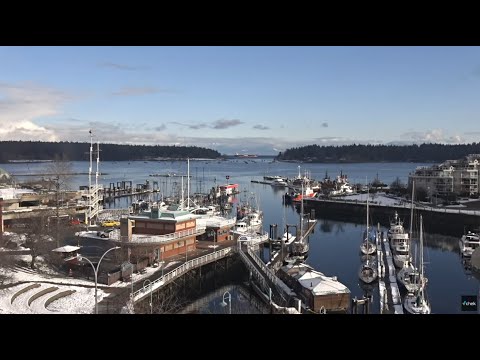
Nanaimo — Gateway to Vancouver Island
Nanaimo stretches along the eastern coast of Vancouver Island in British Columbia, approximately 110 kilometres west of mainland Vancouver. It is the second-largest city on the island, often called the "Harbour City" or "Hub City" — and for good reason. Nanaimo's bay historically served as a transport hub connecting the island to the mainland. Today, ferries arrive here from Vancouver and Hornby Island, and the city itself has become an important economic and cultural centre for the region. If you want to see this picturesque harbour with your own eyes, Nanaimo webcams online allow you to watch the life of the port at any time of day.
From Coal Mine to Tourist Gem
Nanaimo's history is inseparably linked to coal mining. In 1852, the Hudson's Bay Company established a fort here, and soon a settlement grew around it, named after the local Snuneymuxw people. For more than a century, the coal industry shaped the city's character — miners descended into the mines, and the port sent black gold to the mainland. But by the 1960s, the reserves were depleted, and Nanaimo faced the need to reinvent itself. Logging, fishing, and tourism became the new pillars of the economy, and the picturesque nature and mild climate attracted people seeking a quiet life by the ocean.
The Dessert That Conquered Canada
It's hard to imagine Nanaimo without its sweetest symbol — the Nanaimo bar. This three-layer no-bake dessert — cookie crumb crust, custard filling, and chocolate ganache — first appeared in print in 1953 in a cookbook by the Nanaimo Hospital Women's Auxiliary. However, its history runs deeper: similar sweets had been made in Canadian families since the 1930s, and the recipe was passed down unofficially from generation to generation. In 1985, Mayor Graham Roberts organised a contest for the best original recipe, which canonised the dessert and declared it the official symbol of the city. Since then, Nanaimo has even erected a monument to this treat — a giant bar that can be seen if you watch Nanaimo webcams in the city centre. And in 2019, Canada Post issued a stamp honouring the Nanaimo bar as one of the most Canadian desserts.
Bathtub Racing — Nanaimo's Pirate Traditions
One of Nanaimo's most colourful traditions is the bathtub racing, held annually in July. It all began in 1967 when Mayor Frank Ney decided to make the city a famous tourist attraction for Canada's 100th anniversary. Originally, the route ran across the open ocean from Nanaimo to Vancouver — about 75 kilometres through the rough waters of the Strait of Georgia. Due to difficult conditions and coast guard requirements, the course was later changed to a safer circular route around the harbour in Departure Bay. Participants build racing vessels based on bathtubs, equipping them with outboard motors, and Mayor Ney personally took to the water in a pirate costume with a parrot on his shoulder. This pirate aesthetic became permanently associated with the race, and today Bathtub Week remains one of the brightest summer events on Vancouver Island.
Ancient Petroglyphs and Rock Art
Nanaimo is home to one of the largest concentrations of petroglyphs in Canada — rock carvings that are thousands of years old. Petroglyph Park is located close to the city centre, and here you can see images of mythical creatures, fish, people, and abstract symbols carved into the rock by the Snuneymuxw people. These stones are not just archaeological artefacts but living testimonies to the spiritual culture of the indigenous peoples who inhabited these lands long before the arrival of Europeans. Many petroglyphs are associated with legends about Transformers — mythical beings who travelled the world, giving the earth its present form.
The Snuneymuxw People: Guardians of the Land
The Snuneymuxw (Snuneymuxw First Nation) are a Coast Salish indigenous people who have inhabited the southeastern coast of Vancouver Island for over 5,000 years. Their traditional language — Hul'q'umi'num' — is now endangered, with fewer than a hundred speakers remaining. In winter, the Snuneymuxw lived in large cedar longhouses, and in summer they moved to temporary camps for fishing and hunting. Salmon was the main food source and a spiritual symbol — fish was caught using weirs in the Nanaimo River. The central social ritual was the potlatch — a complex ceremonial celebration with feasting, dancing, and gift-giving. However, in 1884, the Canadian government banned the potlatch, and this ban remained in force until 1951, dealing a huge blow to indigenous culture. Today, the Snuneymuxw are actively restoring their traditions and fighting for the return of lands illegally alienated in the early 20th century.
The Legend of the Sisters and the Water Monster
The central legend of the Snuneymuxw people is the story of twin sisters and the water monster sxwuy'em. Long ago, a terrible water spirit lived in Nanaimo Harbour that devoured people. When twin sisters arrived in the village, their families decided to bribe the monster by giving the girls to it as wives. But the sisters did not want to leave their home. Then the spirit became enraged and began sucking the water out of the harbour. The sisters ran to the sea to return the water, but the monster killed them. At the site of their death, their bodies turned into stones — rocks that can still be seen along the shore. The word sxwuy'em in the Snuneymuxw language refers to this very place, associated with the stones and the sisters. This legend is not just a myth but part of the living cultural memory of the people, passed down from generation to generation.
Float Homes and a Unique Neighbourhood
One of Nanaimo's most unusual features is the float home community. An entire neighbourhood of the city consists of houses floating on the water and moored to docks. This is not just exotic housing but a full-fledged neighbourhood with its own infrastructure, where people live year-round. Float homes appeared in Nanaimo in the mid-20th century and have since become an integral part of the city's landscape. A walk along the waterfront allows you to see these unique structures, and if you don't want to travel far — Nanaimo webcams will show the harbour with its float homes in real time.
Climate and Nature: Milder Than You Think
Nanaimo lies in a temperate oceanic climate zone, which surprises with its mildness. Winters here are warm by Canadian standards — the average January temperature is about 3°C, and snow falls rarely and melts quickly. Summer is pleasant and not hot, with temperatures around 22-24°C. The city is surrounded by coniferous forests, and the coastline is indented with bays and islands. Nearby are marine parks where you can watch orcas, seals, and sea lions. This is a place where mountains meet the ocean, and the forest comes right up to the city limits.
What the Cameras Show
Nanaimo webcams cover key points of the city: from the waterfront and harbour to the central streets. You can watch Nanaimo online at any time — the cameras broadcast the life of the port, ferry movements, walks along the promenade, and harbour panoramas. If you are planning a trip to Vancouver Island or simply want to feel the atmosphere of this Canadian harbour city, the Nanaimo online stream is a great way to peek here without leaving home. Choose a camera and enjoy the view of the bay, float homes, and the endless ocean horizon.