

🏙️ Webcams Krasnodar online — watch in real time
1 cameras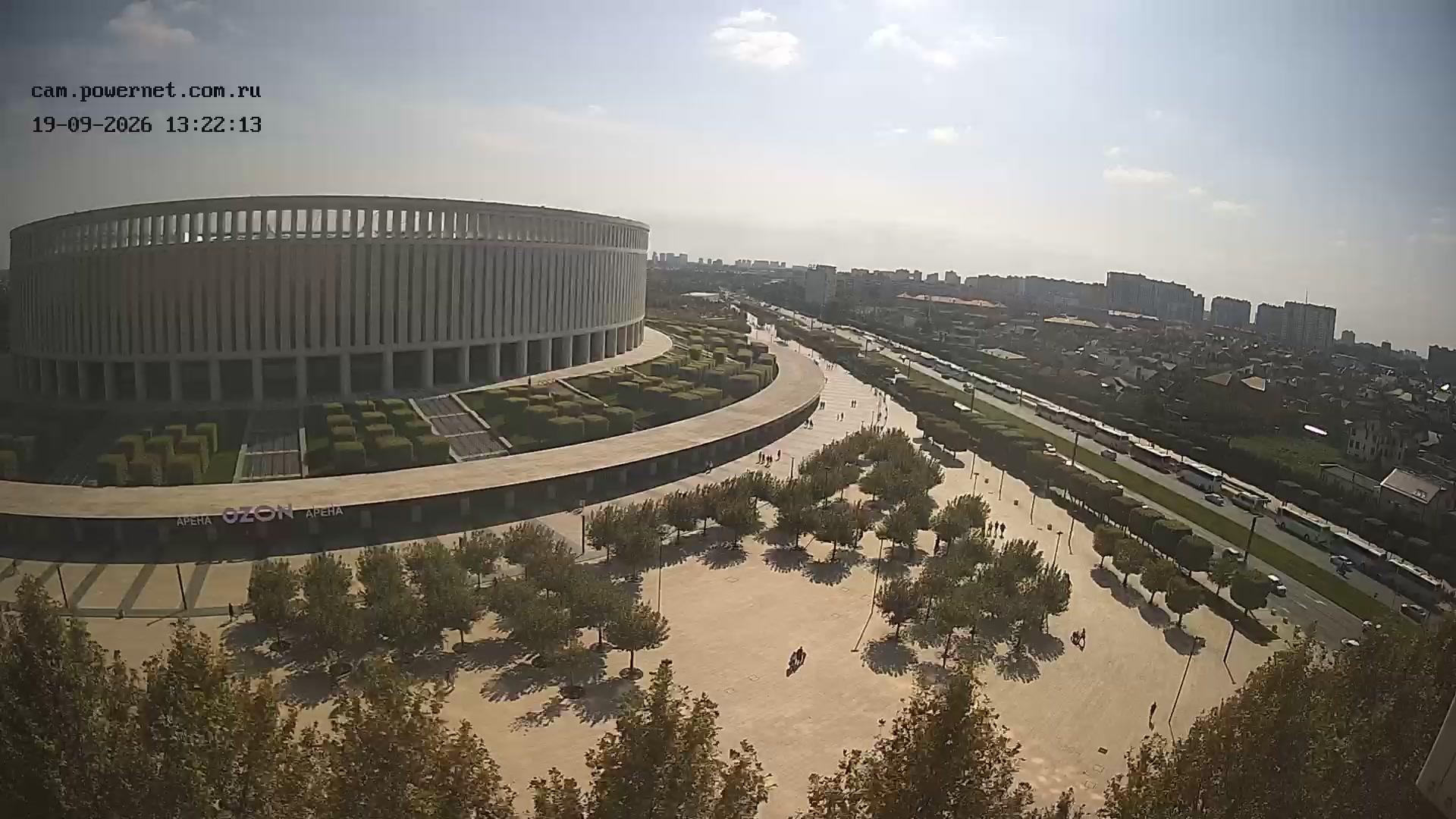
History of Krasnodar: from Yekaterinodar to the southern capital
Krasnodar is a city with a rich history that began in the late 18th century. Krasnodar was founded in 1793 as the Yekaterinodar fortress — "the gift of Catherine II" to the Black Sea Cossacks for their loyalty. This name was given in honor of Empress Catherine II, or more precisely — in honor of her name day, that is, Saint Catherine. On June 30, 1792, the empress granted the Cossacks the territory between the Kuban River and the Sea of Azov, and the following year the future capital of Kuban was founded at the Karasunsky Kut.
The founders of the city were the atamans of the Black Sea Cossack Host Sidor Bely and Zakharia Chepega. The city began as a military outpost of the Black Sea Cossack Host at the Karasunsky Kut, where the City Garden now stands — one of the favorite recreation spots for locals. The Cossacks built a wooden fortress here, which became the center of Chernomoria.
In 1920, Yekaterinodar was renamed Krasnodar. The new name carried a double meaning: "red" as a symbol of the revolution and "gift" in memory of the former name. Thus the city entered a new era while maintaining its connection to its Cossack past. Over more than two centuries of history, Krasnodar has come a long way from a border fortress to the largest metropolis in southern Russia.
Why Krasnodar is called the southern capital of Russia
"Southern capital of Russia" is an unofficial nickname that has firmly stuck to Krasnodar. This name is used by local residents, the political elite, and the media. The city earned this title for its economic activity and special hospitable, temperamental character. Krasnodar is considered the main city in southern Russia for its role in the regional economy and attractiveness for living.
Entrepreneurs, students, and specialists from across the region flock here. A stable influx of migrants from all over southern Russia and the Transcaucasus ensures constant population growth. Today, Krasnodar is the largest city in Kuban and the capital of Krasnodar Krai. The city's population is steadily growing, making it one of the most dynamically developing metropolises in the country.
The southern capital attracts not only with economic opportunities but also with quality of life. Mild climate, developed infrastructure, an abundance of greenery, and proximity to the seas make Krasnodar a desirable place to relocate. The city combines the energy of a metropolis and southern hospitality, creating a unique atmosphere.
City symbols: coat of arms, flag, and their meaning
The modern coat of arms of Krasnodar was adopted in 2005 based on the symbolism of Yekaterinodar from 1849. It depicts a fortress wall, which symbolizes the Yekaterinodar fortress. The open gates on the coat of arms are a symbol of friendliness and openness, and the ataman's mace recalls that the city was the capital of Chernomoria and the residence of the ataman. Each element of the coat of arms carries deep historical meaning.
The flag of Krasnodar was adopted in 2006. It consists of two horizontal stripes — yellow at the bottom and white at the top. In the center of the flag is a red fortress wall with two towers. These symbols reflect the city's history and its Cossack heritage. Yellow symbolizes wealth and prosperity, white — purity and nobility, red — courage and strength.
The monument to Catherine II is another important symbol of the city. It was opened in 1907, destroyed by the Bolsheviks, and reinstalled in the early 2000s in the Catherine Square. This monument reminds of the city's roots and its founder. Catherine Square has become a gathering place for locals and tourists, and the monument is one of the landmarks of Krasnodar.
Attractions and architecture of Krasnodar
Krasnodar is famous for its architecture, which combines pre-revolutionary buildings with modern structures. The historic center of the city has preserved many architectural monuments from the 19th and early 20th centuries. Krasnaya, Gogol, and Lenin (formerly Yekaterininskaya) streets are true open-air museums. Here you can see merchant mansions, tenement houses, and public buildings from different eras.
One of the main attractions is Catherine Square, where the monument to the empress is located. Nearby is the Alexander Nevsky Cathedral — one of the largest churches in Kuban. Galitsky Park and Solnechny Island are popular places for walks for locals and visitors. The shopping center "Gallery Krasnodar" is a modern landmark that has become a symbol of the new city.
The drama theater, philharmonic, and local history museum — the cultural life of Krasnodar is rich and diverse. The city is a major educational center in southern Russia with several universities and research institutes. The Krasnodar Stadium — the home arena of the football club — has become one of the landmarks of the city and a venue for major sporting events.
Climate and nature of Kuban
Krasnodar is located in a temperate climate zone with mild winters and hot summers. The proximity of the Black and Sea of Azov softens temperature fluctuations, making the climate comfortable for living. The Kuban River, which gave the name to the entire region, flows through the city and is its main waterway. The Kuban is one of the largest rivers in the North Caucasus, it nourishes the city and surrounding fields.
The nature of Kuban is amazingly diverse. Here you can find both steppe landscapes and mountain scenery of the Caucasus. Within the city limits there are many parks and squares, making it one of the greenest cities in Russia. The Kuban climate is ideal for agriculture, which has made the region the breadbasket of the country. The surroundings of Krasnodar are famous for fruit orchards and vineyards.
In winter, severe frosts are rare in Krasnodar, and summer lasts from May to September. Such a climate attracts people from colder regions of the country. The city is immersed in greenery during the warm season, and parks and embankments become favorite recreation spots. The Kuban nature gives residents and guests of Krasnodar comfort and beauty all year round.
Districts and modern development of the city
Modern Krasnodar is actively developing and expanding. The city is divided into several districts, each with its own character. The Central district is the historic core with administrative buildings and cultural sites. The Western and Eastern districts are residential areas with modern infrastructure. The Prikubansky district is the largest in area and population.
The construction boom of recent decades has greatly changed the appearance of Krasnodar. New residential complexes, shopping centers, and sports facilities have appeared. Pashkovsky Airport connects Krasnodar with major cities in Russia and abroad. The railway station and bus station provide transport accessibility of the city. Infrastructure development makes Krasnodar increasingly attractive for living and business.
The population of Krasnodar is steadily growing due to the influx of migrants from all over southern Russia and the Transcaucasus. This makes the city dynamic and multinational. The cultures and traditions of different peoples intertwine here, creating the unique atmosphere of the southern capital. Krasnodar continues to grow and develop while maintaining its unique identity and connection to its historical past.
What you can see on the cameras
Krasnodar webcams online allow you to see the city in real time from anywhere in the world. Broadcasts from streets and squares give you the opportunity to assess the situation in the city, look at the sights and observe the life of the southern capital. You can watch Krasnodar webcam for free and without registration — live broadcasts are available at any time of the day.
Krasnodar online broadcast shows the city as it is — alive, dynamic, constantly changing. Cameras are installed at key points of the city and broadcast panoramas of streets, squares, and parks. Krasnodar city center webcams watch online is a popular search among those who want to see the heart of the southern capital. Observing the city in real time is a fascinating activity that allows you to feel the rhythm of Krasnodar's life.
Live broadcast from Krasnodar is available on our page — choose the camera you are interested in and enjoy the view of the city. Whether it's the historic center, parks, or busy intersections — webcams convey the atmosphere of the southern capital in all its glory. This is a convenient way to get acquainted with the city before a trip or simply satisfy your curiosity by seeing Krasnodar as the locals see it.