

🏙️ Webcams Chelyabinsk online — watch the capital of the Southern Urals live
3 cameras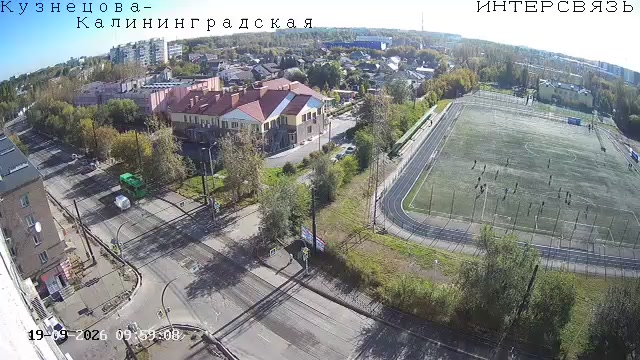
Chelyabinsk — Gateway to Siberia and a City on the Border of Two Geological Eras
Chelyabinsk occupies a unique position on the map of Russia: the western part of the city rests on the granites of the Southern Urals, while the eastern part lies on the sedimentary rocks of Western Siberia. This is why Chelyabinsk earned its historical nickname — "Gateway to Siberia". In the 19th century, the Trans-Siberian Railway passed through the city, turning a former district outpost into a major transit point. Tea, bread, butter, and meat from the European part of the empire flowed here before being sent further east. Today, Chelyabinsk is a modern metropolis with a population of over 1.2 million, preserving the spirit of industrial might and Ural steadfastness.
The city's terrain surprises with its elevation changes: the highest point reaches 291.1 meters above sea level, while the lowest is 191.4 meters in the Miass River valley. This difference creates unexpected panoramic views: from some heights, steppe expanses open up, while from others, the Ural foothills are visible. The Miass River, along which the city stretches, divides Chelyabinsk into two parts and shapes its unique landscape.
Tankograd: How Chelyabinsk Forged Victory During the War
In October 1941, the fate of Chelyabinsk changed dramatically. The Leningrad Kirov Plant, the Kharkov Motor Plant, and dozens of other enterprises were evacuated here. The city turned into a giant tank complex, earning the unofficial but proud name "Tankograd". During the war years, Chelyabinsk's factories produced 16,323 tanks and self-propelled artillery units, 43,811 tank engines, and 85,000 sets of fuel equipment for the front. By 1945, every third tank in the Red Army had a Chelyabinsk engine.
The industrial power of Tankograd did not vanish without a trace — it shaped the appearance of entire districts. The Tractor Plant District still preserves the memory of labor heroism: here stand workshops where women and teenagers worked for two or three, and monuments to rear workers line the streets. Today, Chelyabinsk's webcams allow you to see these historic quarters — from the Stalinist buildings of Lenin Avenue to the monumental structures of industrial giants.
The Chelyabinsk Meteorite Fall: The Day That Changed the City
On February 15, 2013, at 9:20 local time, the sky over Chelyabinsk split with a blinding flash. A meteorite about 18 meters in diameter and weighing approximately 11,000 tons entered the atmosphere at a speed of 18.6 km/s and exploded in the air. In terms of explosion power, this event ranked second in modern history after the Tunguska phenomenon. The shockwave swept through the city, shattering windows in hundreds of homes, schools, hospitals, and kindergartens. More than 1,500 people were injured — mostly by glass shards.
The cosmic visitor left behind numerous fragments. The largest of them — a fragment measuring 88 × 66 × 62 cm and weighing over 600 kg — was raised from the bottom of Lake Chebarkul on October 16, 2013. A 503 kg fragment is now on display at the State Historical Museum of the Southern Urals. The meteorite fall became the most documented case of Earth colliding with a celestial body in the history of observations — thousands of dashcams, surveillance cameras, and smartphones captured the event.
Districts and Landmarks: From the Center to Residential Areas
Chelyabinsk stretches along the Miass River for more than 30 kilometers. The central district concentrates the main architectural landmarks: Revolution Square with its ensemble of administrative buildings, Kirov Street — the pedestrian "Arbat" of Chelyabinsk, and the Naum Orlov Drama Theater. Victory Avenue — the city's longest street, stretching over 12 kilometers — connects the center with distant residential areas.
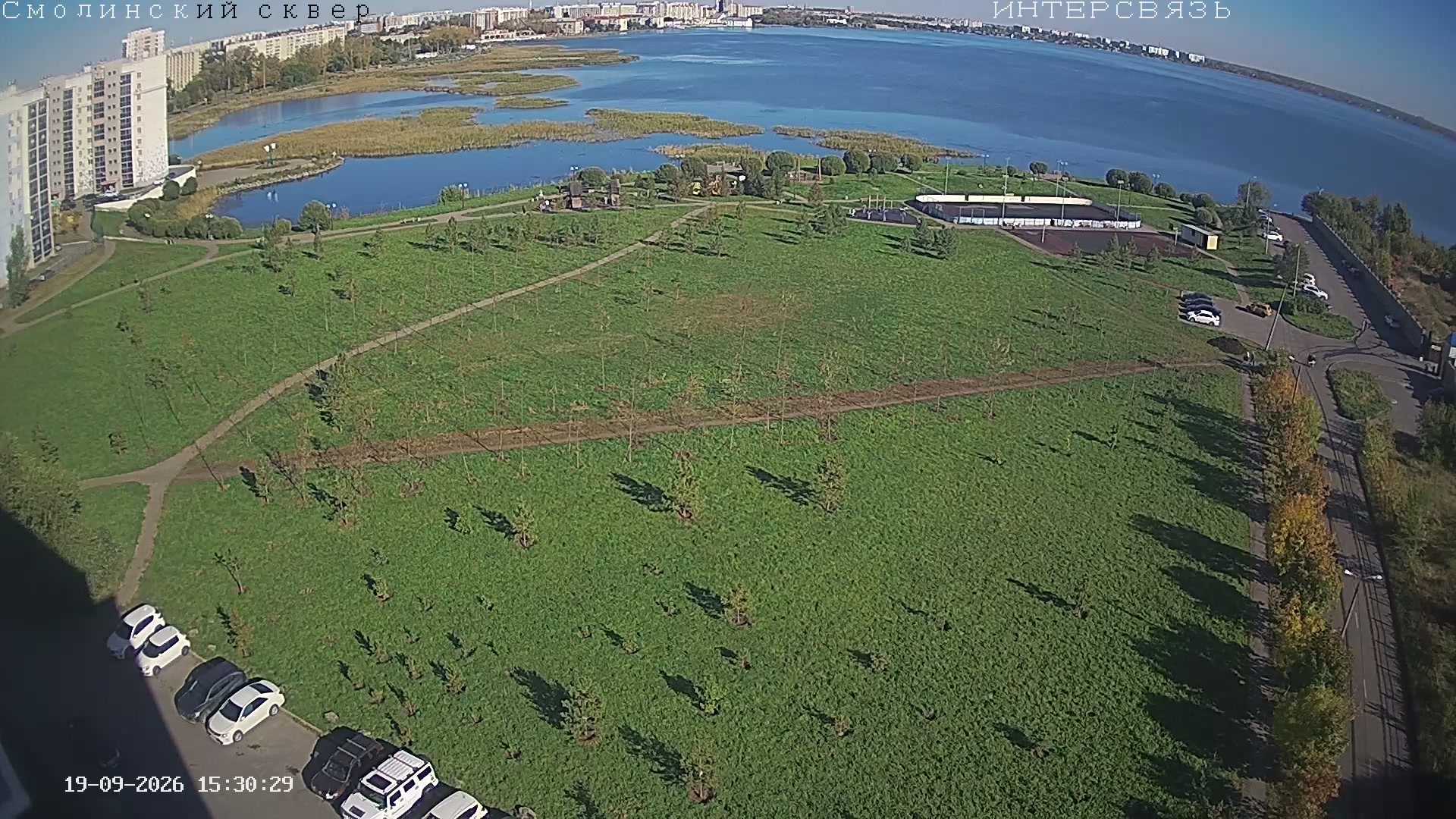
Gagarin Park is the green heart of the Leninsky District, where Chelyabinsk residents walk among century-old pines and feed squirrels. Alye Pole is another green zone named after local meadows that bloom with scarlet poppies in summer. The Miass Embankment offers walks along the water with views of the opposite bank, where the chimneys of industrial enterprises are visible — a reminder of the city's working glory. The resort area of Lake Turgoyak within the city limits attracts skiing enthusiasts in winter and beachgoers in summer.
The Miass River and Ural Landscapes
The Miass is not just a waterway but a geographic symbol of Chelyabinsk. The river originates in the Ilmen Mountains and carries its waters through the entire city, dividing it into left-bank and right-bank parts. Within Chelyabinsk, the Miass forms several reservoirs — Shershnevskoye, First and Second City Ponds — which serve as recreation areas and regulate flow.
The Ural foothills approach the city from the west, creating picturesque panoramas. Pervaya Mountain on the outskirts is a popular spot for hiking and cycling. The slopes are covered with mixed forests, and stone outcrops are exposed on the summits — those very granites of the Southern Urals, whose age exceeds 250 million years. Views from the heights reveal Chelyabinsk from an unexpected angle: endless blocks of high-rise buildings against the backdrop of Ural ridges create the feeling of a city on the edge of two worlds.
Climate and Weather: From Forty-Degree Frosts to Summer Heat
Chelyabinsk is known for its sharply continental climate. In winter, temperatures drop below minus 35 degrees, while in summer the thermometer rises above plus 38. Seasonal differences exceed 70 degrees — this creates a special rhythm of urban life. In winter, Chelyabinsk becomes a kingdom of snow and ice: rivers are bound by thick ice, and snowdrifts reach a meter high. In summer, the city turns green, embankments fill with vacationers, and parks bloom with flowering linden trees and apple trees.
Precipitation is unevenly distributed: the maximum occurs in July-August, when warm air from the Kazakh steppes collides with cool Ural masses, generating thunderstorms and downpours. Spring arrives violently — the Miass River breaks free of ice in April, sometimes forming ice jams and flooding low-lying areas. Autumn fogs spread over the reservoirs, creating a mystical atmosphere along the embankments.
The "Tale of the Urals" Monument and Other City Symbols
Among Chelyabinsk's monuments, a special place is occupied by the "Tale of the Urals" monument by sculptor E.V. Vuchetich. A mighty hero leaning on a blade that has passed through the earth became the city's calling card and even appeared on the 5,000-ruble banknote. The monument stands on the square in front of the railway station — a symbolic location for a city whose history is inextricably linked to the Trans-Siberian Railway.
The Chelyabinsk Railway Station is an architectural monument of the mid-20th century with a high tower and spacious halls. Trains depart from here to all corners of the country, and the building itself serves as a landmark for city guests. Nearby is the Railway Workers Park with a fountain and alleys — a popular meeting and dating spot.
What the Cameras Show
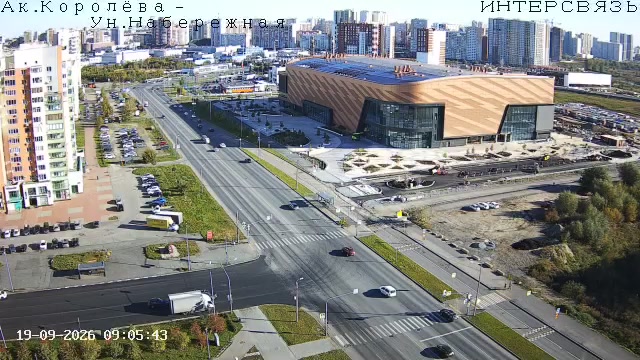
Chelyabinsk's online cameras cover key points of the metropolis: Revolution Square with its administrative ensemble, pedestrian Kirov Street, the Miass River embankment, Gagarin Park, and Alye Pole. Broadcasts from the station allow you to observe train movements and the arrival of city guests. Cameras in the Tractor Plant District show the industrial landscape — workshops and chimneys reminiscent of Tankograd's tank glory.
Chelyabinsk's webcams operate in real time and allow you to assess the road situation on Victory Avenue and other major thoroughfares, see weather conditions — whether winter snowdrifts or summer thunderstorms. Balandino Airport broadcasts the runway and aircraft movements. All cameras are available for free and without registration — just select a point of interest and watch Chelyabinsk online in HD quality.